
Japan’s Kei EV Pivot Moves From Promise to Production
Four new electric kei vans have moved past the concept stage and into production at Daihatsu’s Oita plant, with three of the vehicles launching sales this week.
These electric kei vans include:
-
Toyota’s Pixis Van (on sale)
-
Daihatsu’s e-Hijet Cargo (on sale)
-
Daihatsu e-Atrai (on sale)
-
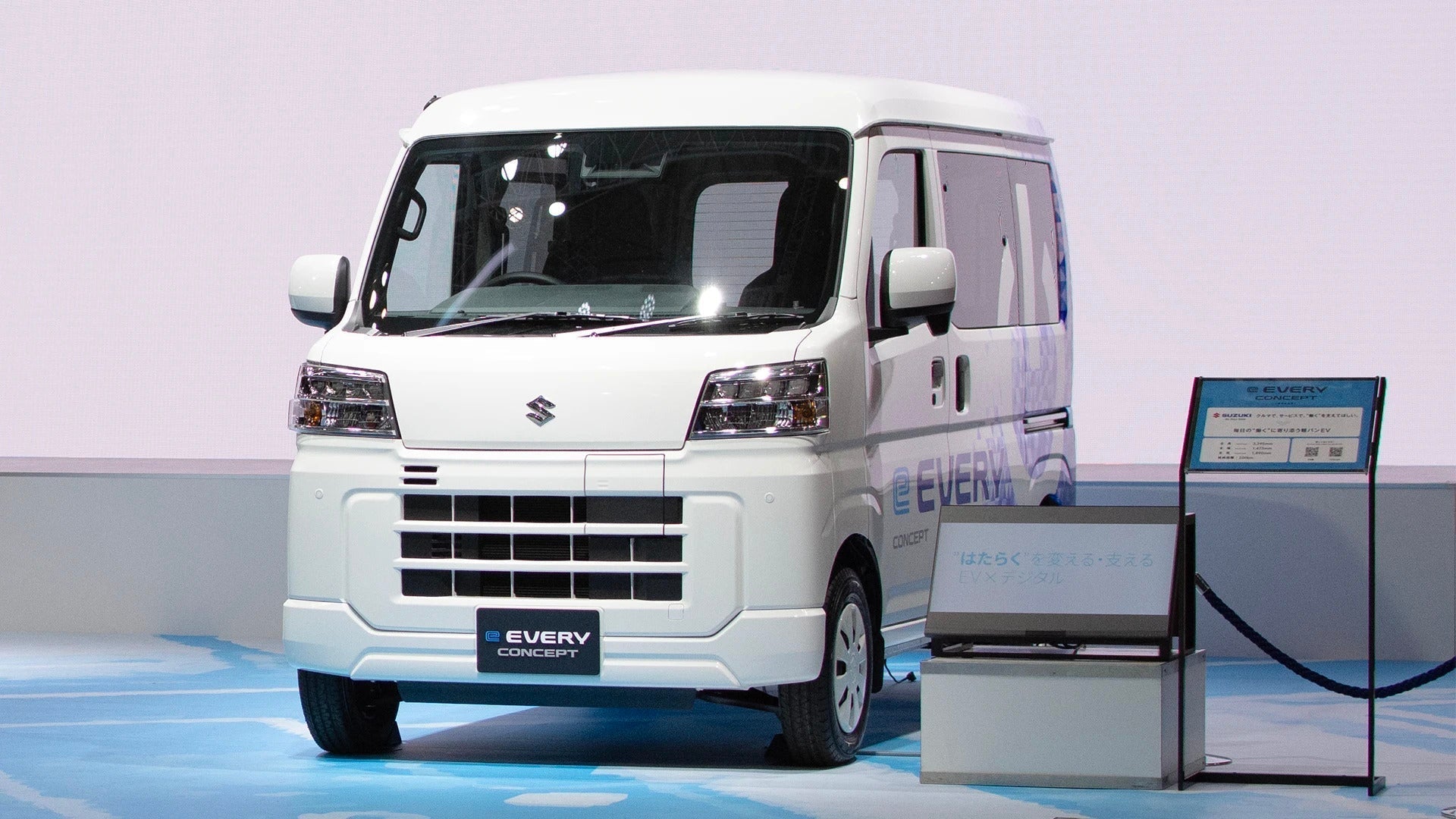
Suzuki e-Every
Are you in need of:
Access the maintenance components that matter most for your kei truck’s reliability, and keep it running as Japan intended with our curated catalog of essential maintenance parts, featuring a trusted blend of genuine OEM and high‑quality aftermarket products.
Once you find what you need, complement your purchase with one of our official kei truck manuals.
Let’s take a closer look at how the four models are helping electric kei vans gain momentum in a market traditionally dominated by their gas counterparts.

Toyota Pixis BEV Van
The Toyota Pixis BEV van offers a maximum range of just over 159 miles, with rapid charging providing an 80% charge in about 50 minutes, and standard charging taking around six hours. This kei van’s BEV (battery electric vehicle) system was co-developed by Suzuki, Daihatsu, and Toyota.
Suzuki and Daihatsu contributed their experience in kei-car manufacturing, while Toyota focused on bringing delivering its refined electric technology. Commercial Japan Partnership Technologies Corporation also participated in planning to optimize specs for last-mile transportation.

Kei vehicles account for about 60% of Japan’s total commercial vehicle fleet, and BEVs like the Toyota Pixis are exceptionally quiet, helping reduce noise pollution during deliveries.
Key specs for the Toyota Pixis van include:
-
4-passenger occupancy
-
2WD (rear-wheel drive)
-
1CG AC synchronous motor
-
Lithium-ion battery
-
$20,070 MSRP (including consumption tax)
-
63 horsepower / 92 lb-ft of torque
-
771-lb load capacity
-
Heated seats, automatic AC, USB outlets
- Multi-function display
Toyota, which is targeting selling 50 Pixis Van BEV units per month, said they: “Will continue to advance efforts to practically achieve carbon neutrality through the provision of sustainable means of transportation.”

Daihatsu e-Hijet Cargo / Daihatsu e-Atrai
Like the Toyota Pixis BEV, the new Daihatsu e-Hijet Cargo and e-Atrai have been on sale since February 2. However, Daihatsu, which Toyota owns, has a higher monthly sales target for the two models, set at 300 units combined. The e-Hijet Cargo and e-Atrai, based on the Hijet Cargo and Atrai gas models, will be Daihatsu’s first mass-produced BEVs.
Daihatsu said: “The e-Hijet Cargo and e-Atrai feature the newly developed e-SMART ELECTRIC BEV system optimized for mini vehicles. Part placement has been revised, and the body and suspension newly designed, to accommodate a large-capacity battery without compromising interior space.”
Within its vehicle category, the e-Hijet Cargo van has the largest cargo area, and it’s available in a two- or four-seat configuration. It also costs about the same as the Toyota Pixis Van BEV at $20,079, and offers the same range. The e-Atrai is slightly more expensive at around $22,121.
According to Daihatsu, both vehicles feature an e-Axle that integrates the motor, inverter, and reduction gear, mounted on the rear drive axle. At the same time, a high-capacity 36.6 kWh thin lithium-ion battery is positioned under the floor.

Suzuki e-Every
First shown at Japan’s Mobility Show in late 2025, the Suzuki e-Every kei van offers a lower range than its Toyota and Daihatsu counterparts at 124 miles. However, this vehicle was also developed with Toyota and Daihatsu.
The e-Every keeps the same body and style as the pure-gas Suzuki Every, which can be used as a commercial or passenger van. This visual similarity may help more gas-powered Every customers transition to an electric powertrain. While production on the e-Every has started, sales are not yet open.
