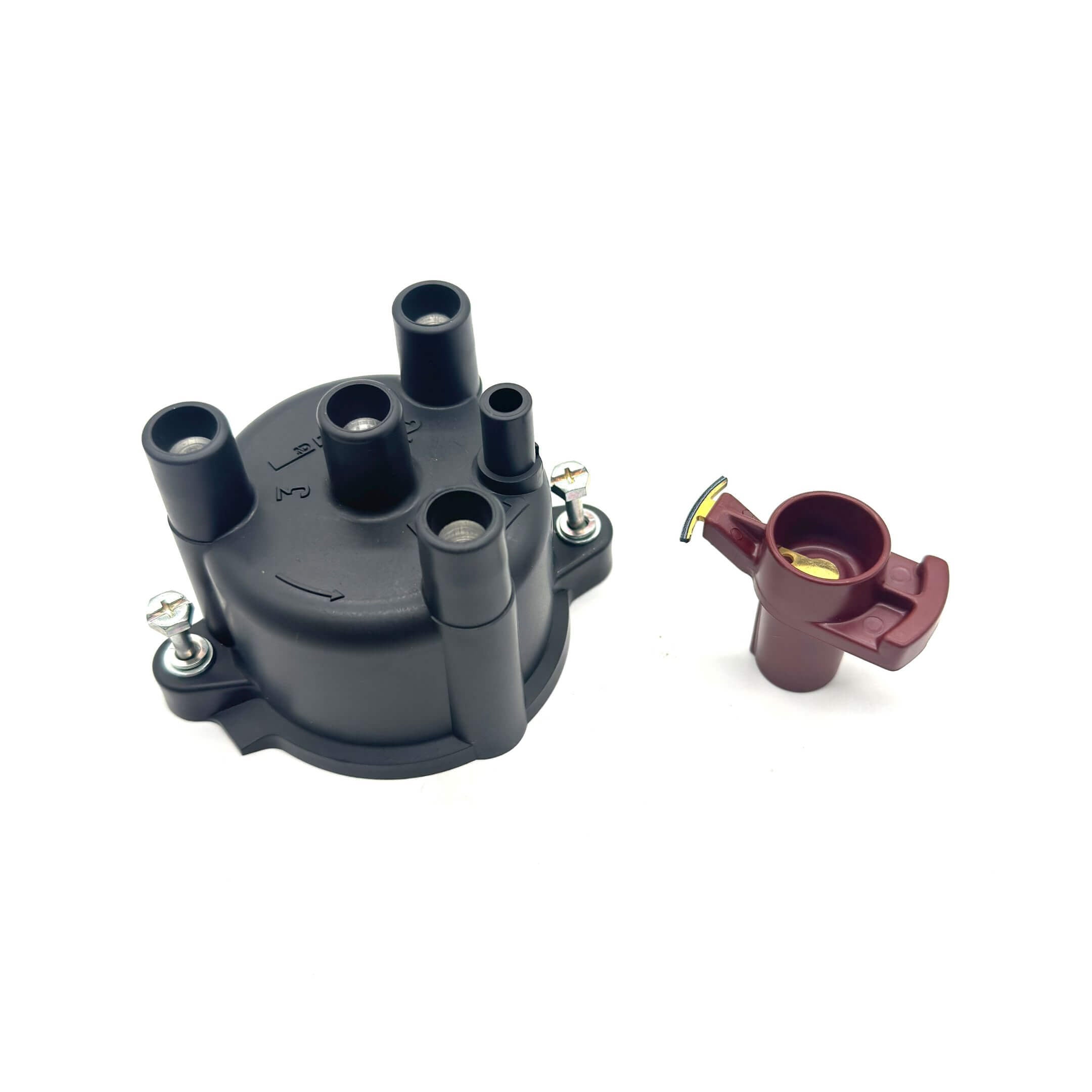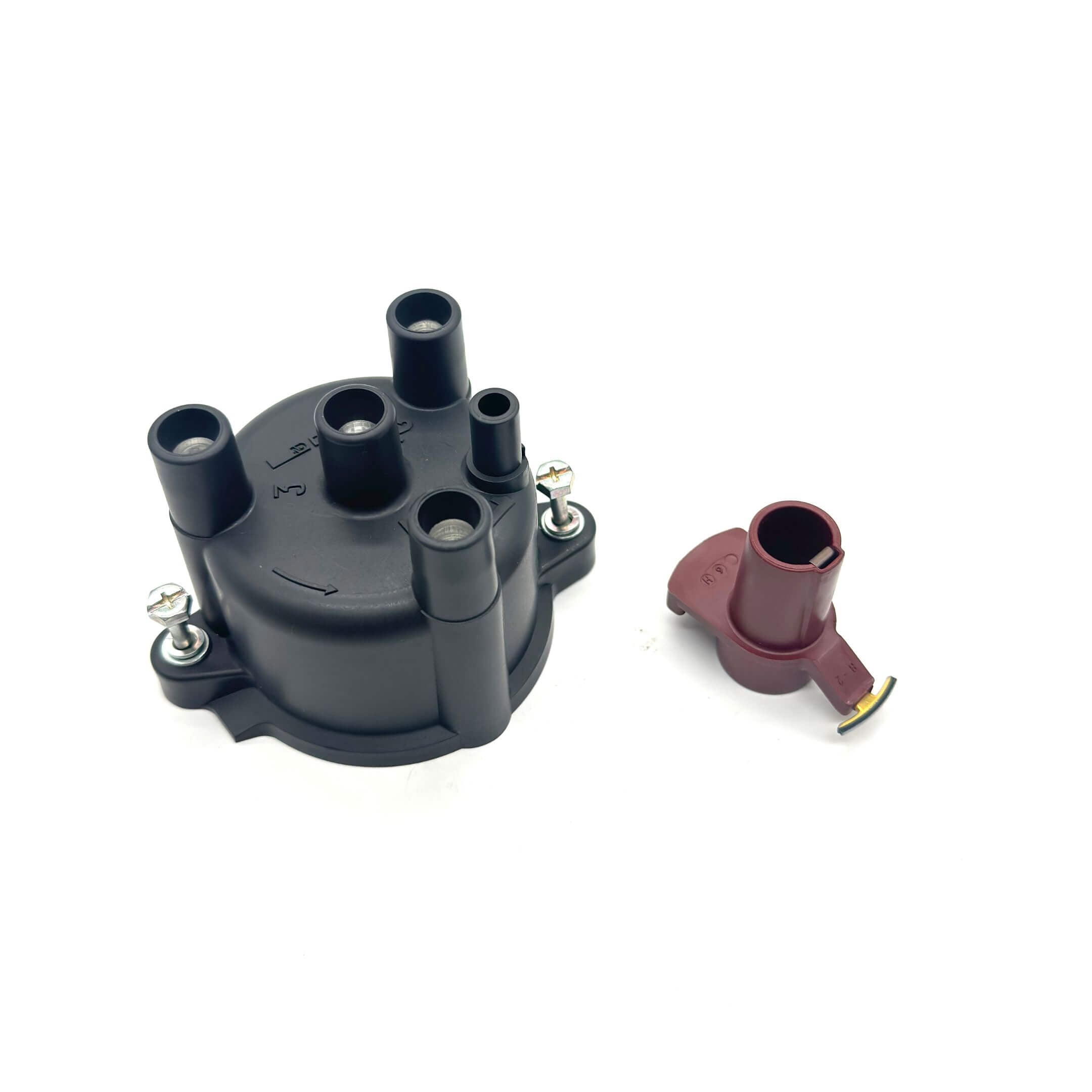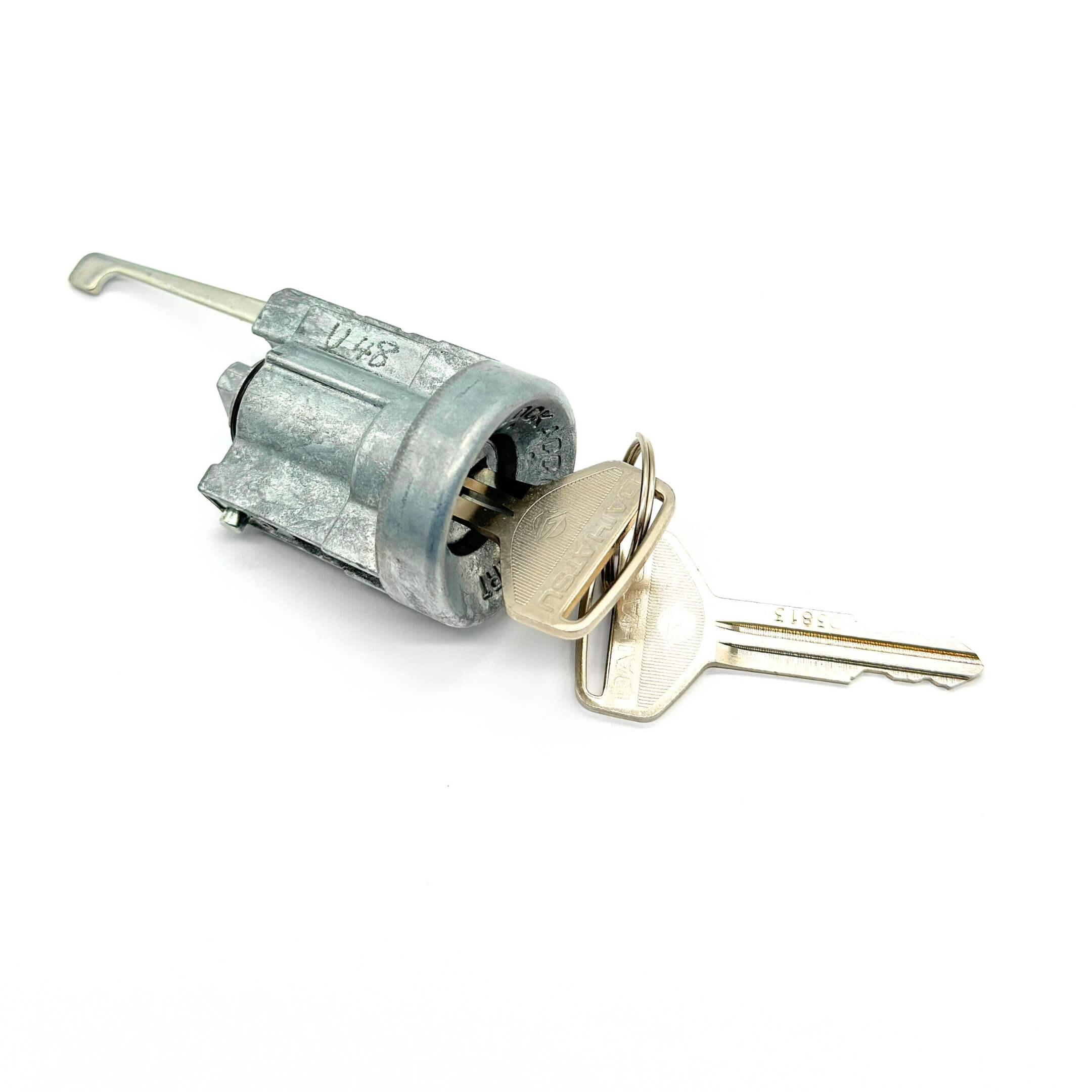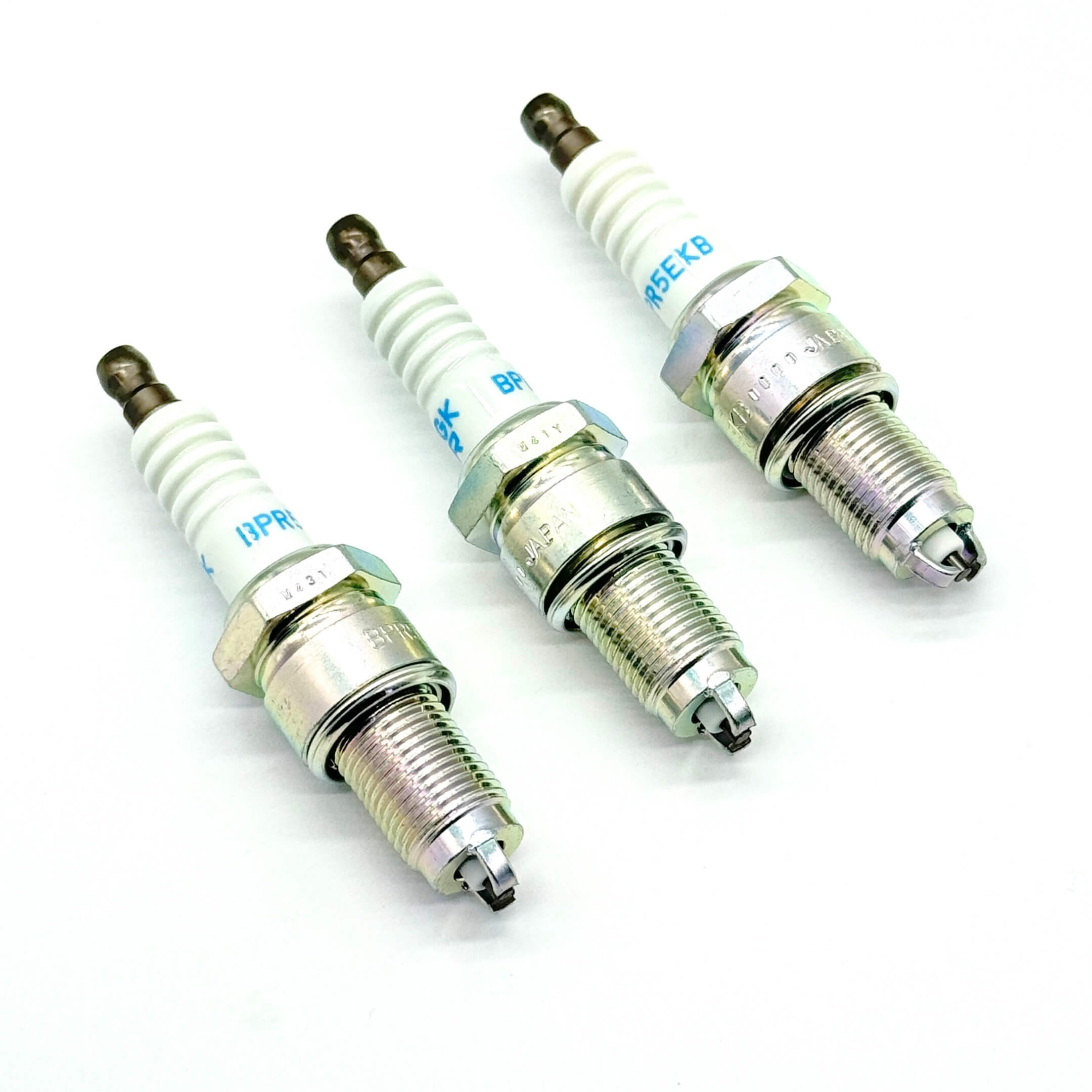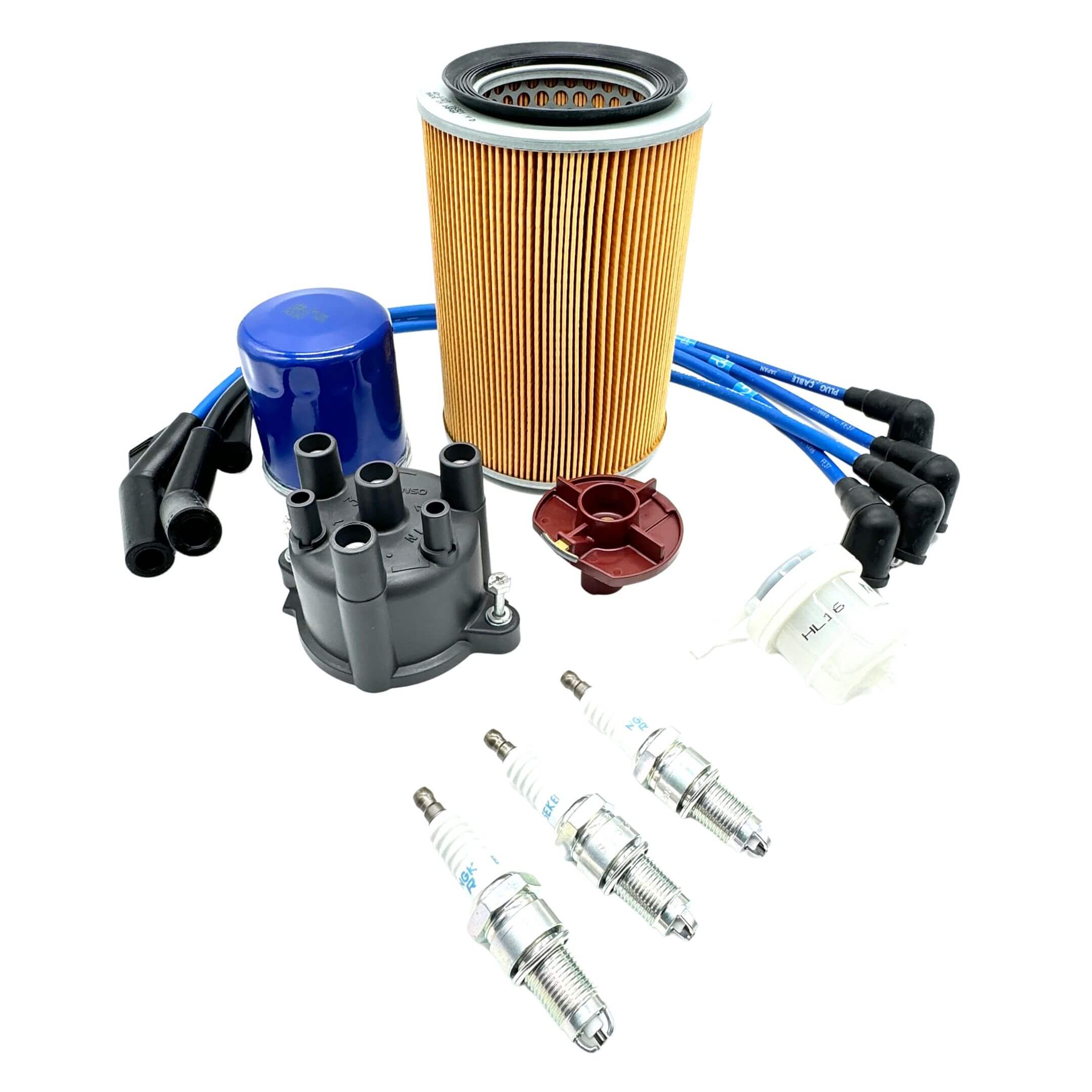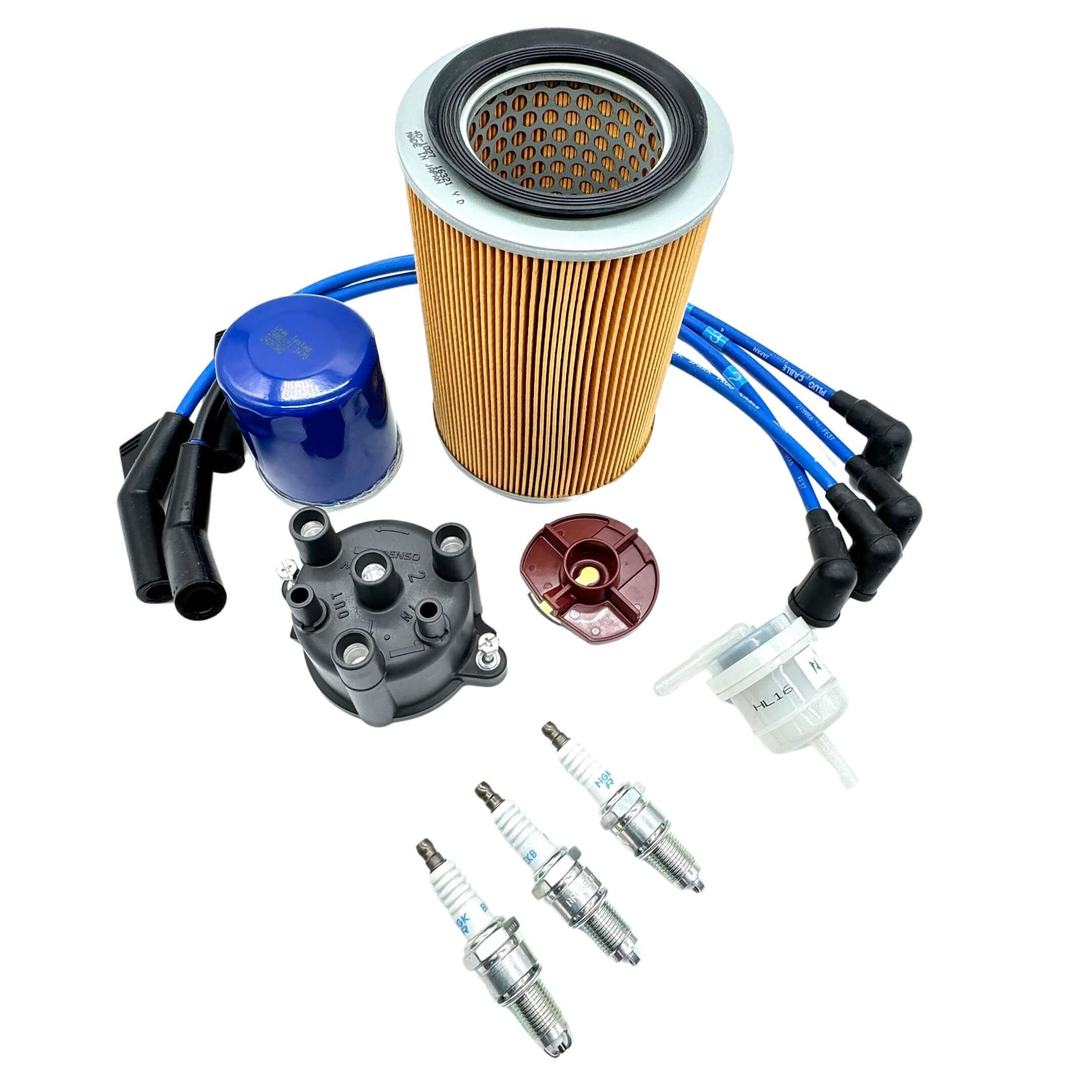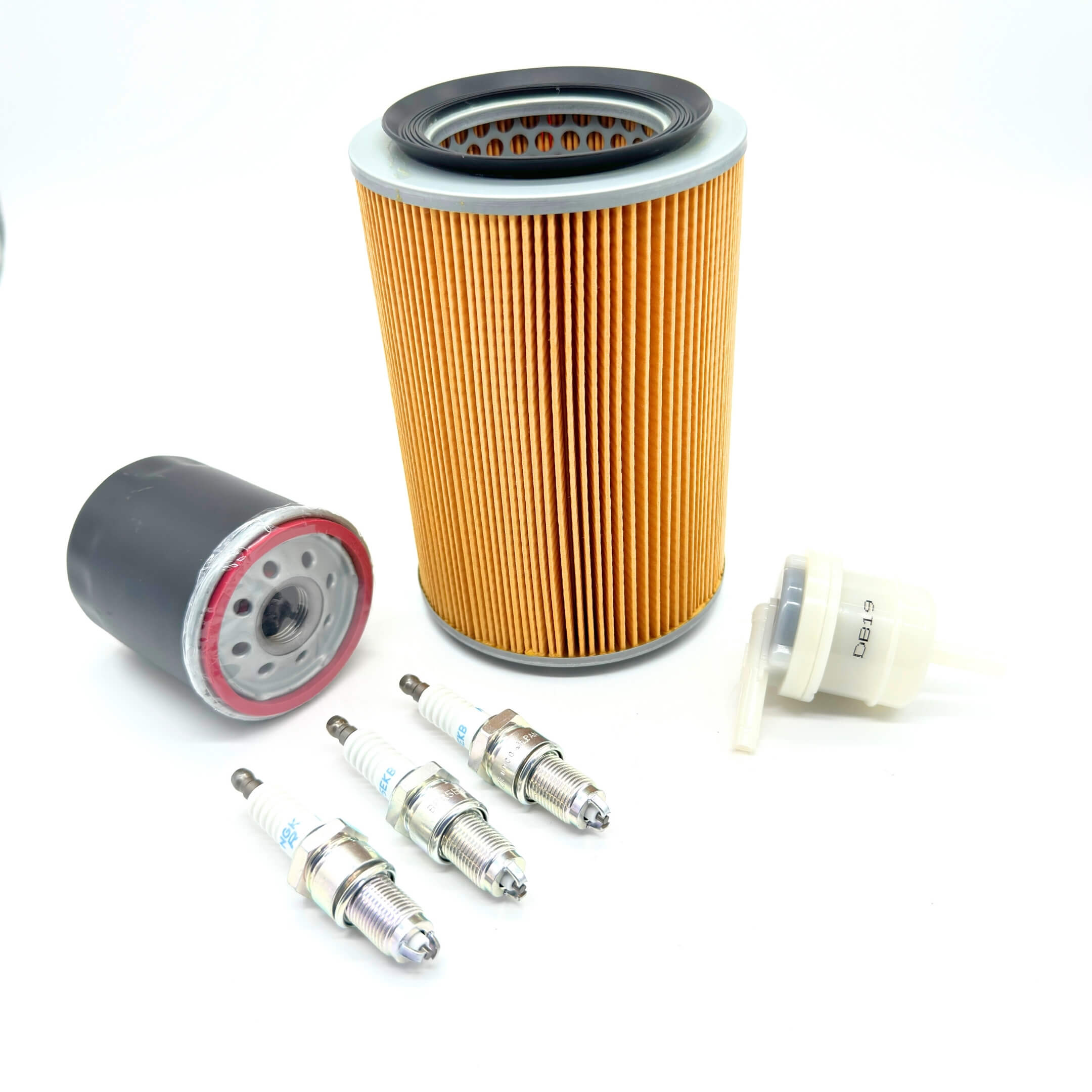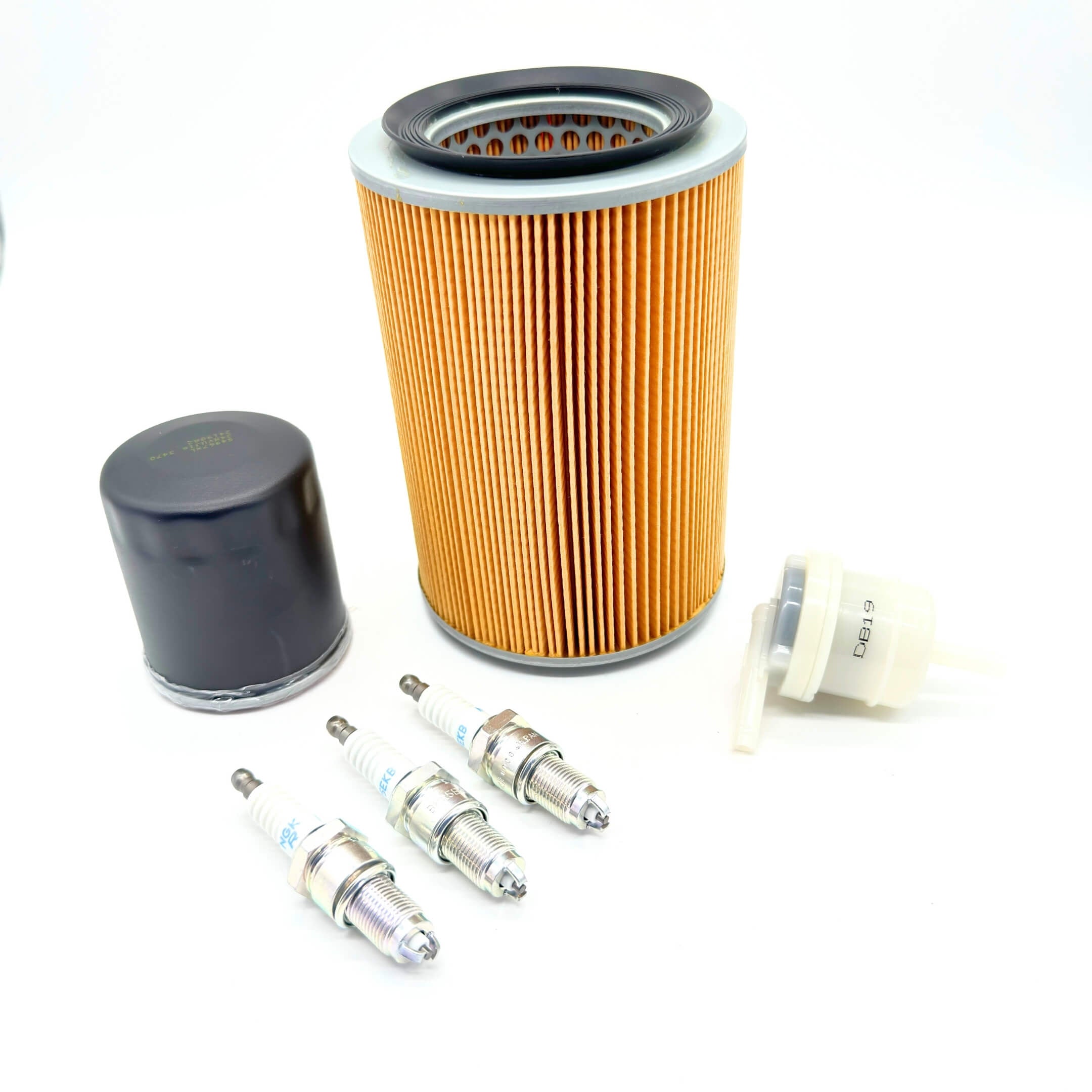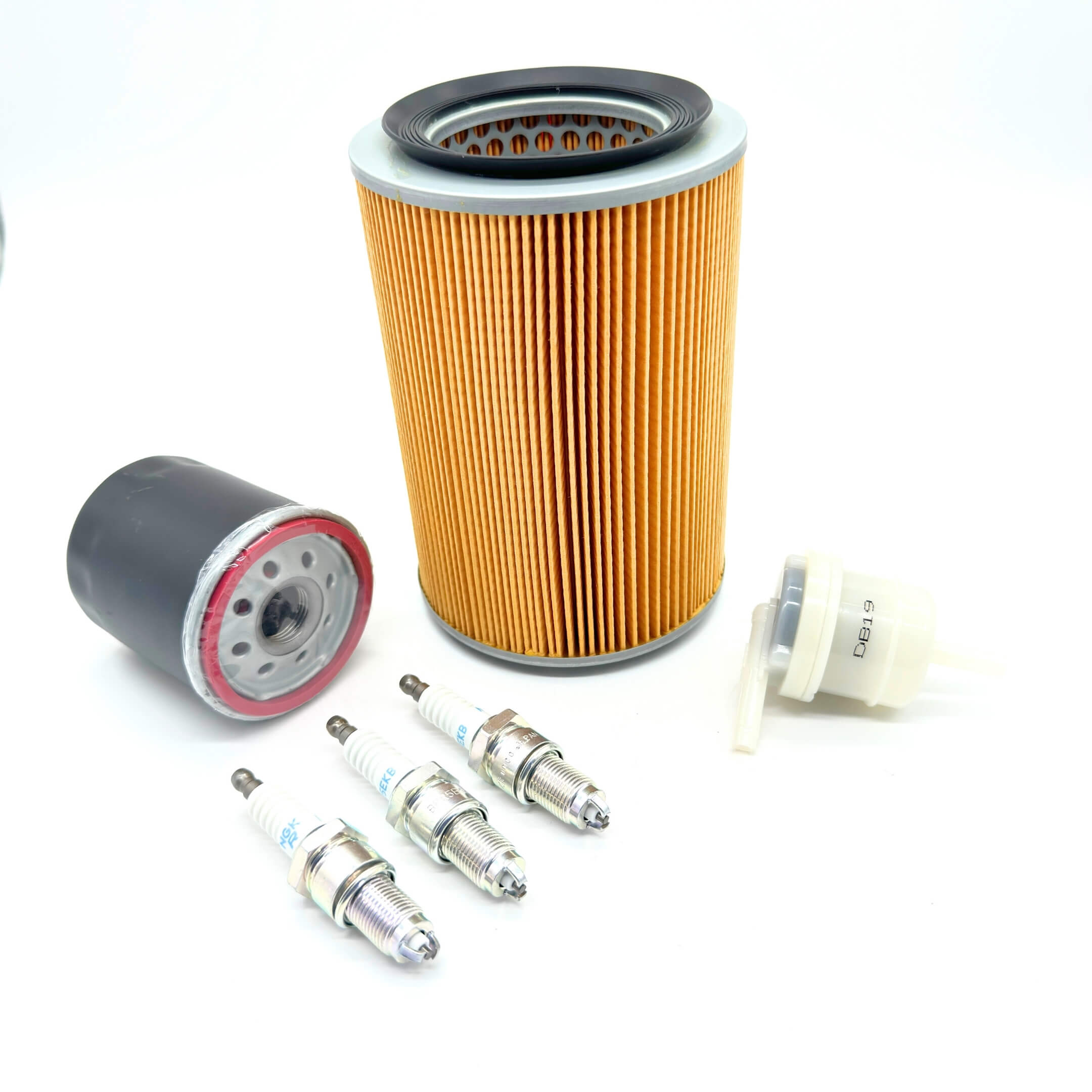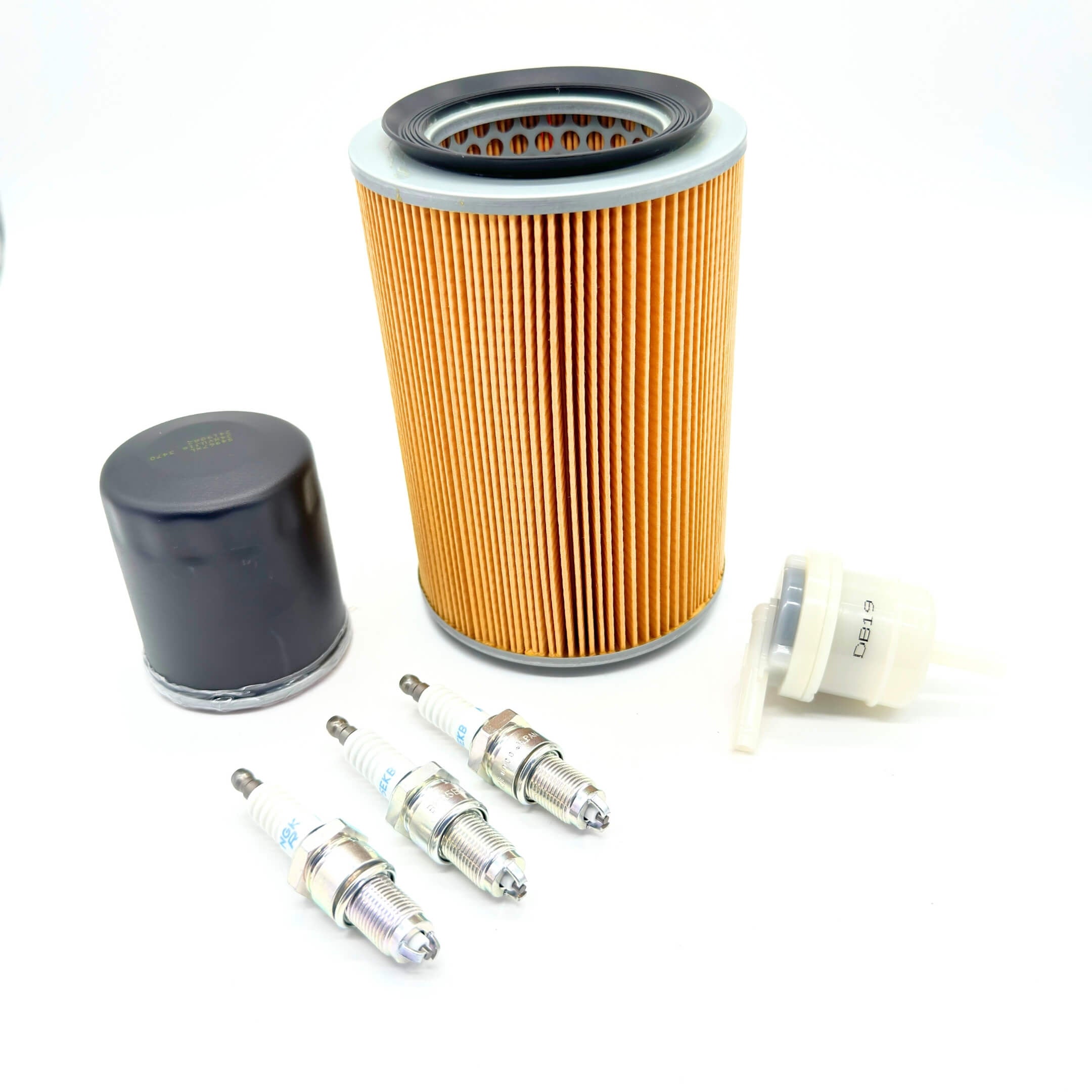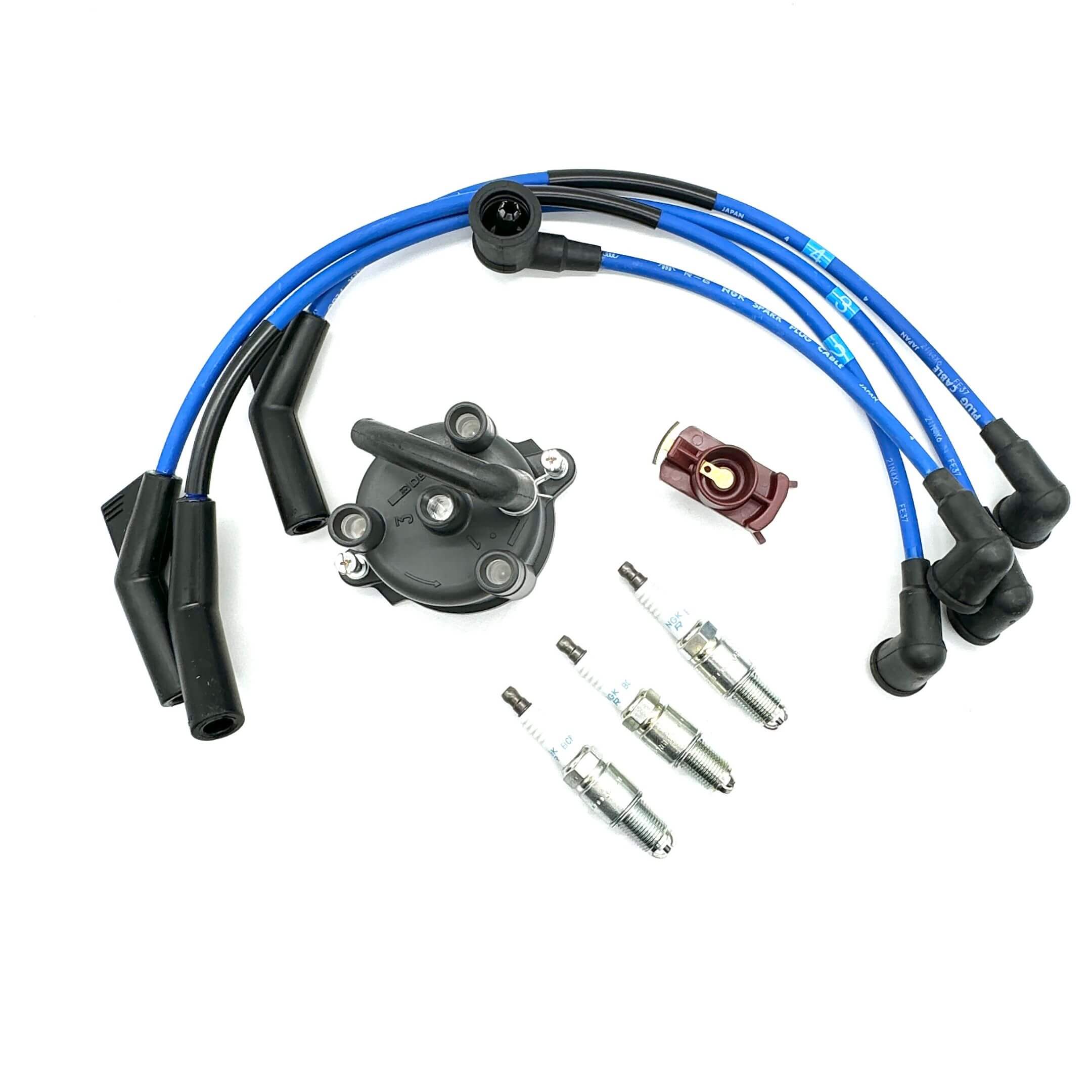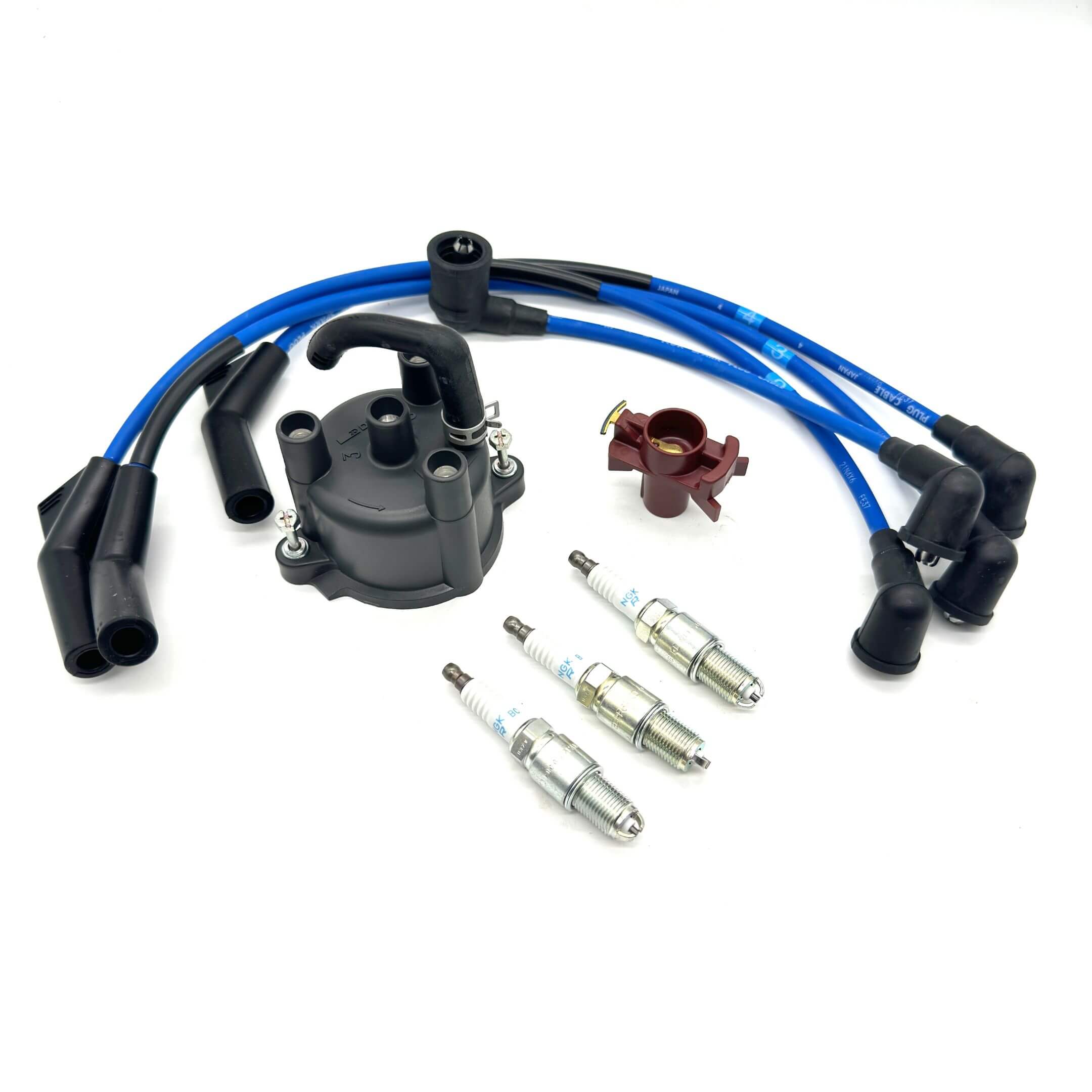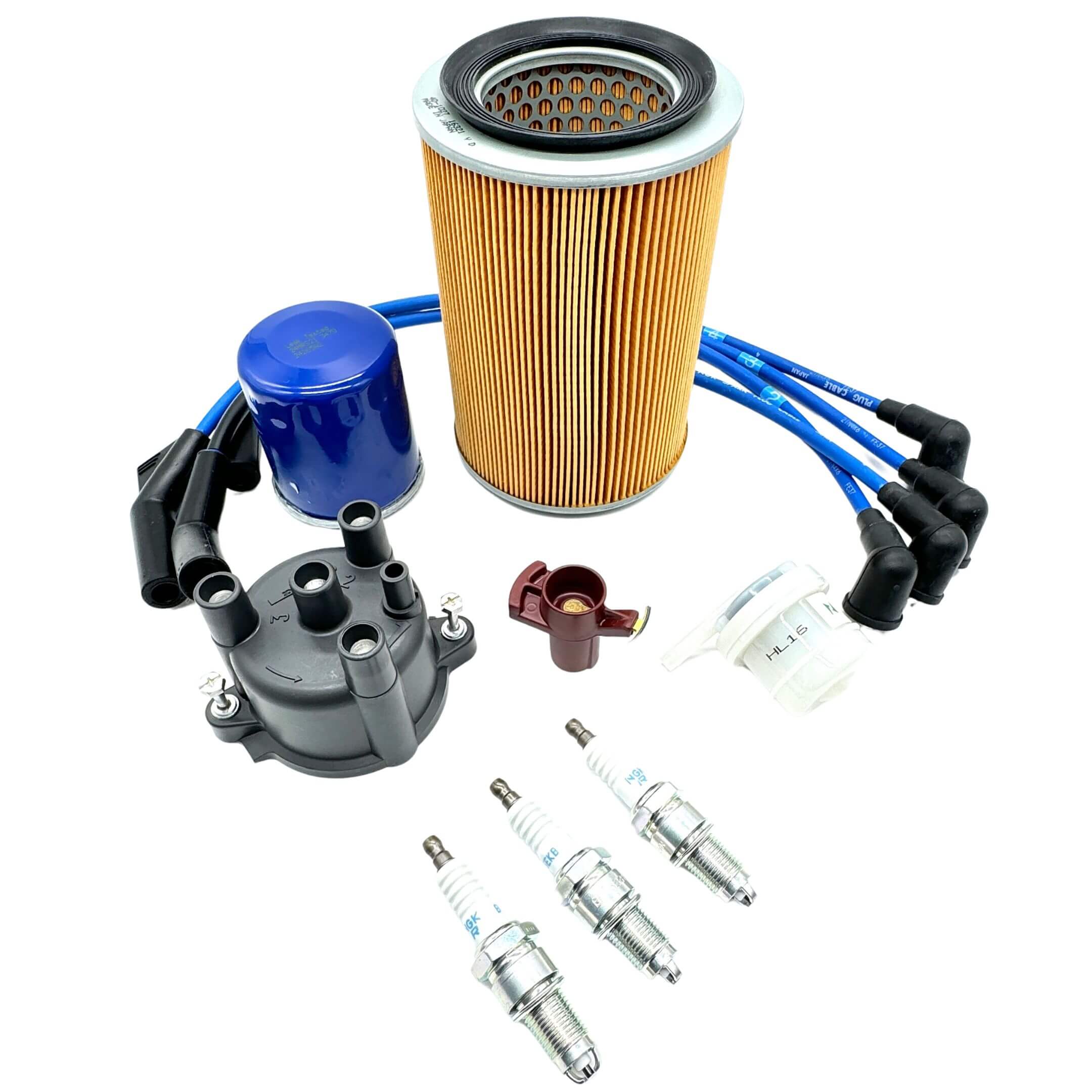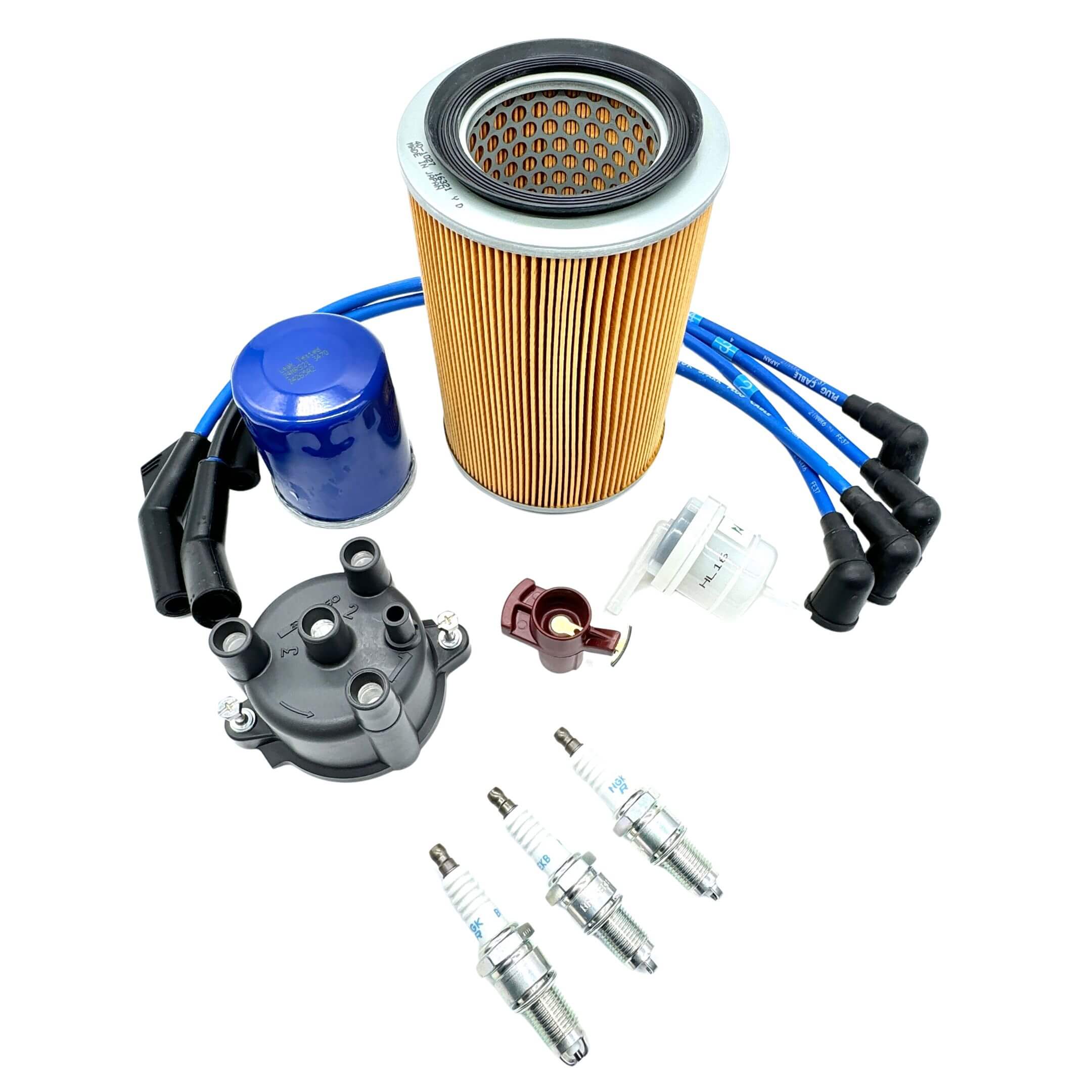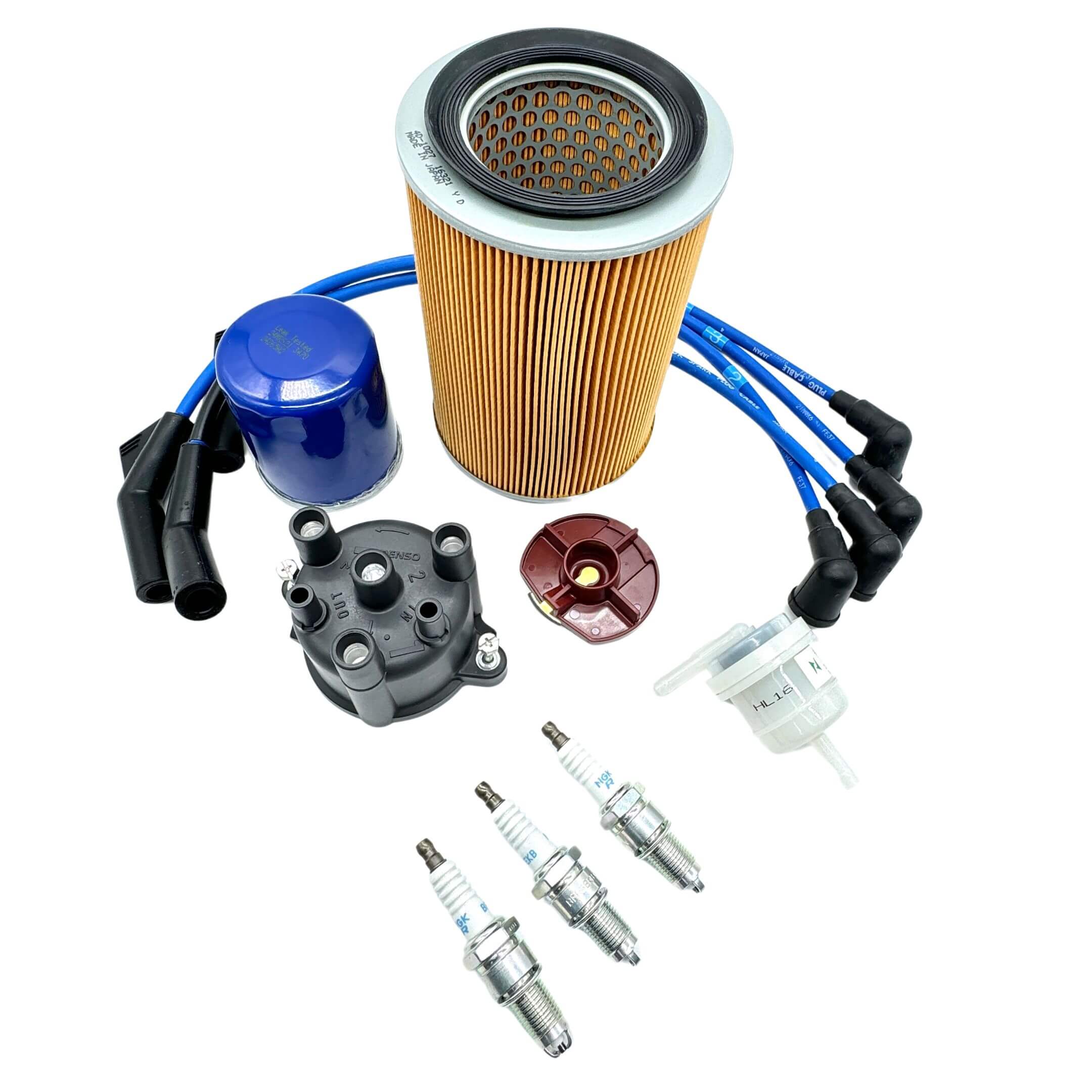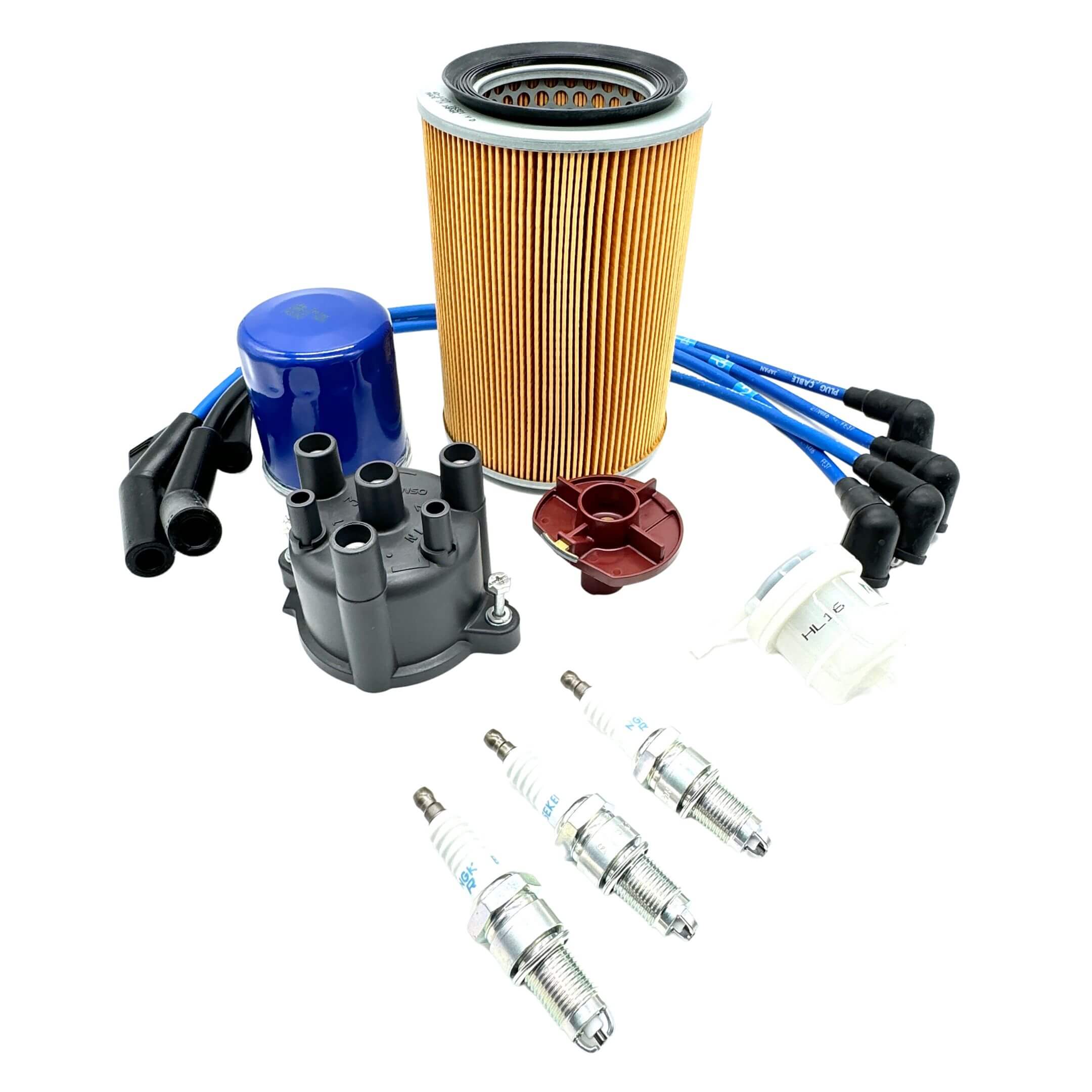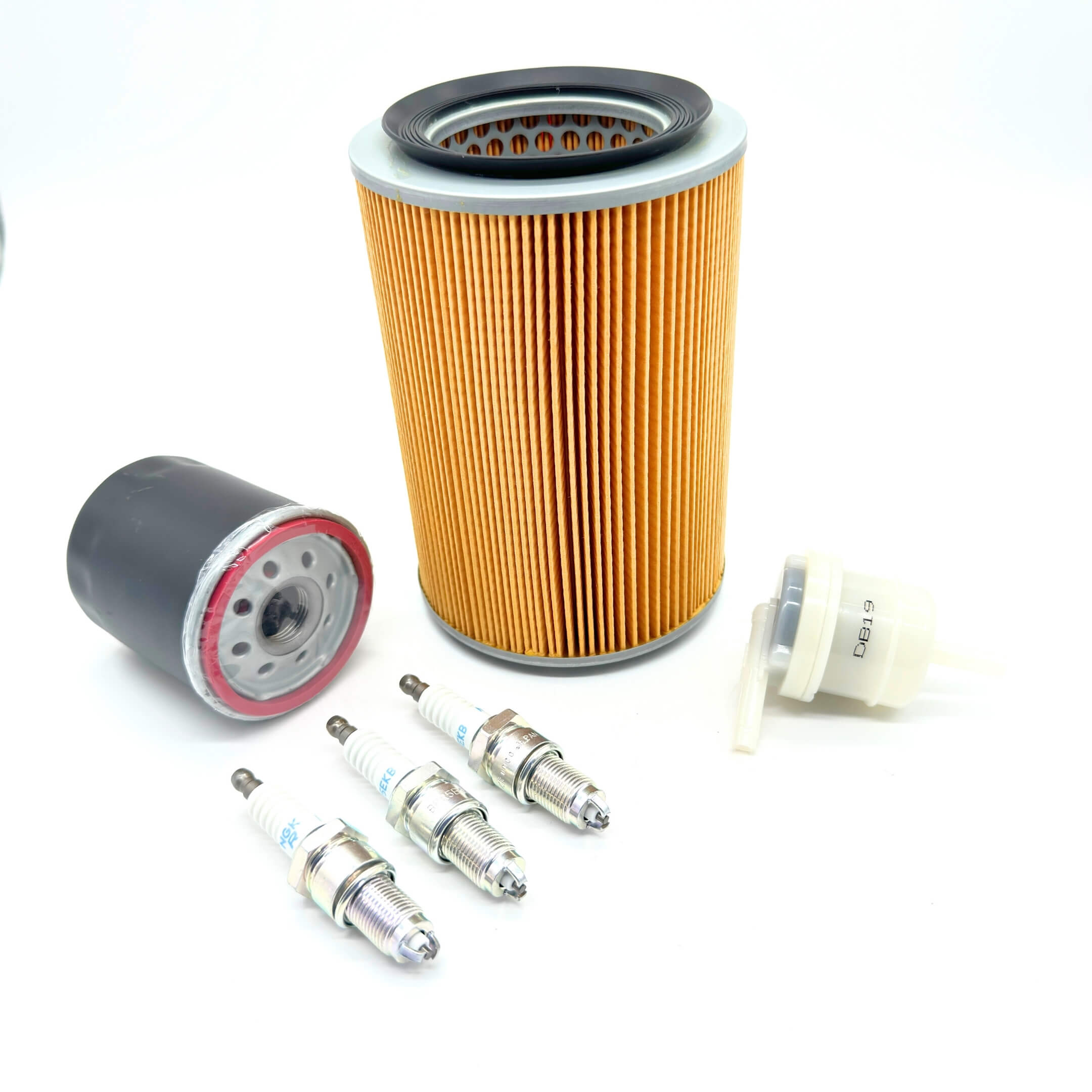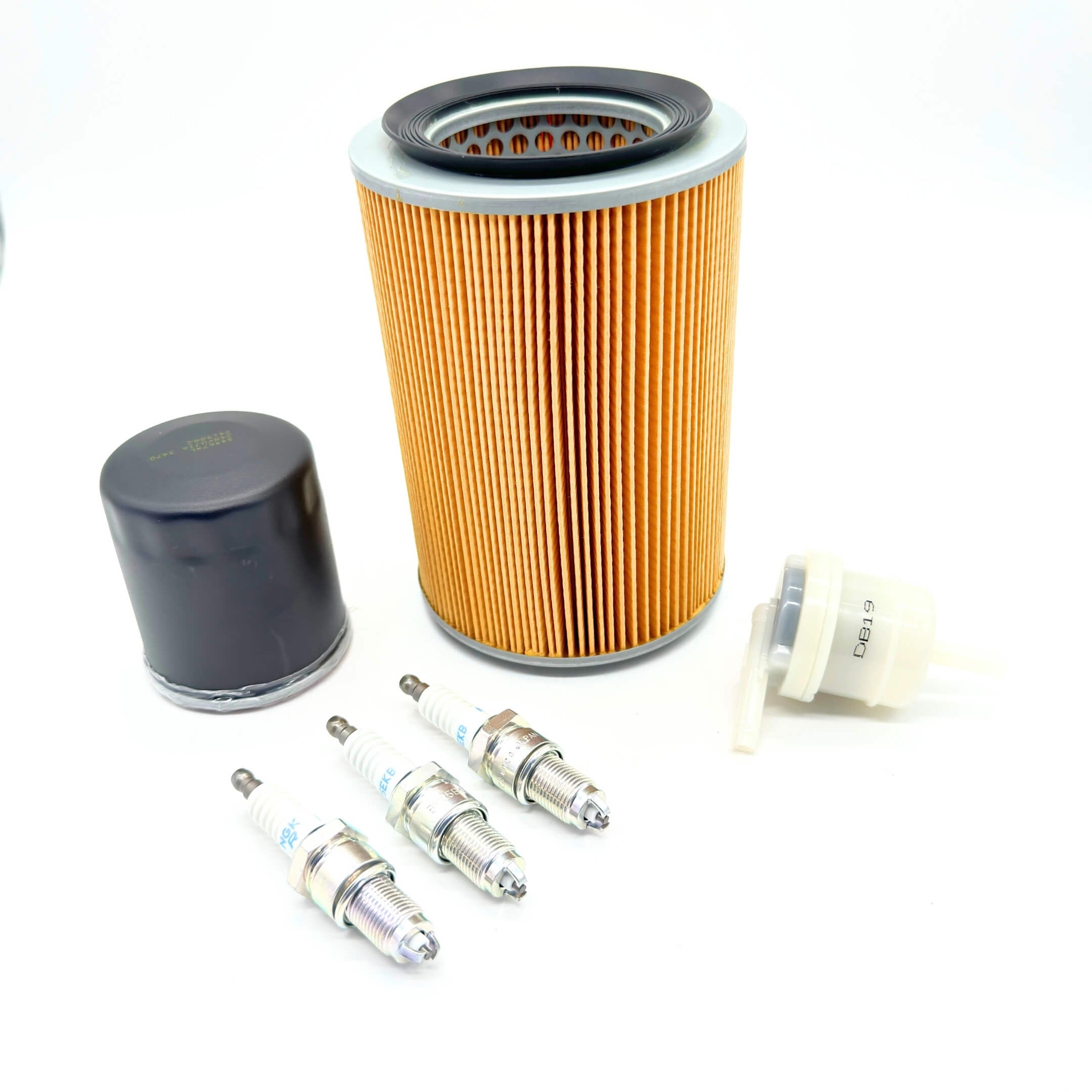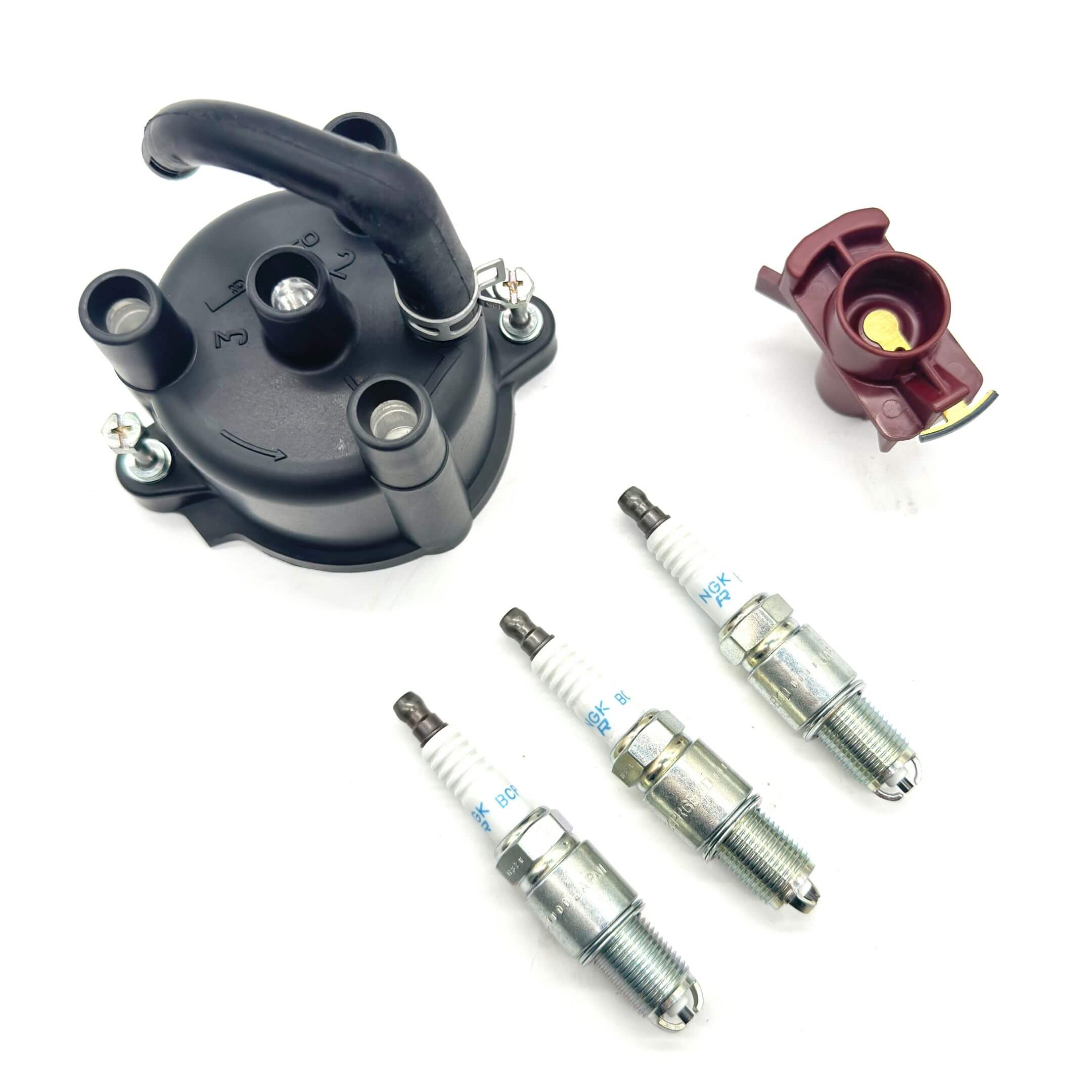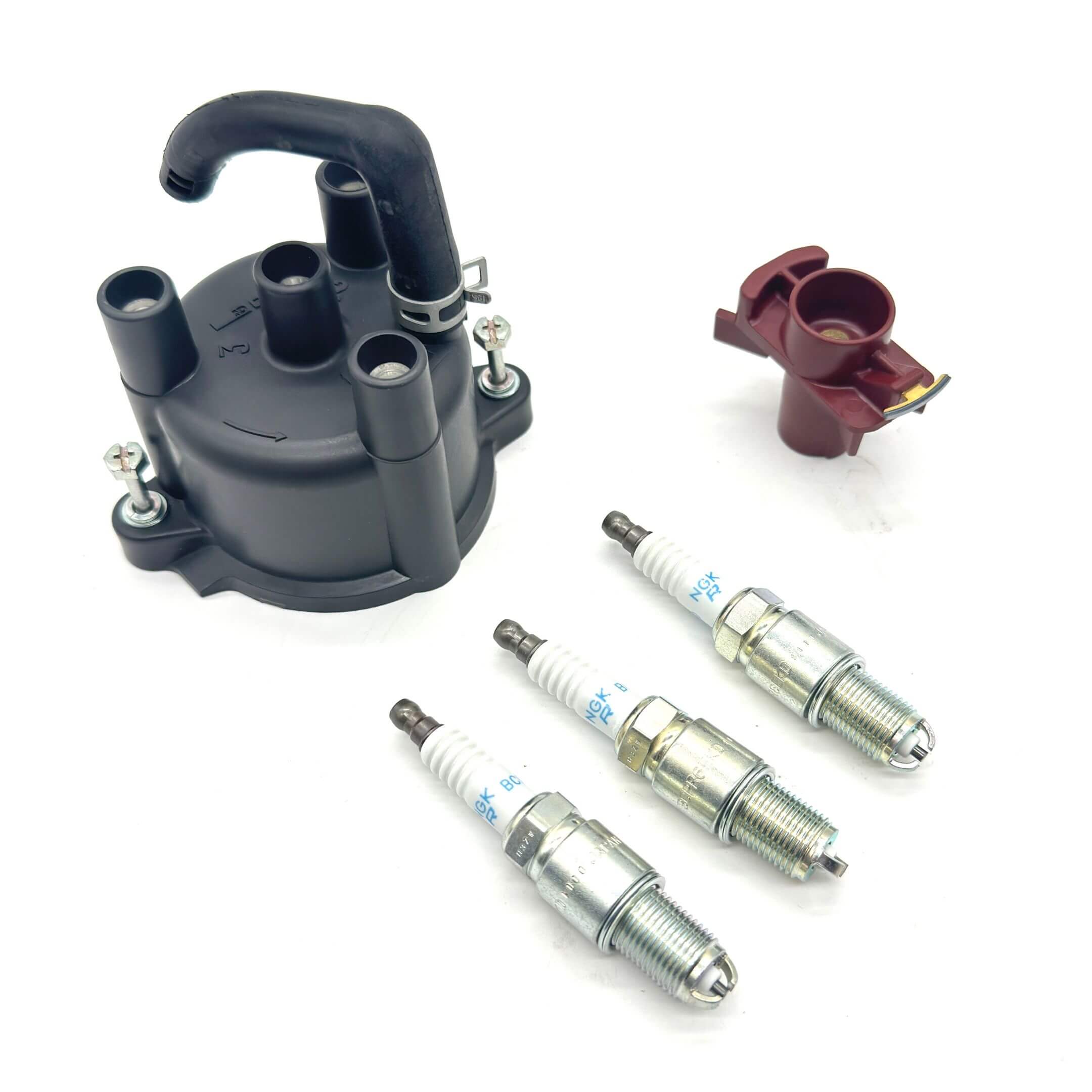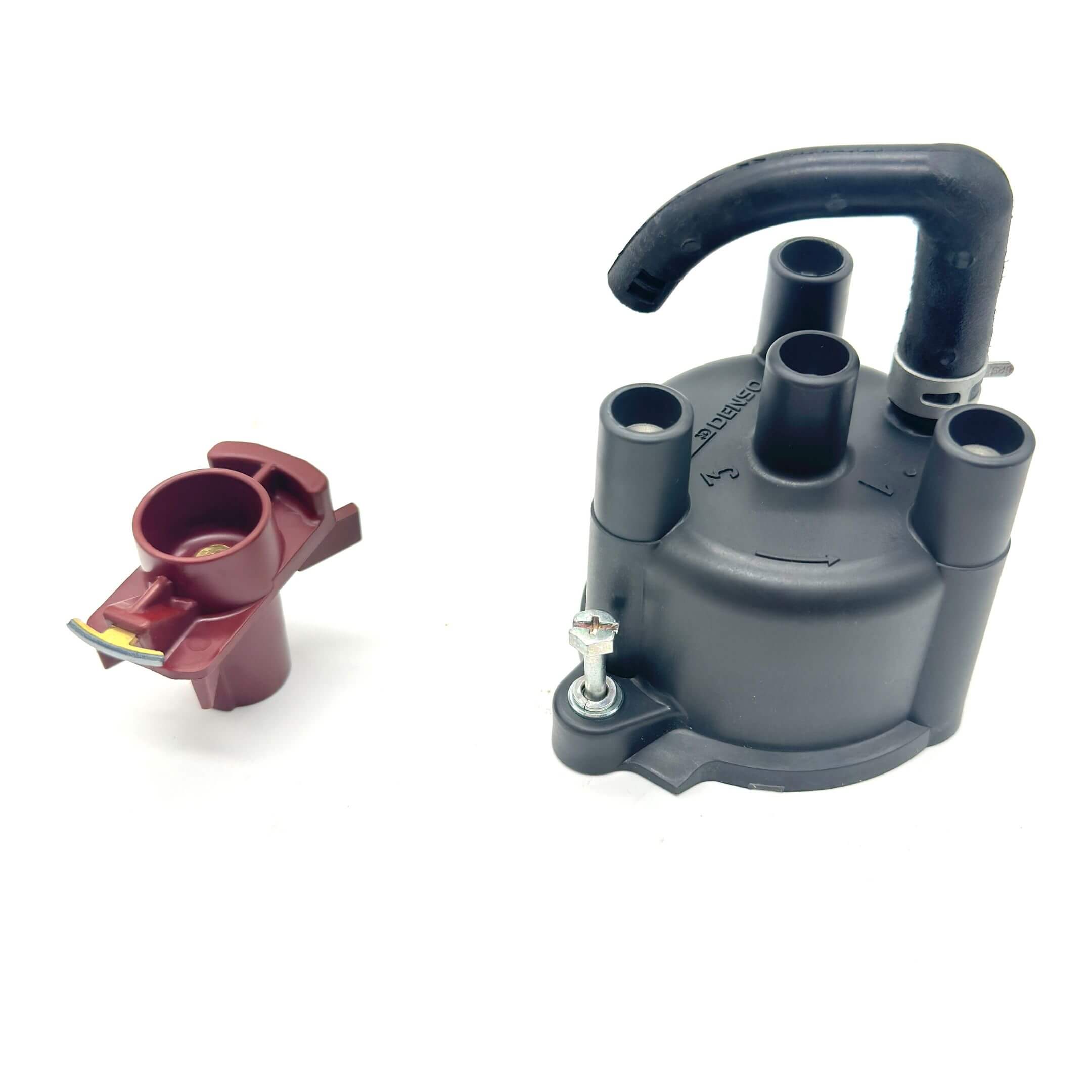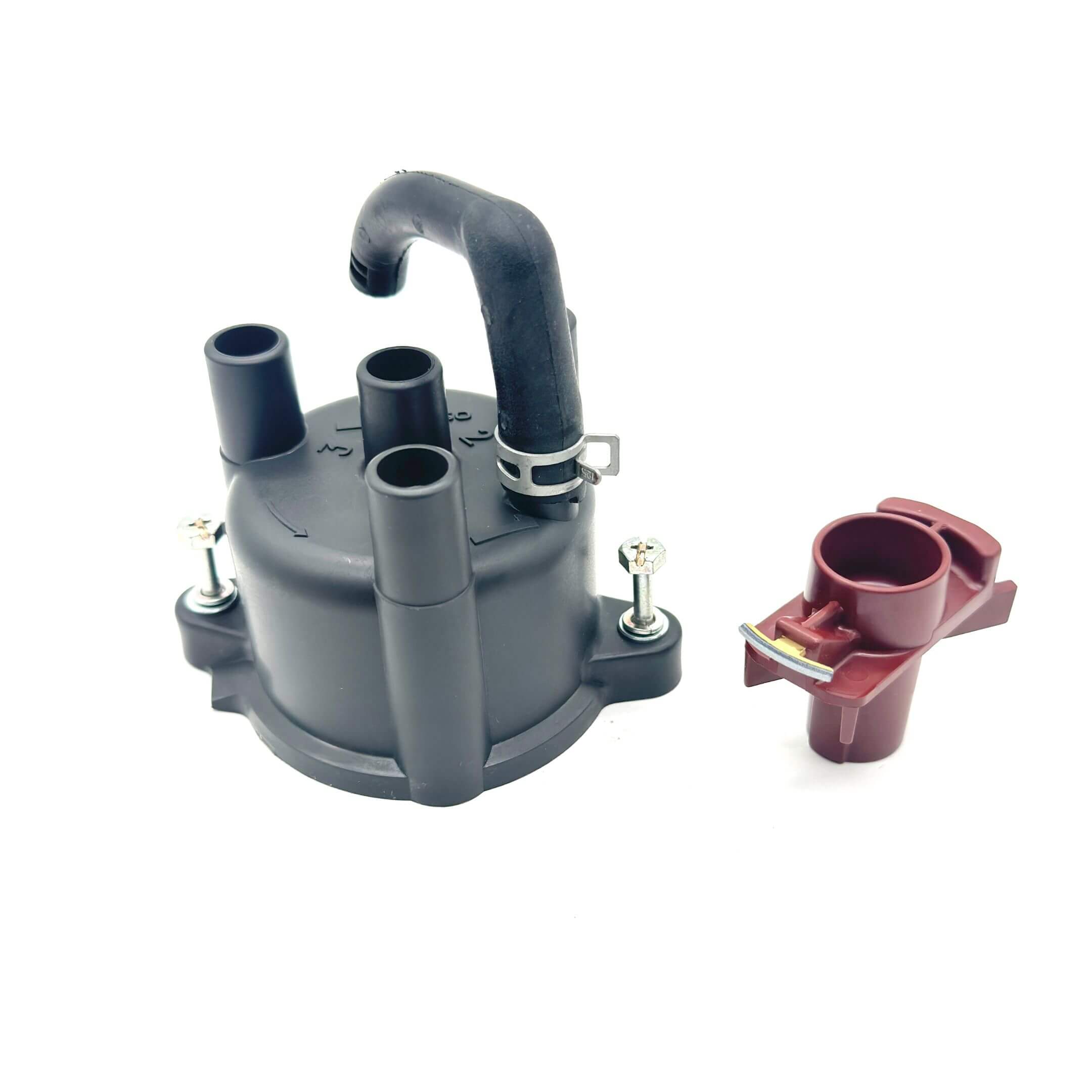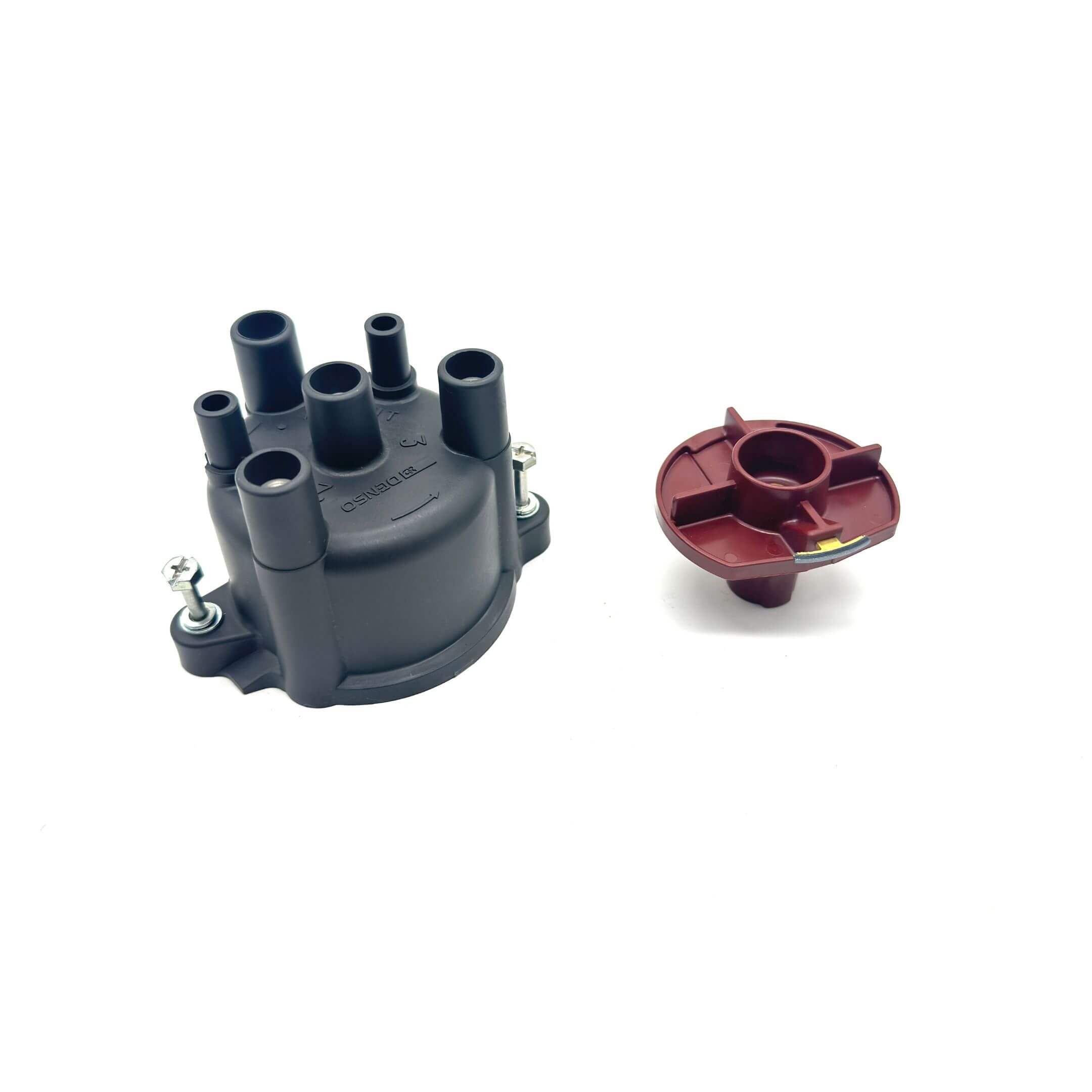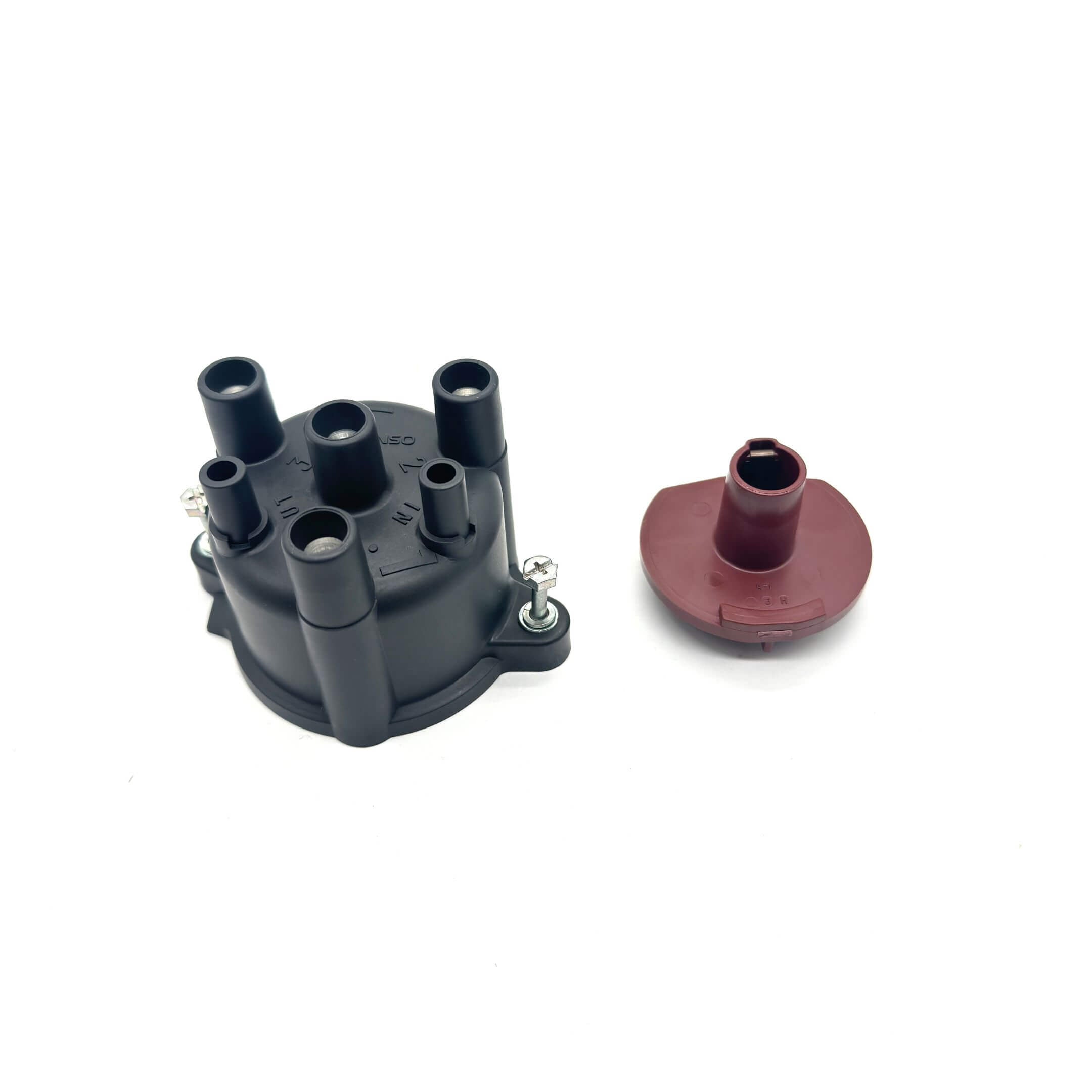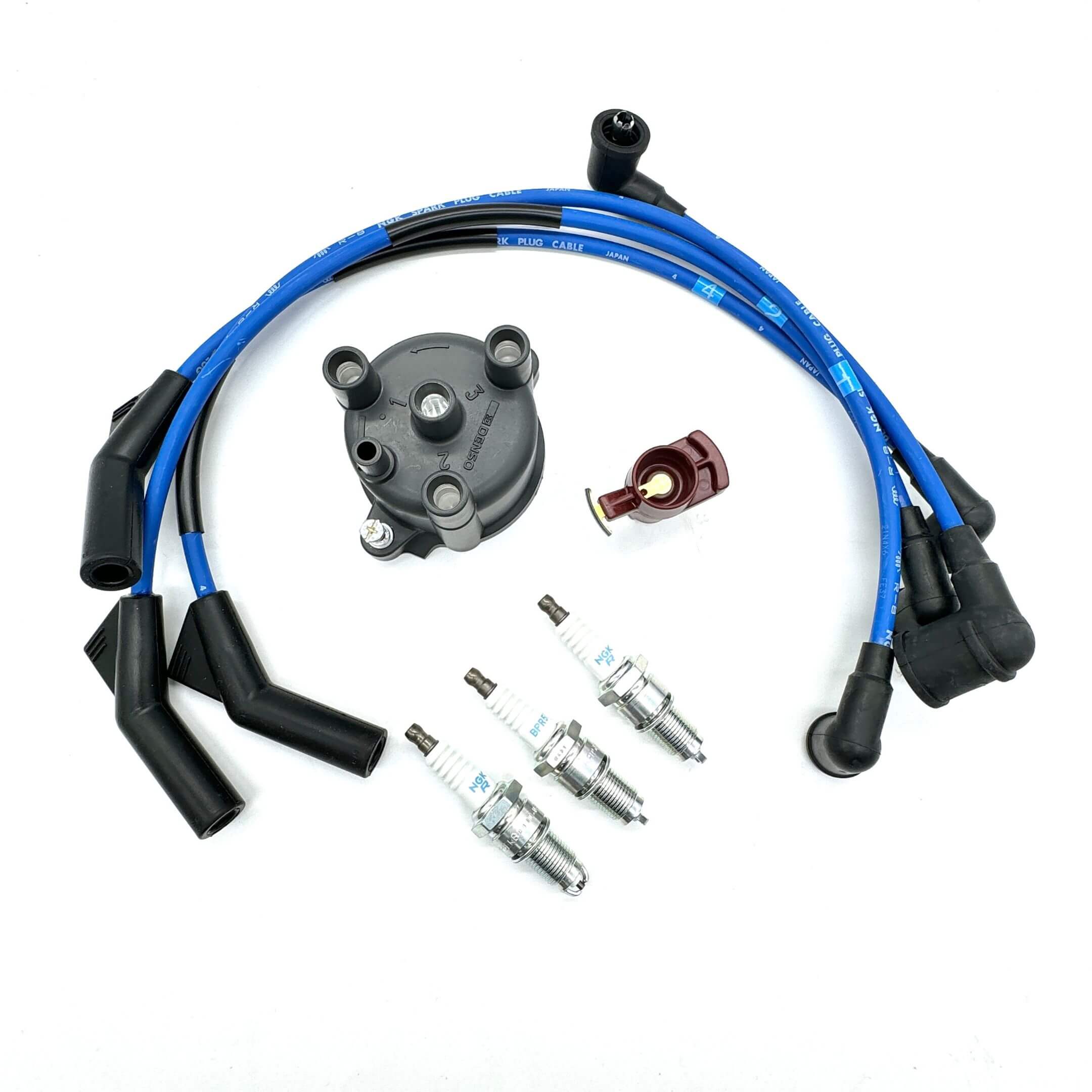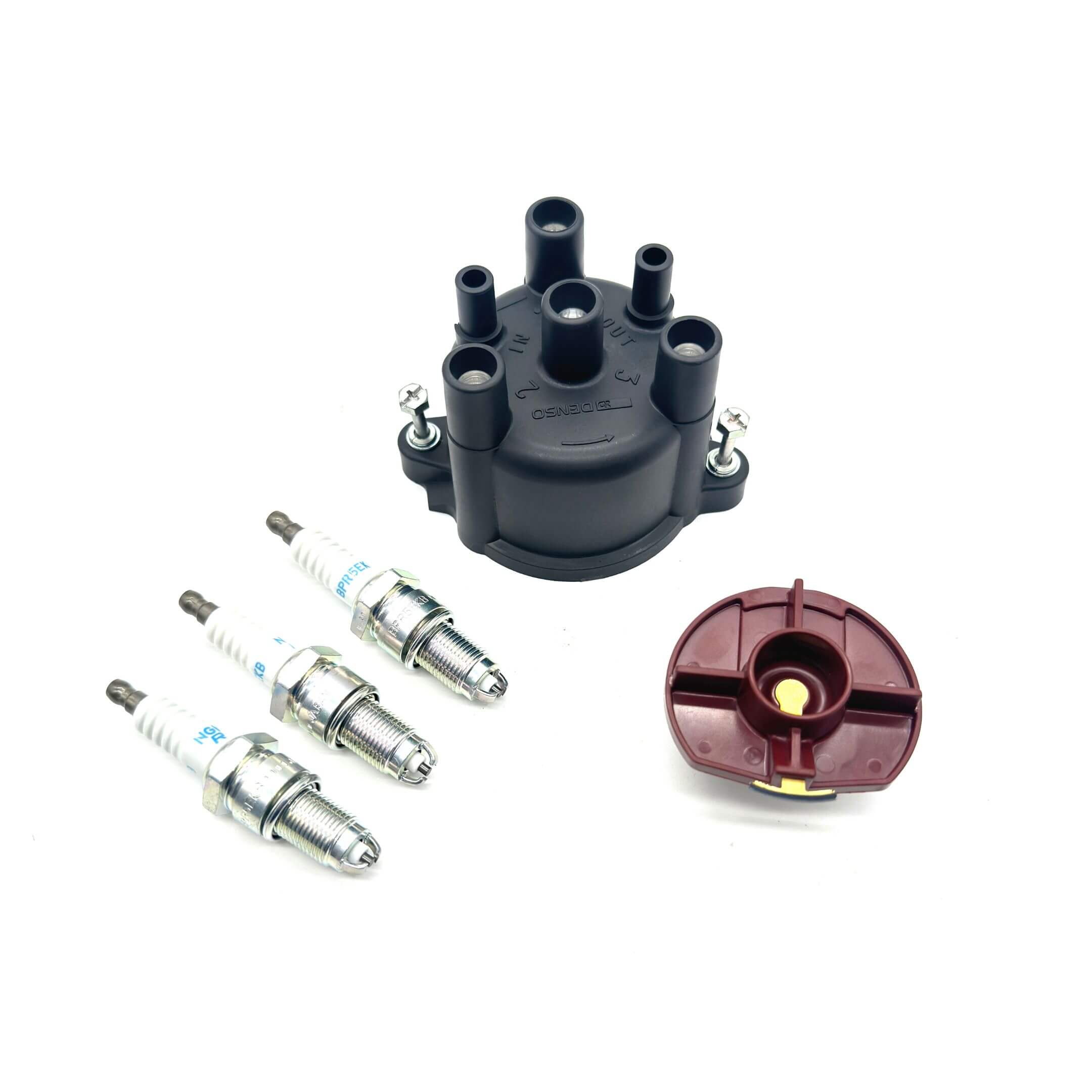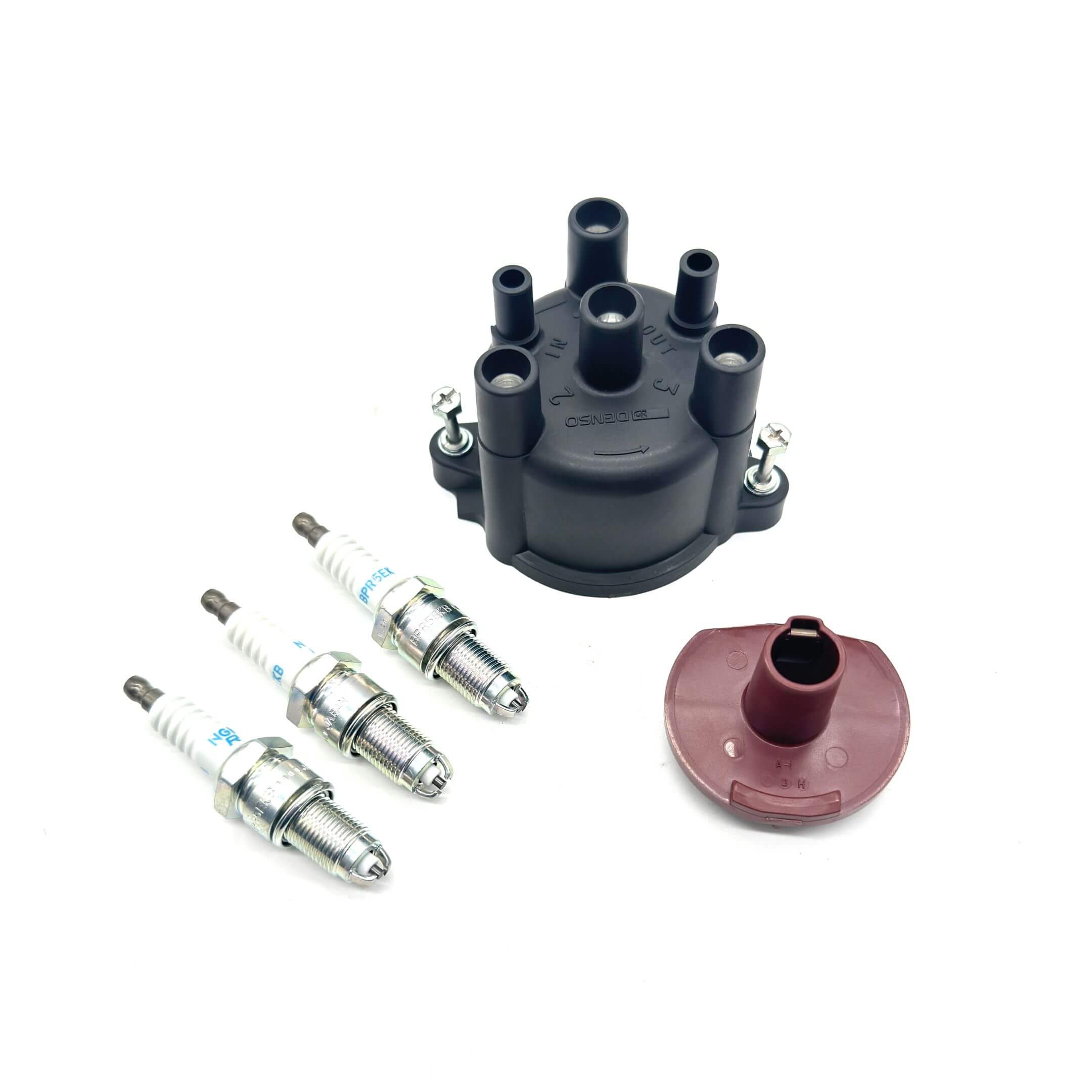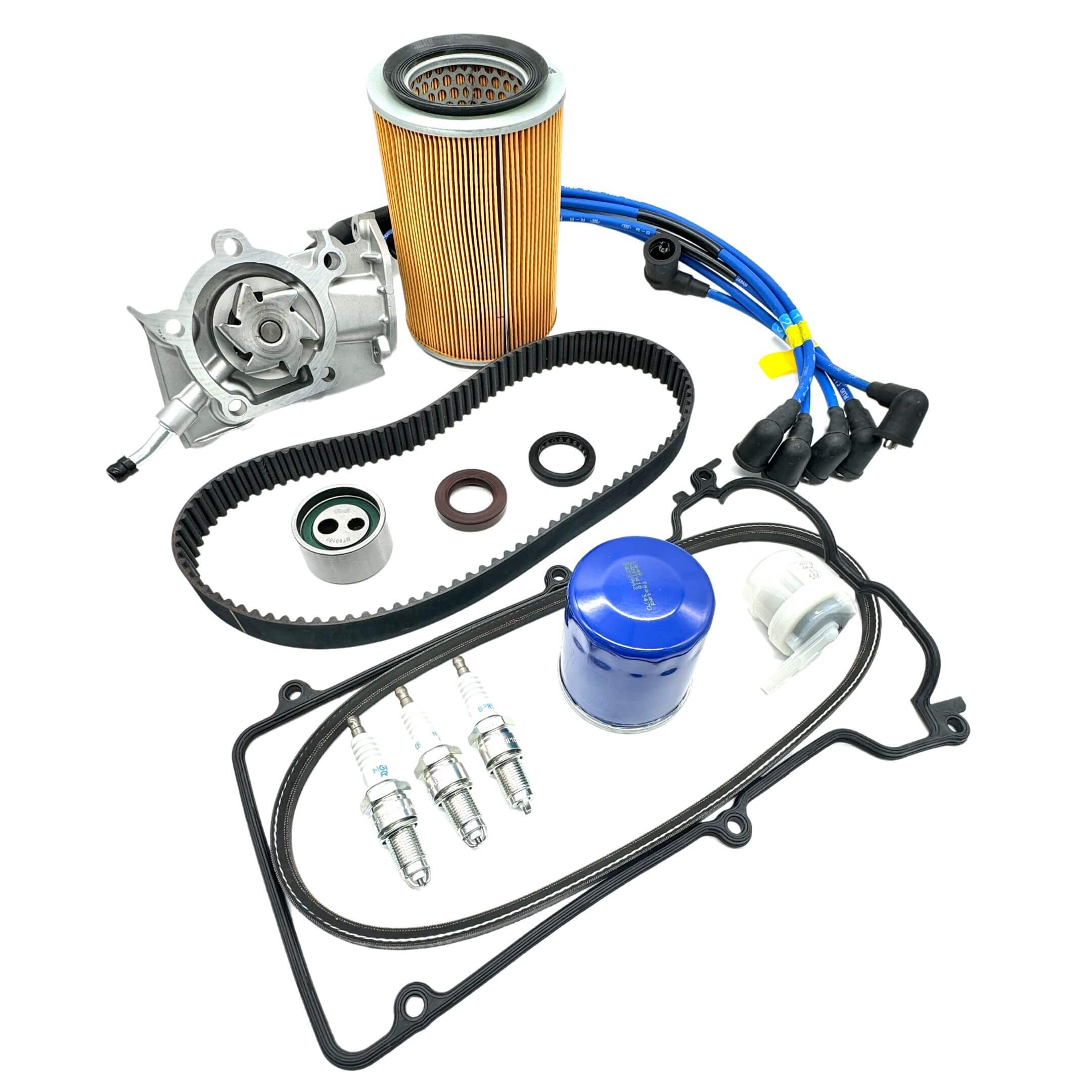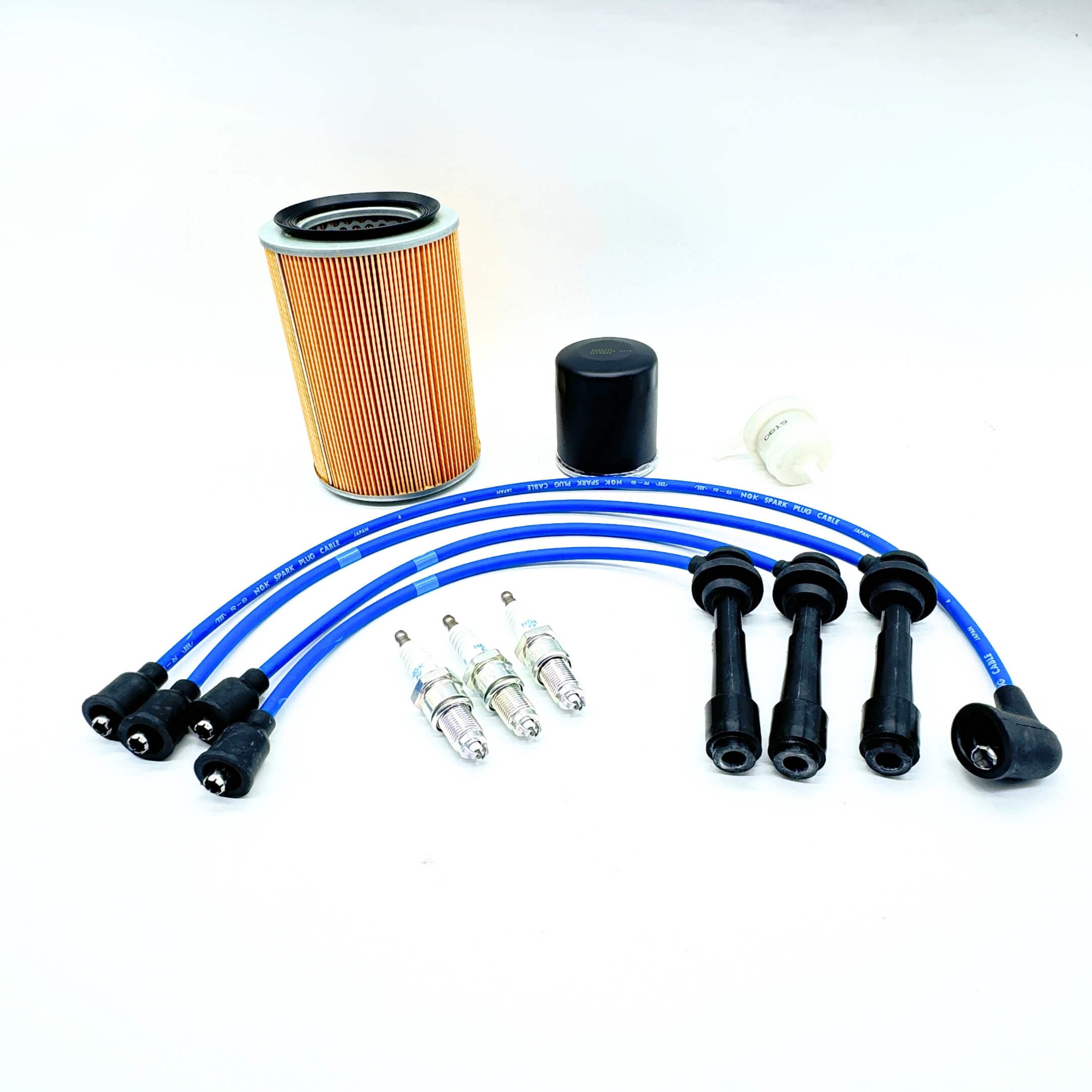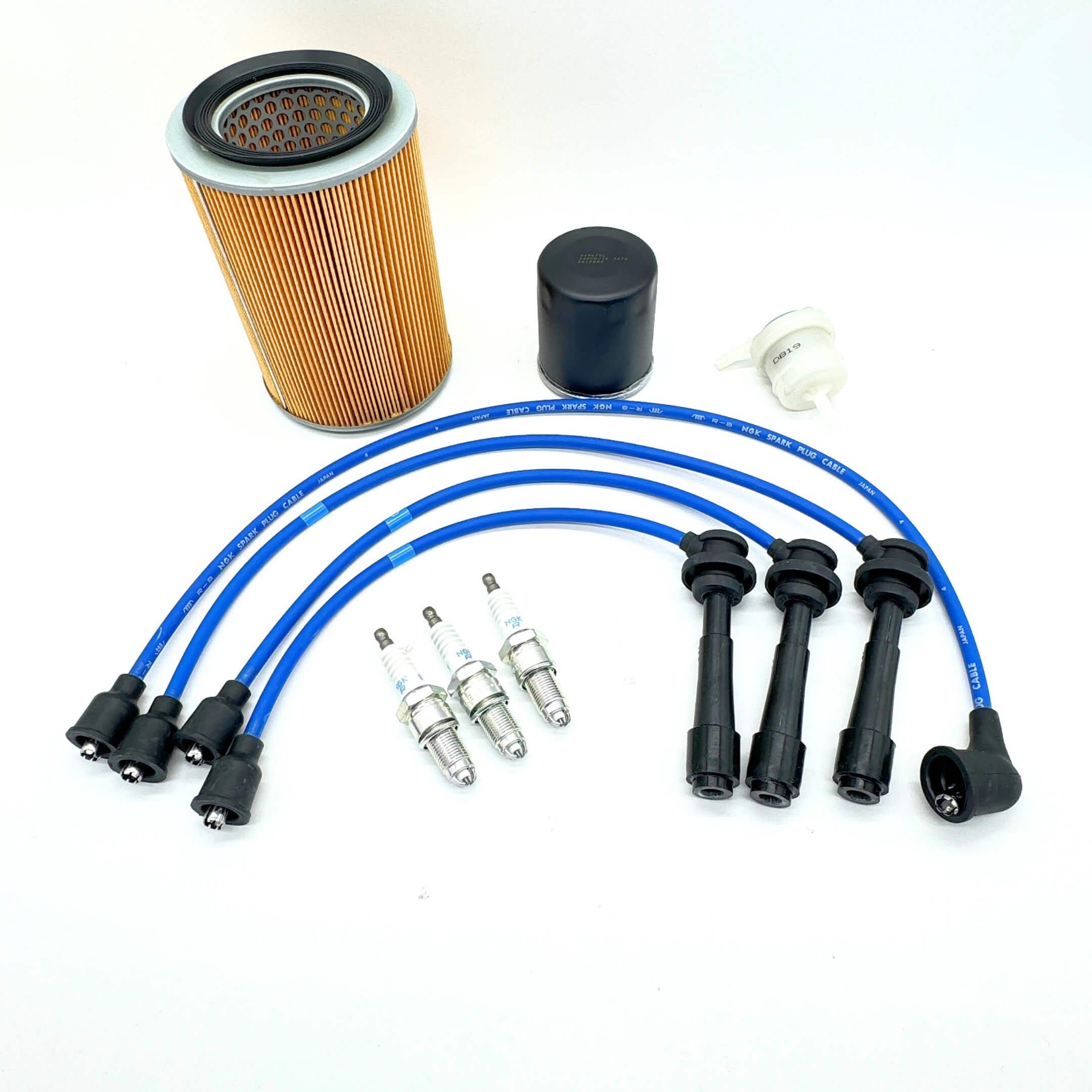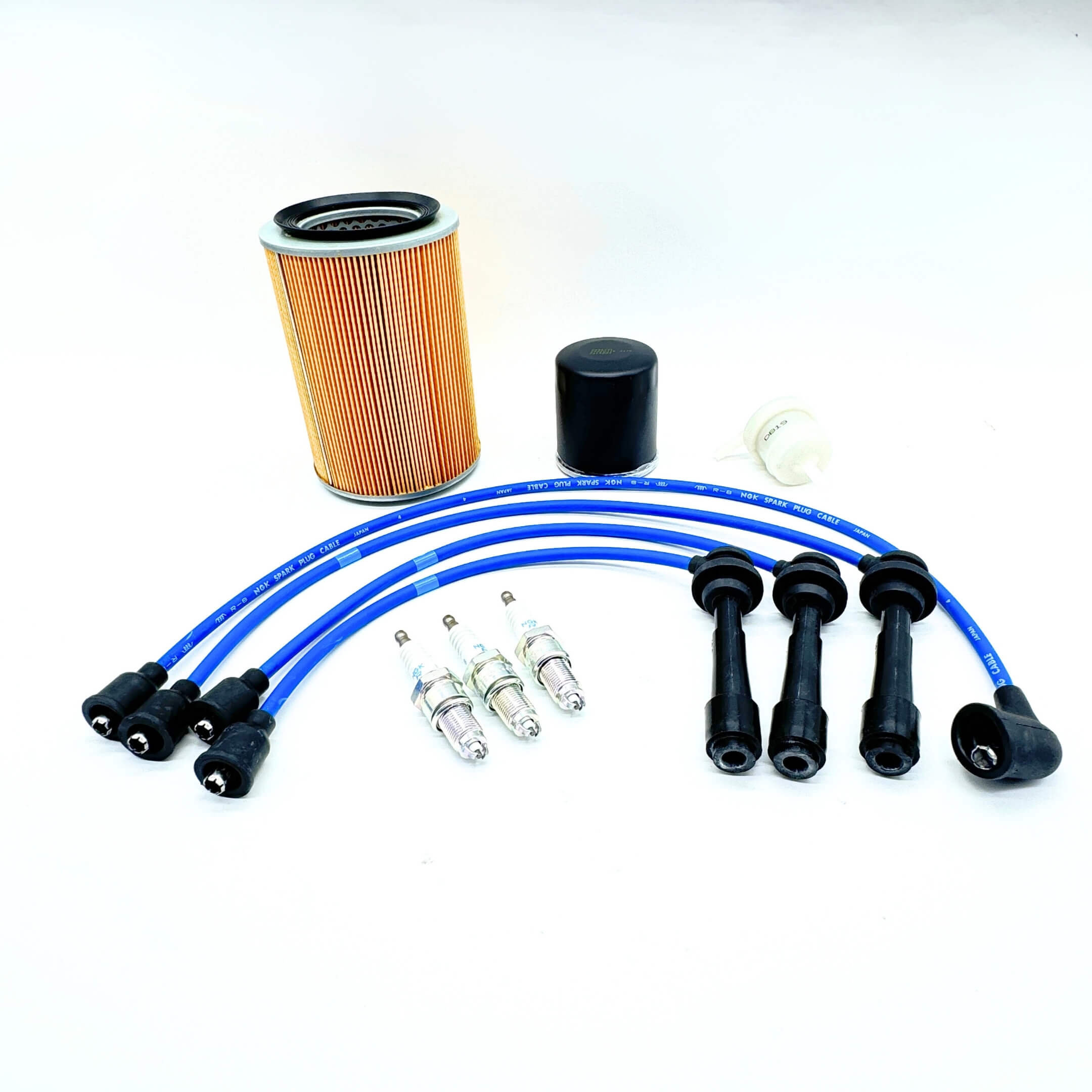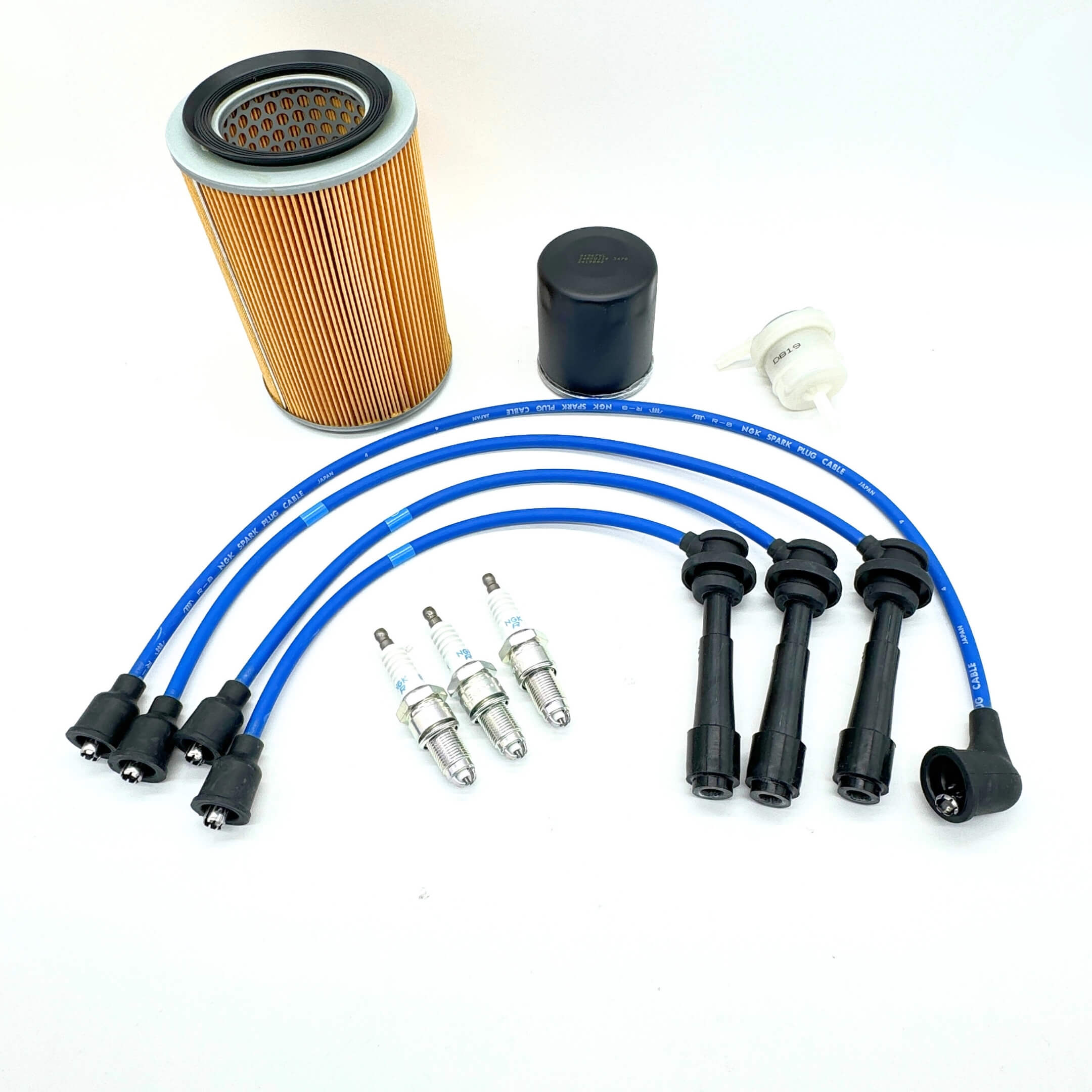
Daihatsu Hijet Ignition Tune Up Kits - S100, S110 Models - 1994-1998
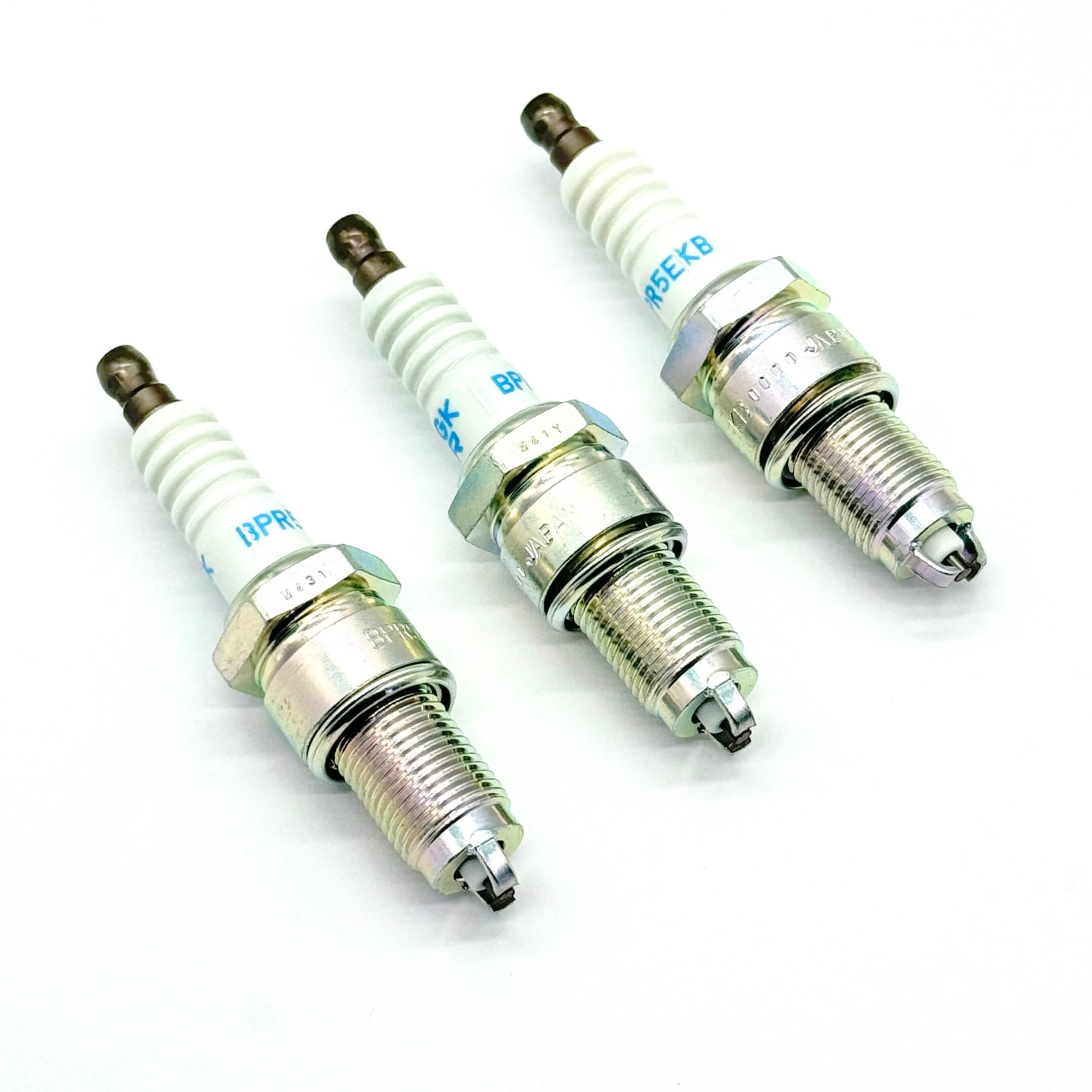
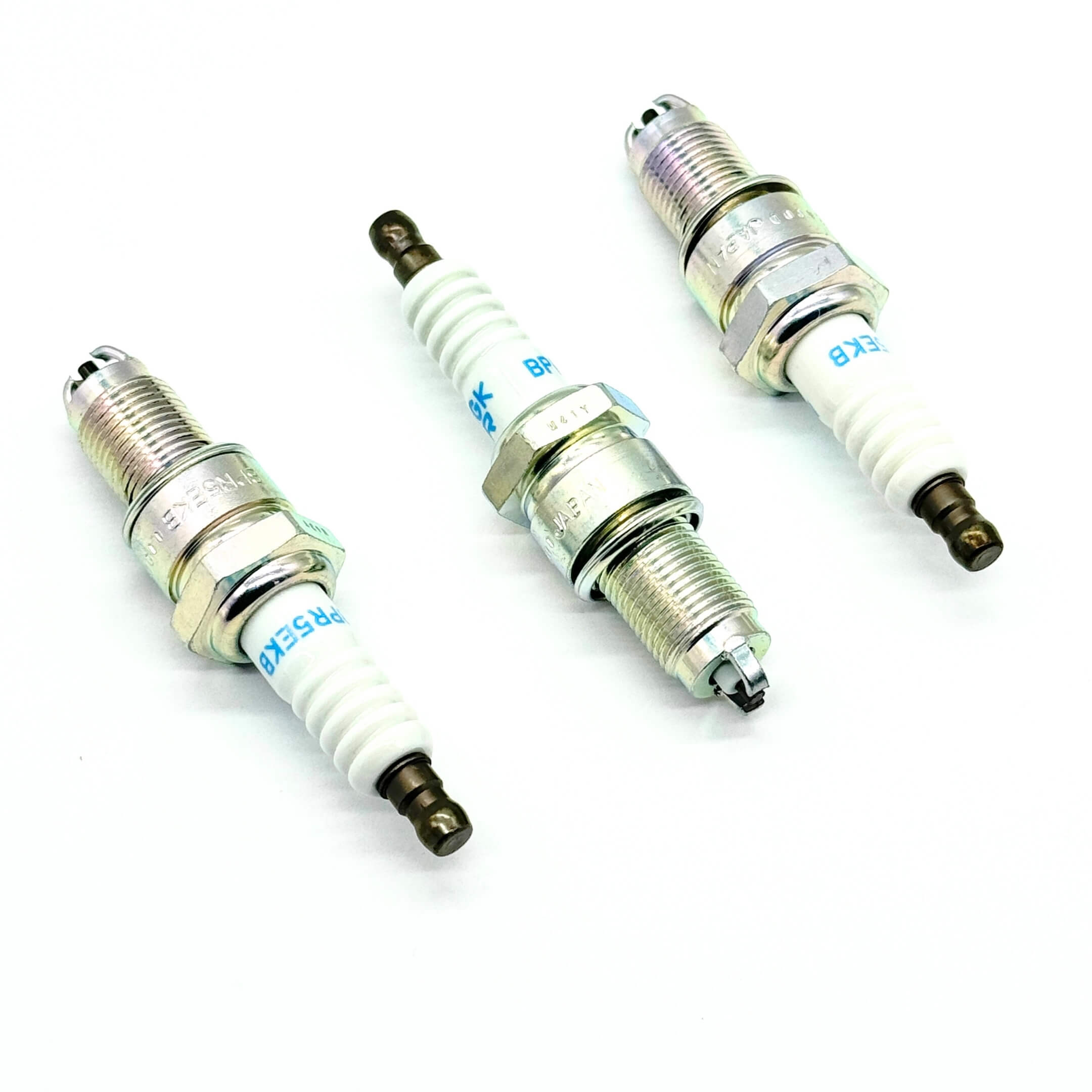
The parts that make and deliver spark: plugs, wires, caps and rotors, coils, and the kits that bundle them, matched by the ENGINE code on your identification plate.
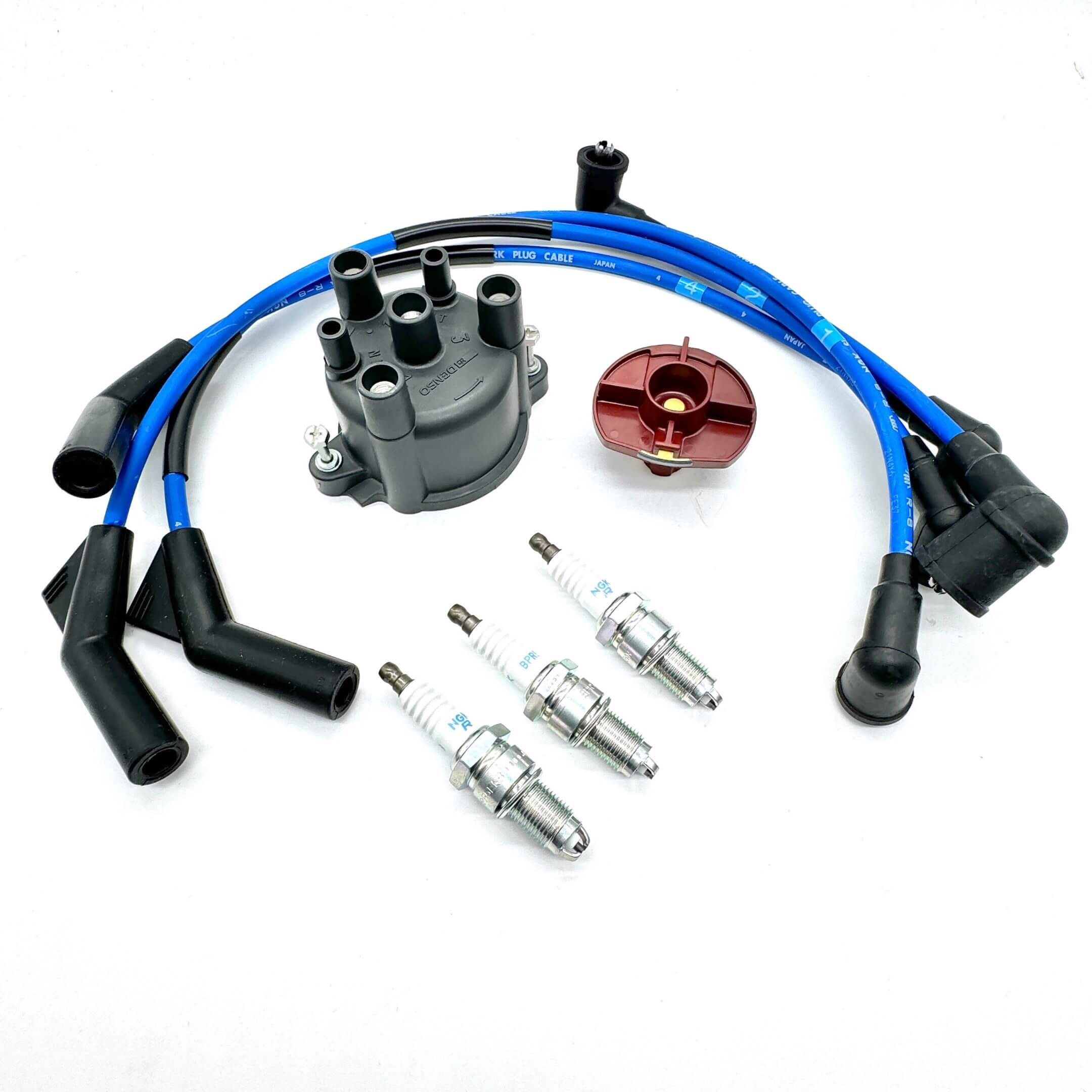
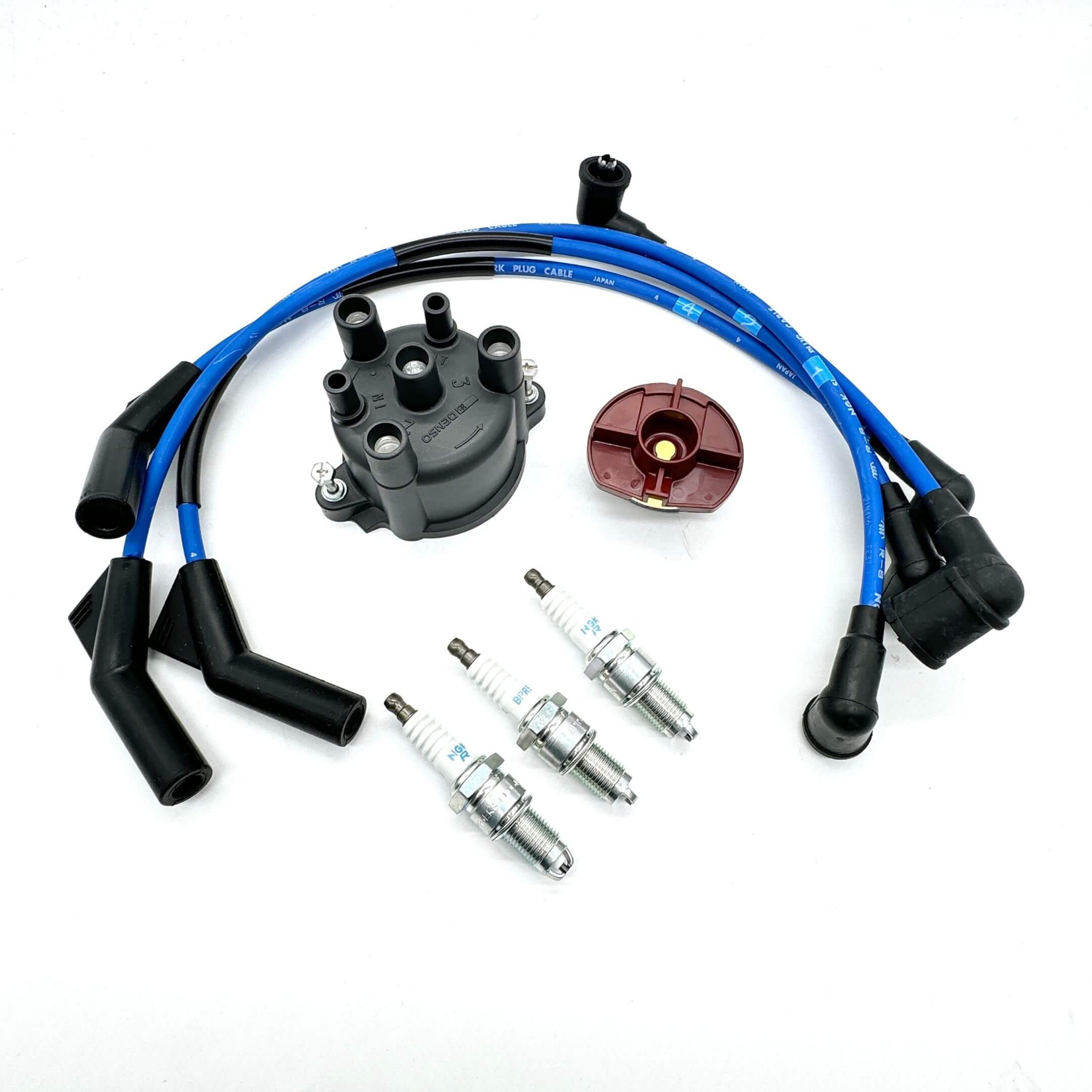
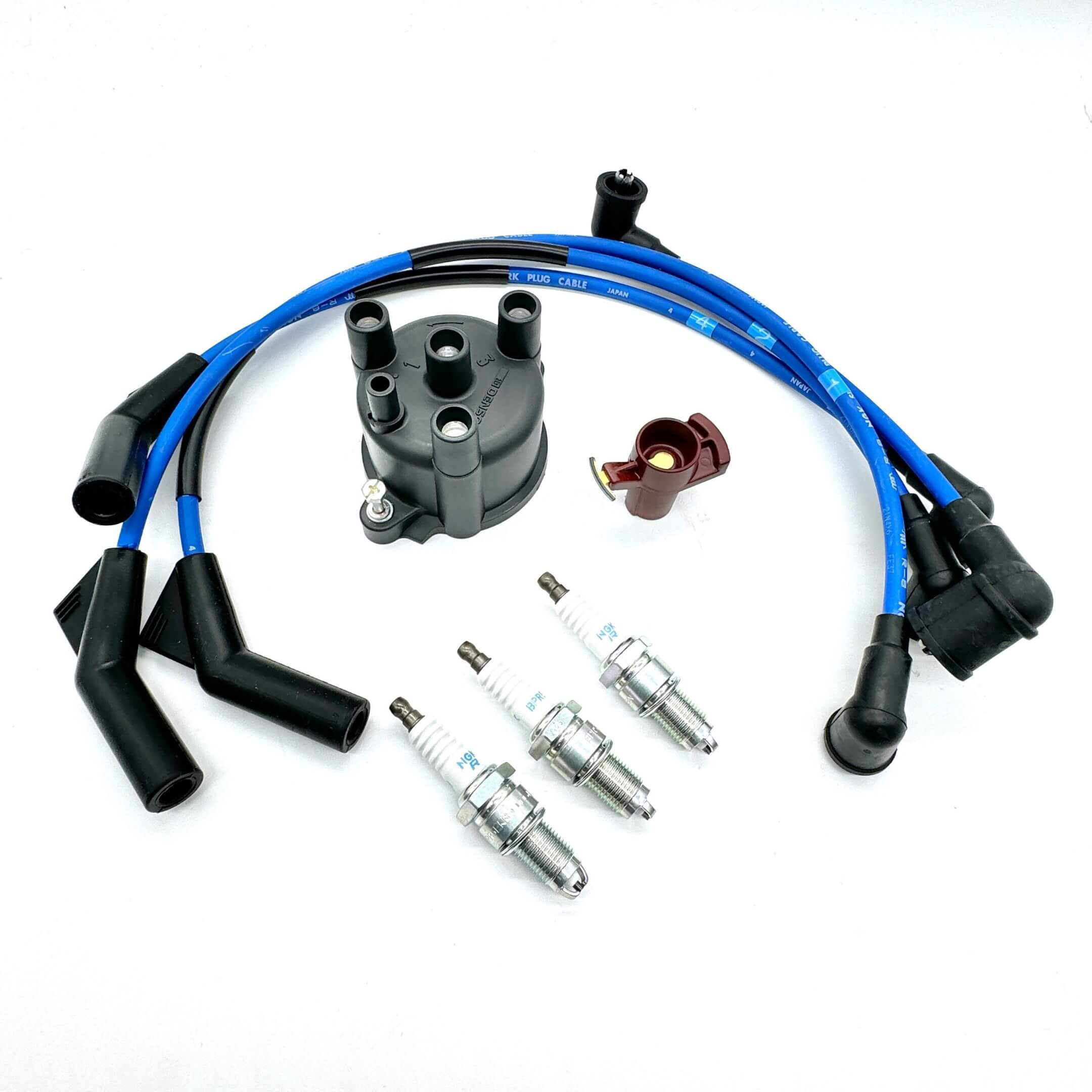
This collection carries the parts that make and deliver spark for the Daihatsu Hijet S100 and S110, 1994-1998: spark plugs, plug wires, distributor caps and rotors, ignition coils, and the kits that bundle them, matched by the ENGINE code on your identification plate.
Plugs, wires, caps, rotors, coils and kits, matched by ENGINE code.
A 1990s Kei truck tells you about ignition trouble through the seat of your pants, not a scan tool.
Some catalog applications extend to S120 and S130 or to specific production months where the product states it, so confirm the fitment on the individual product before ordering.
Find Your Truck
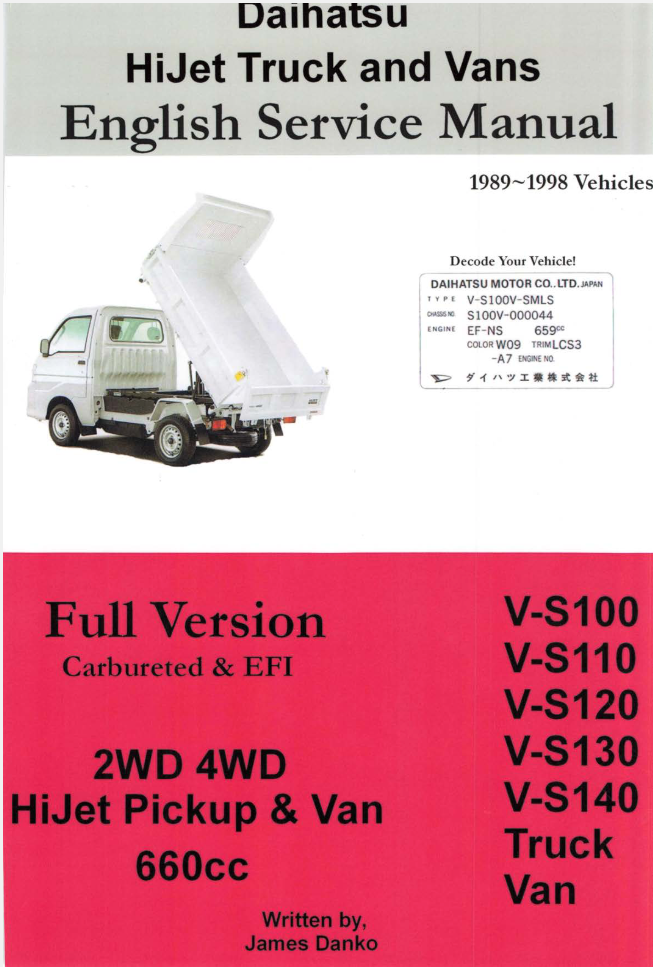
The identification plate carries two lines that matter here. The CHASSIS NO. starts with S100 or S110. The ENGINE line names the code that chooses every part and every setting on this page. Read it before you order anything.


Three engines are documented by the 1994 factory manual this page draws from: EF-NS carbureted, EF-ES injected, and EF-TS turbo. The catalog also carries parts for the later twin-cam codes EF-GS, EF-ZS, and EF-RS, matched by current catalog application rather than by that manual. Not sure what you have? Add the ENGINE line at checkout and we will match it before shipping.
Choose Your Parts
Every part here makes spark or delivers it. Find the category, then match the part to your engine code in the engine table below.
| Category | What is in it |
|---|---|
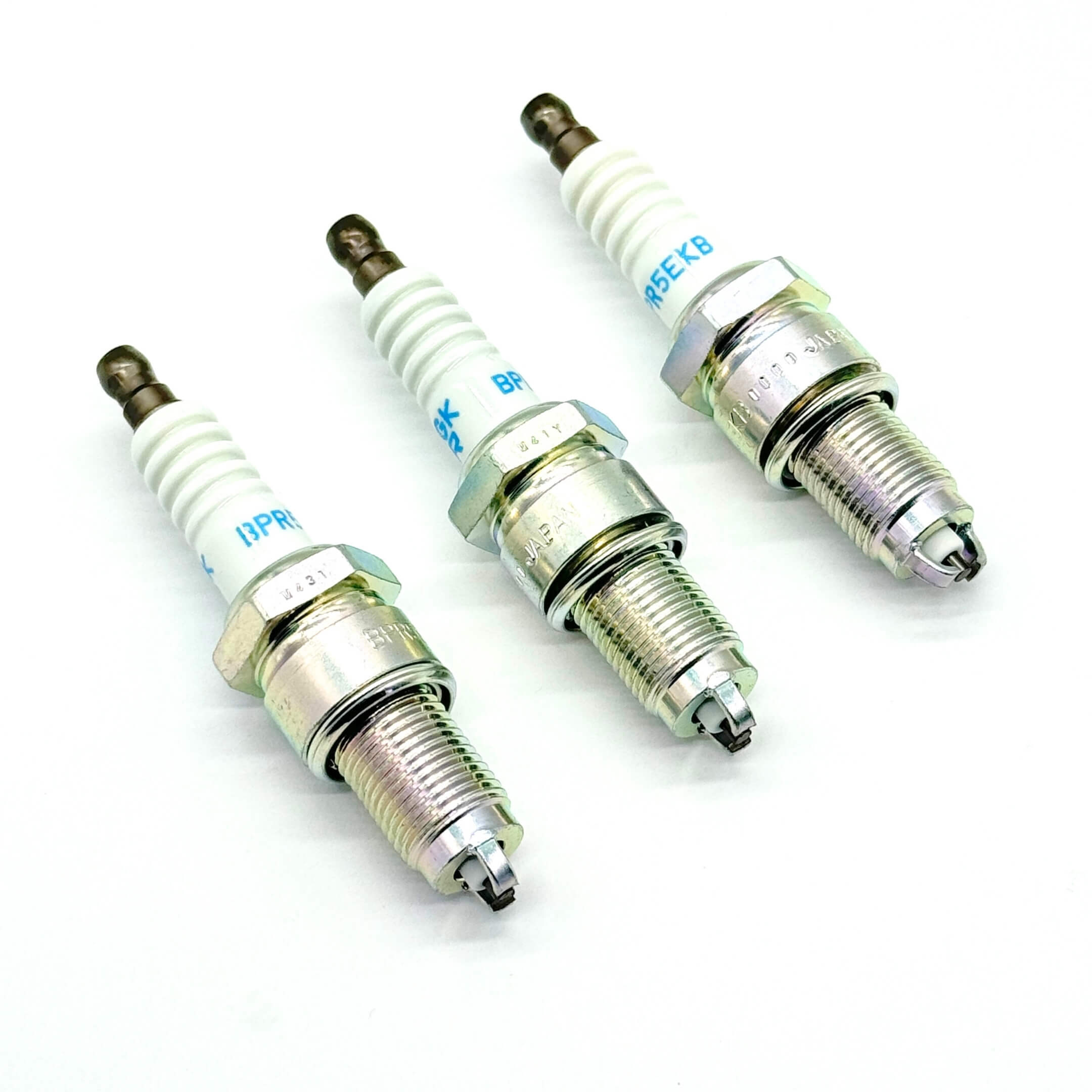
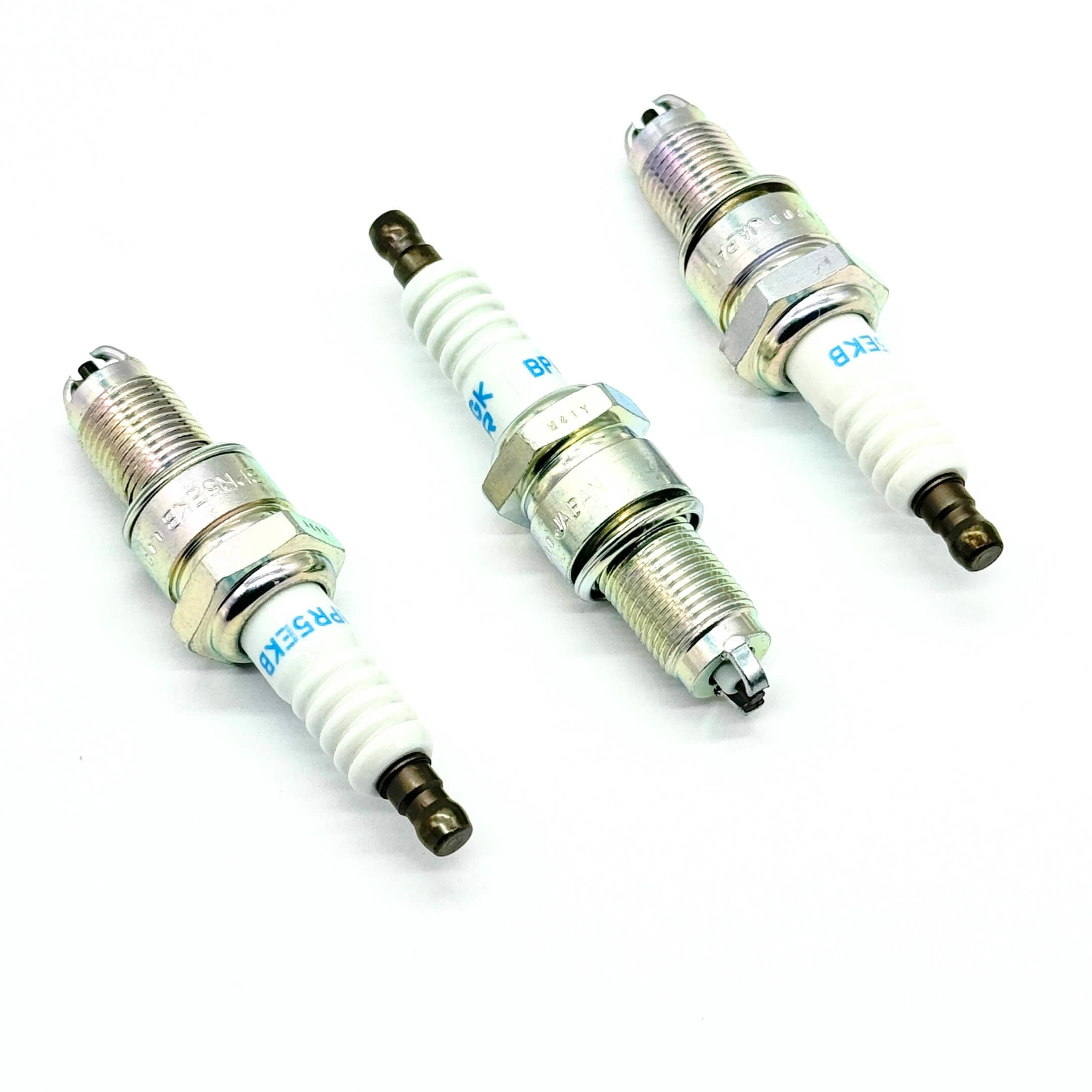
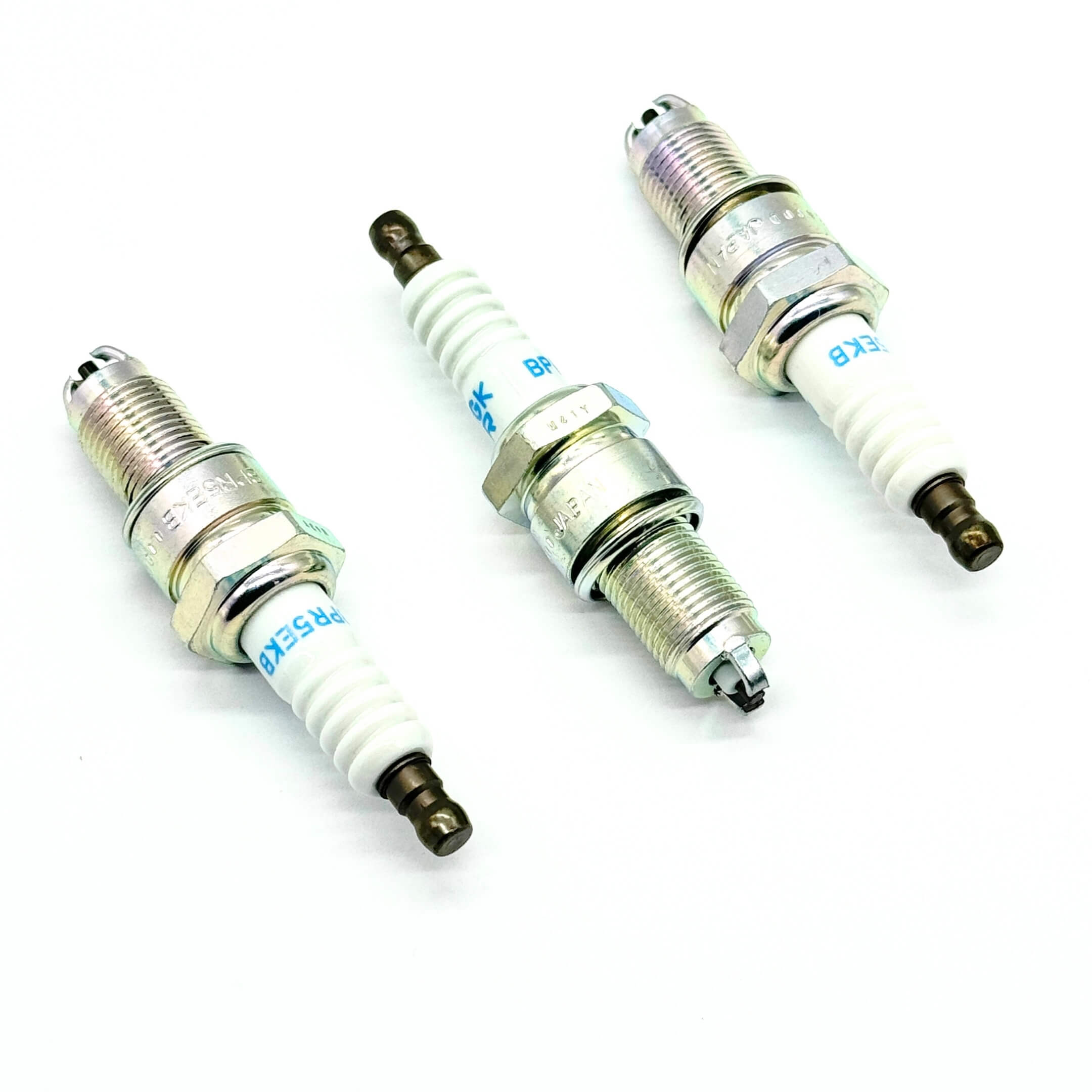
| Spark plugs | Engine-code matched plugs, gapped for the factory 0.9-1.0 mm spec. |
| Plug wires | Resistive cords in truck and van routings, split by production window where the factory changed the set. |
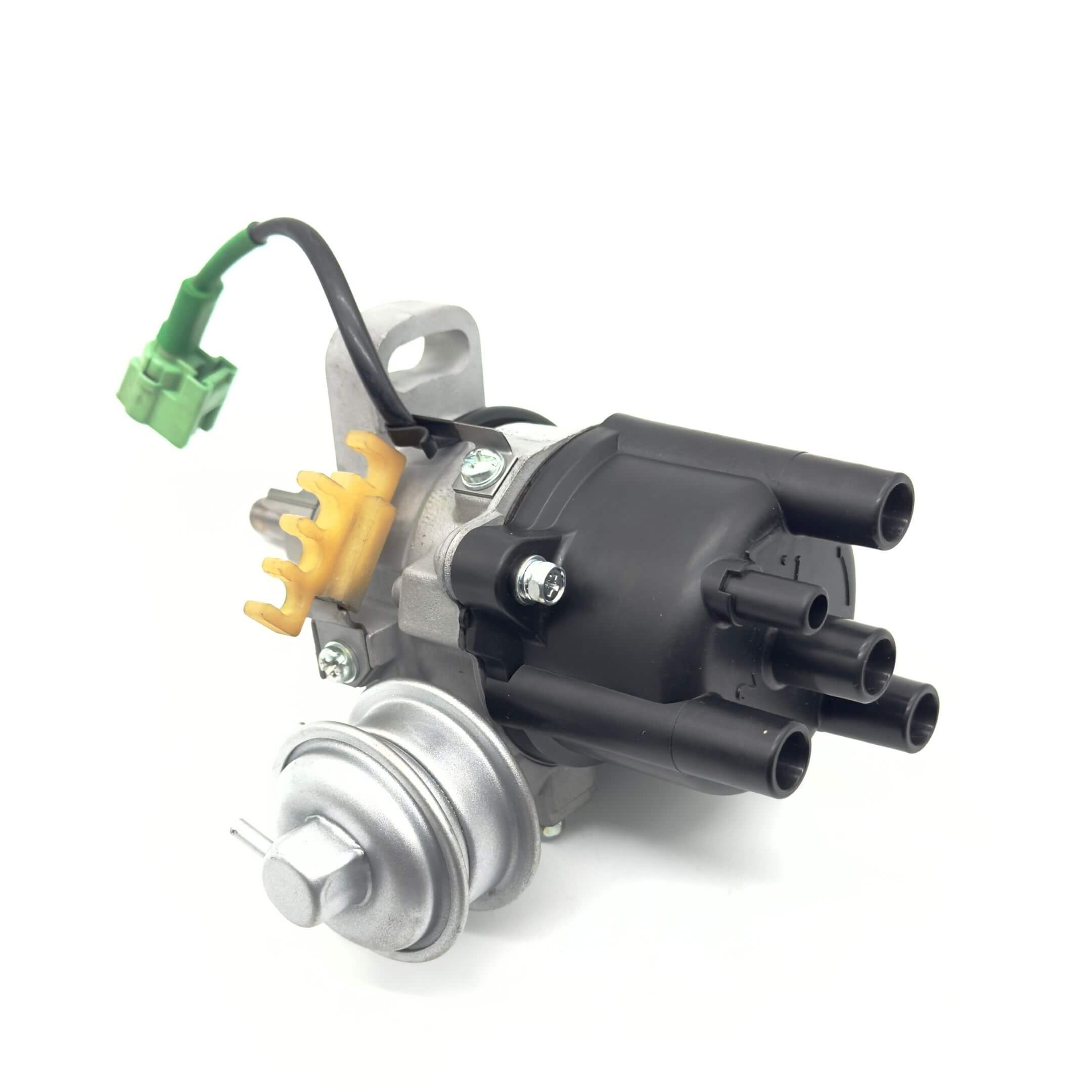
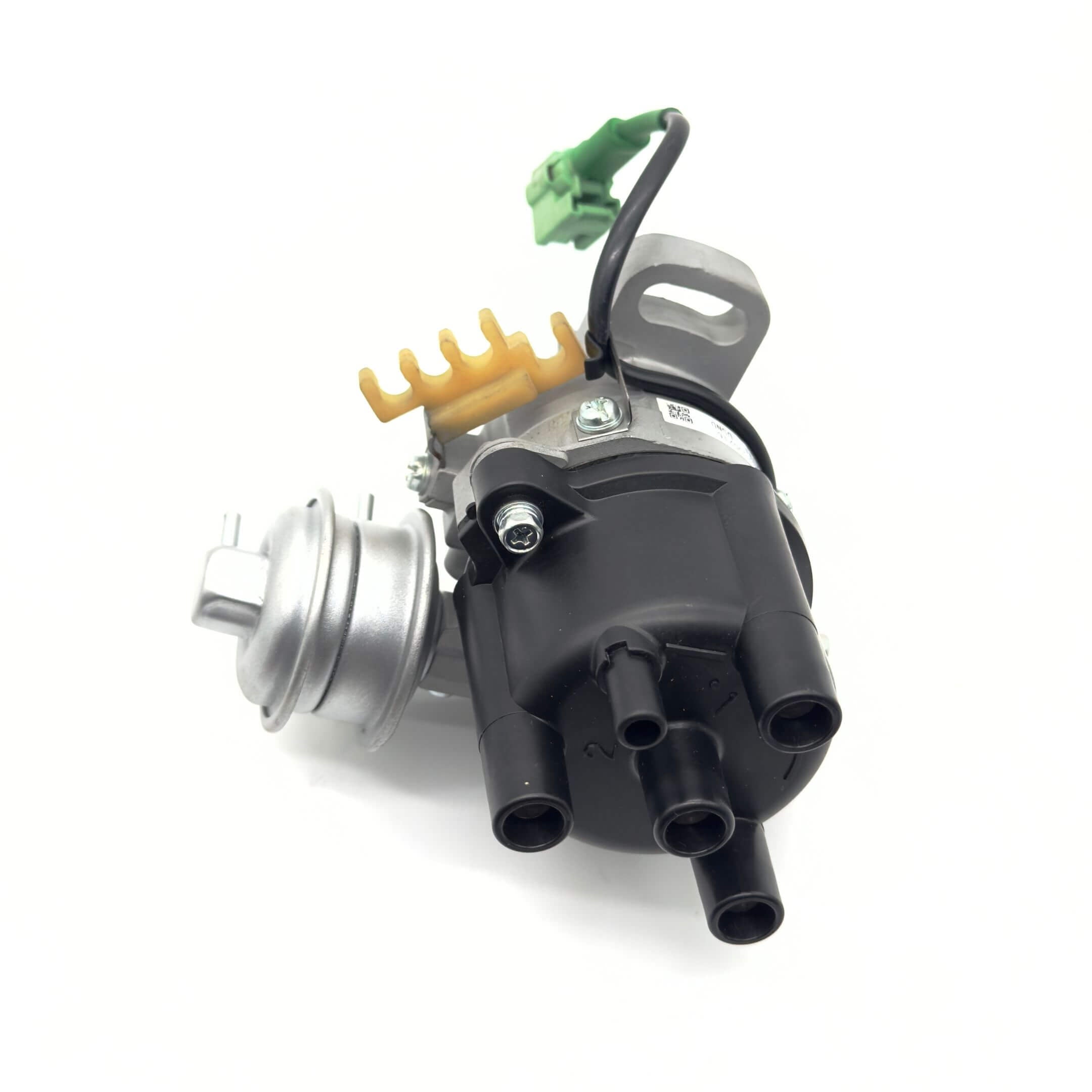
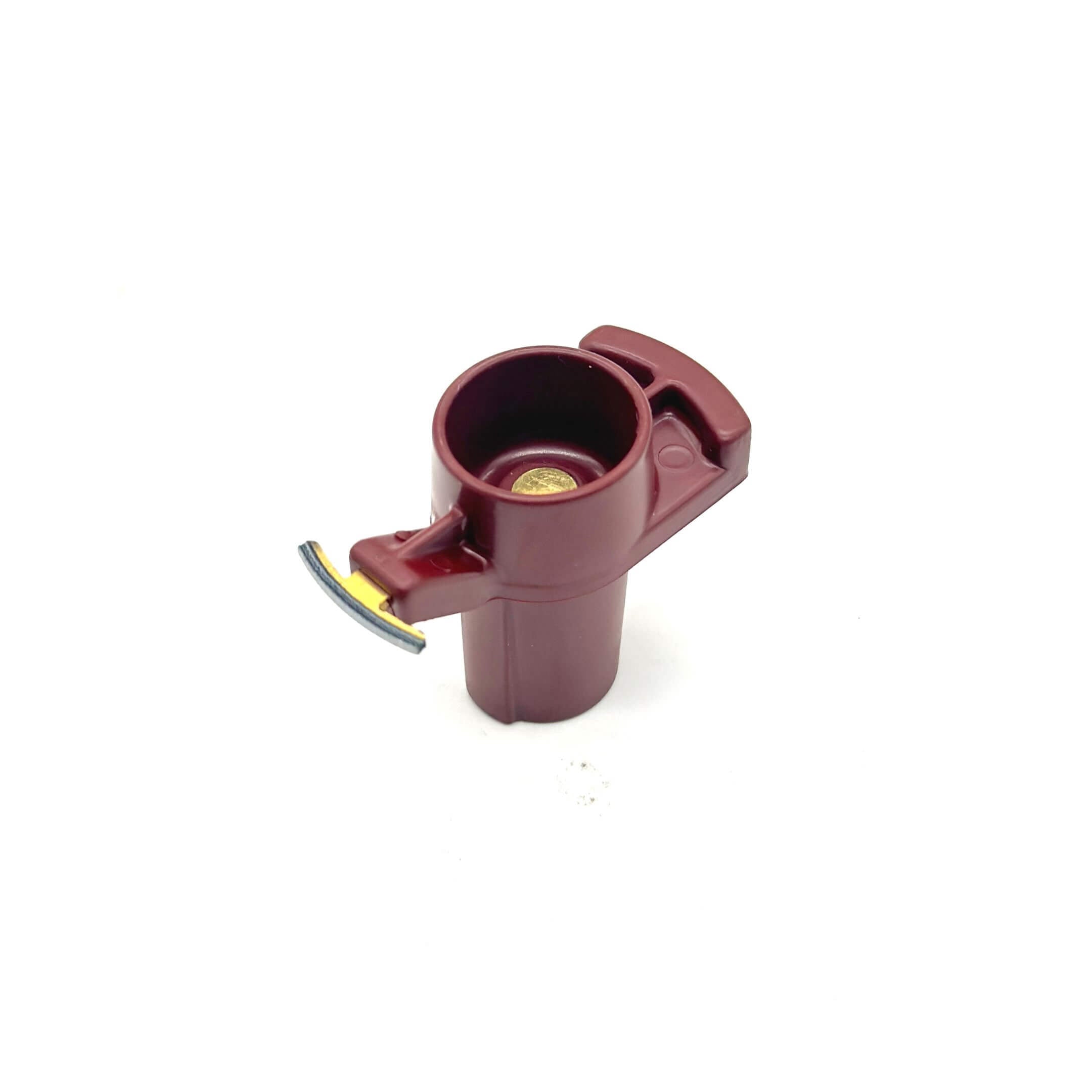
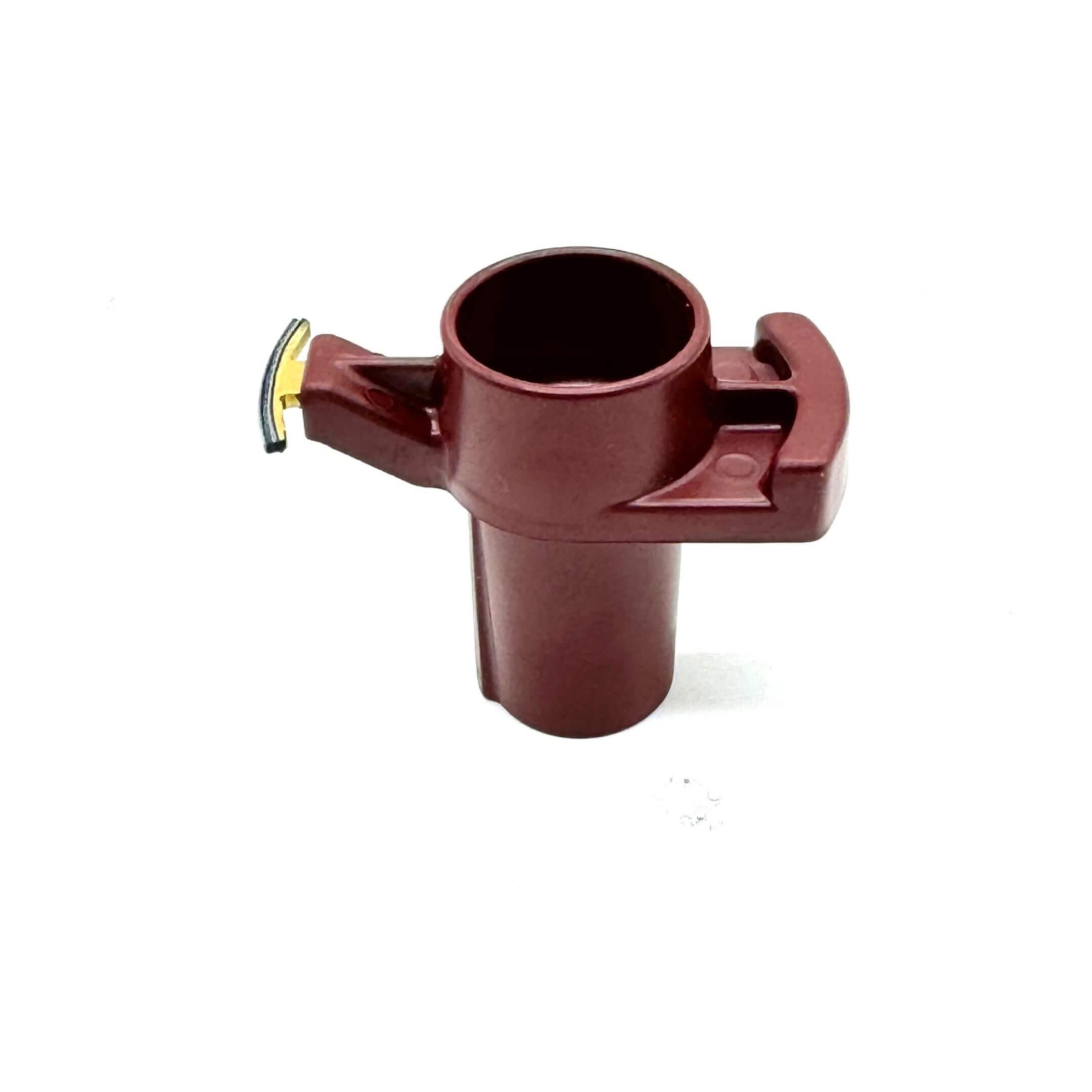
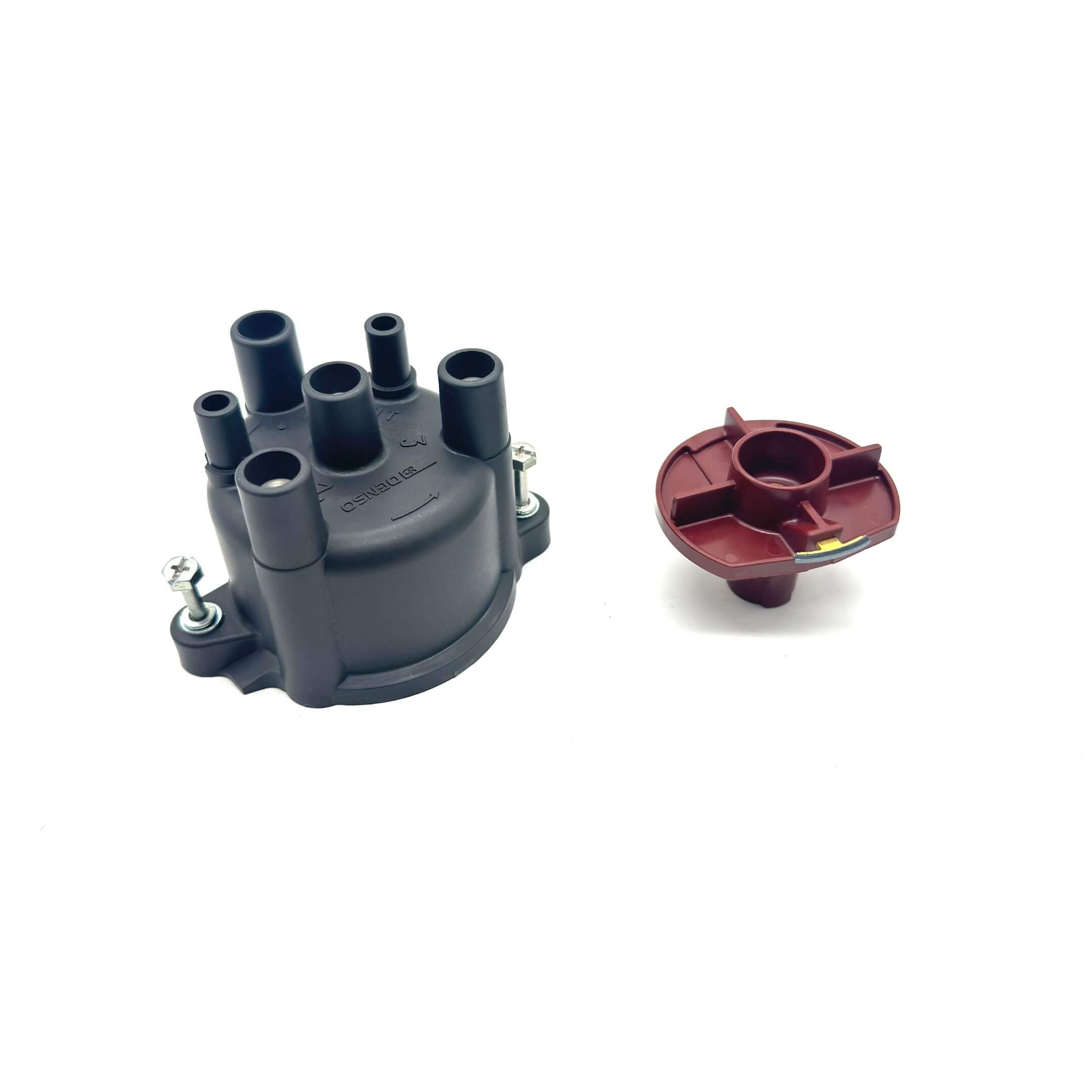
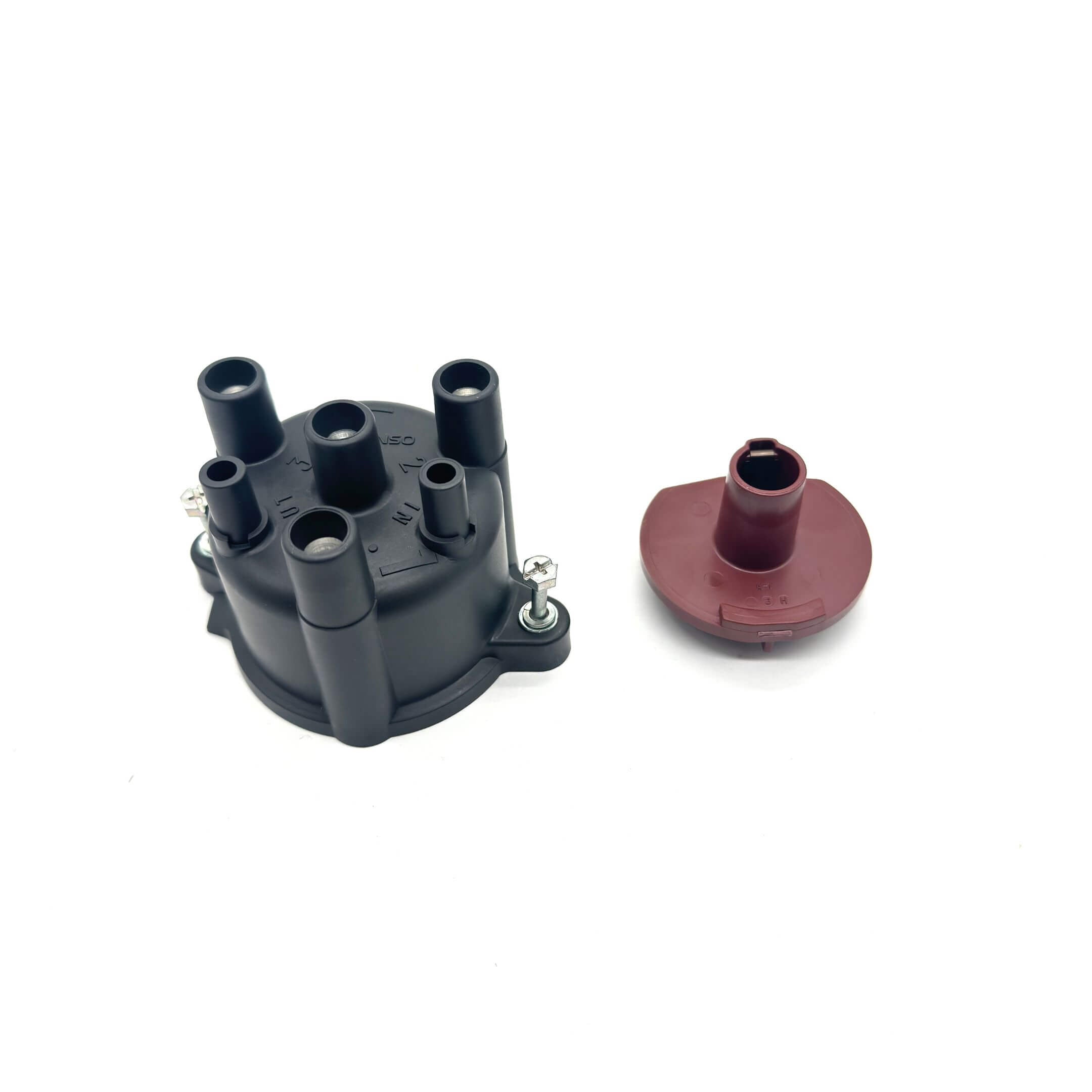
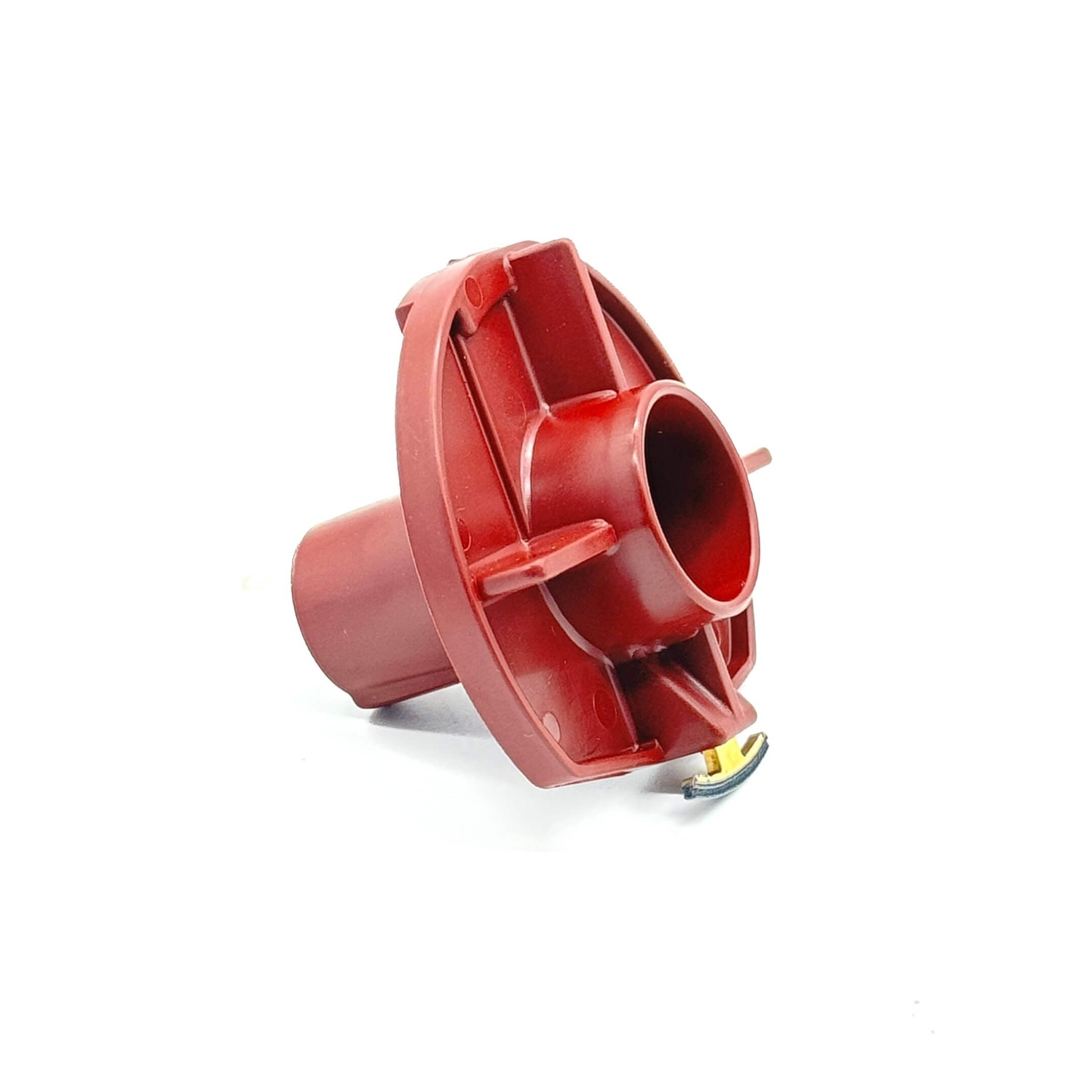
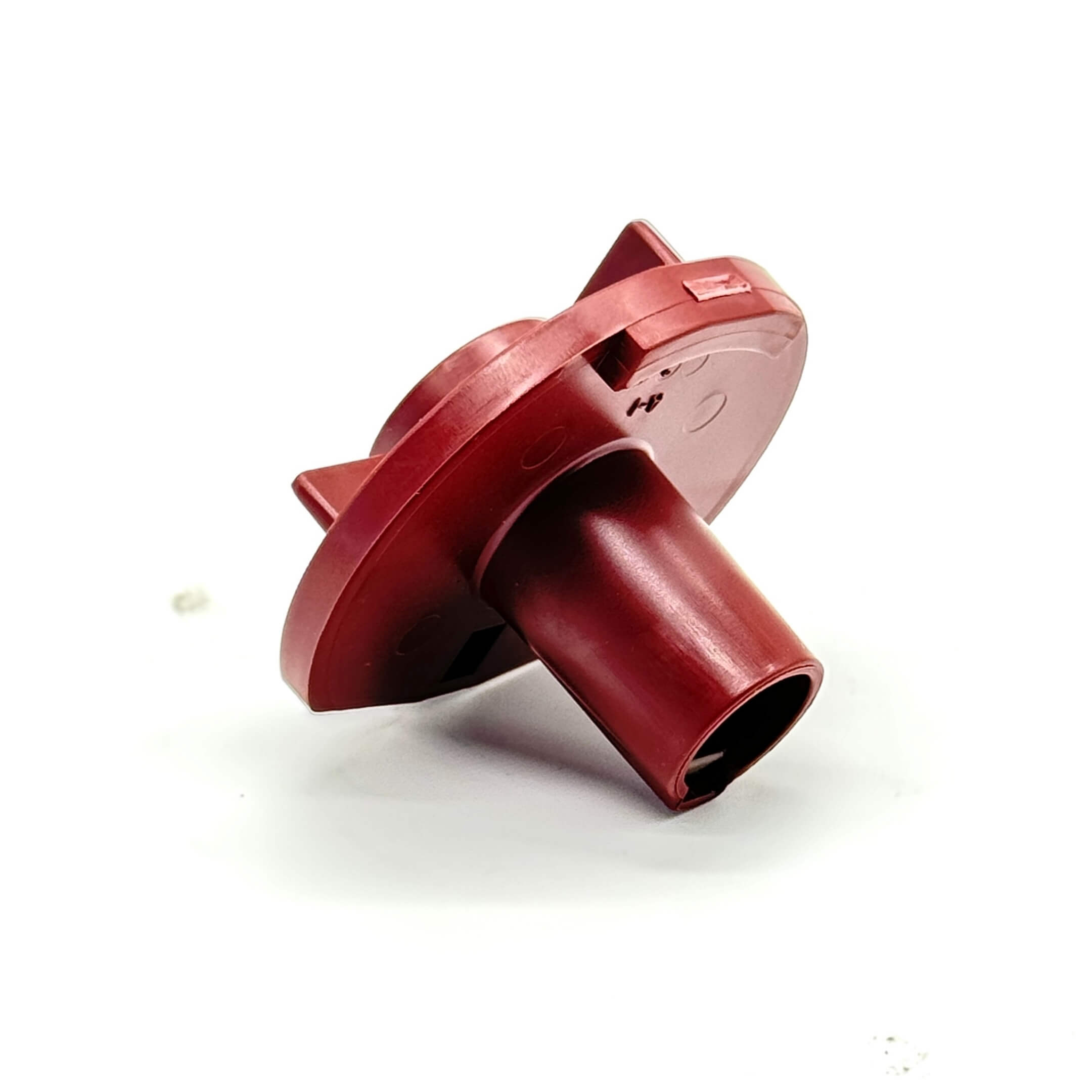
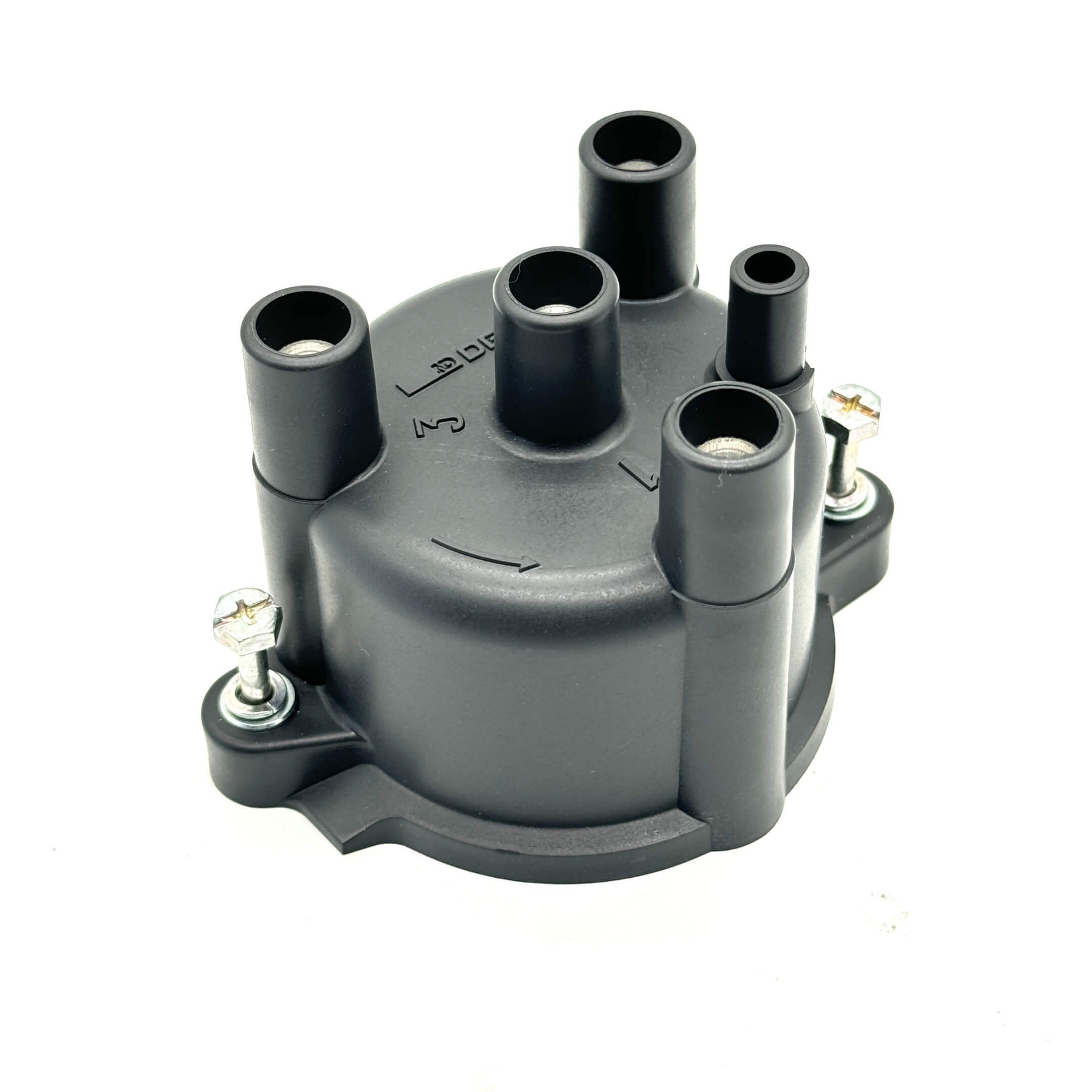
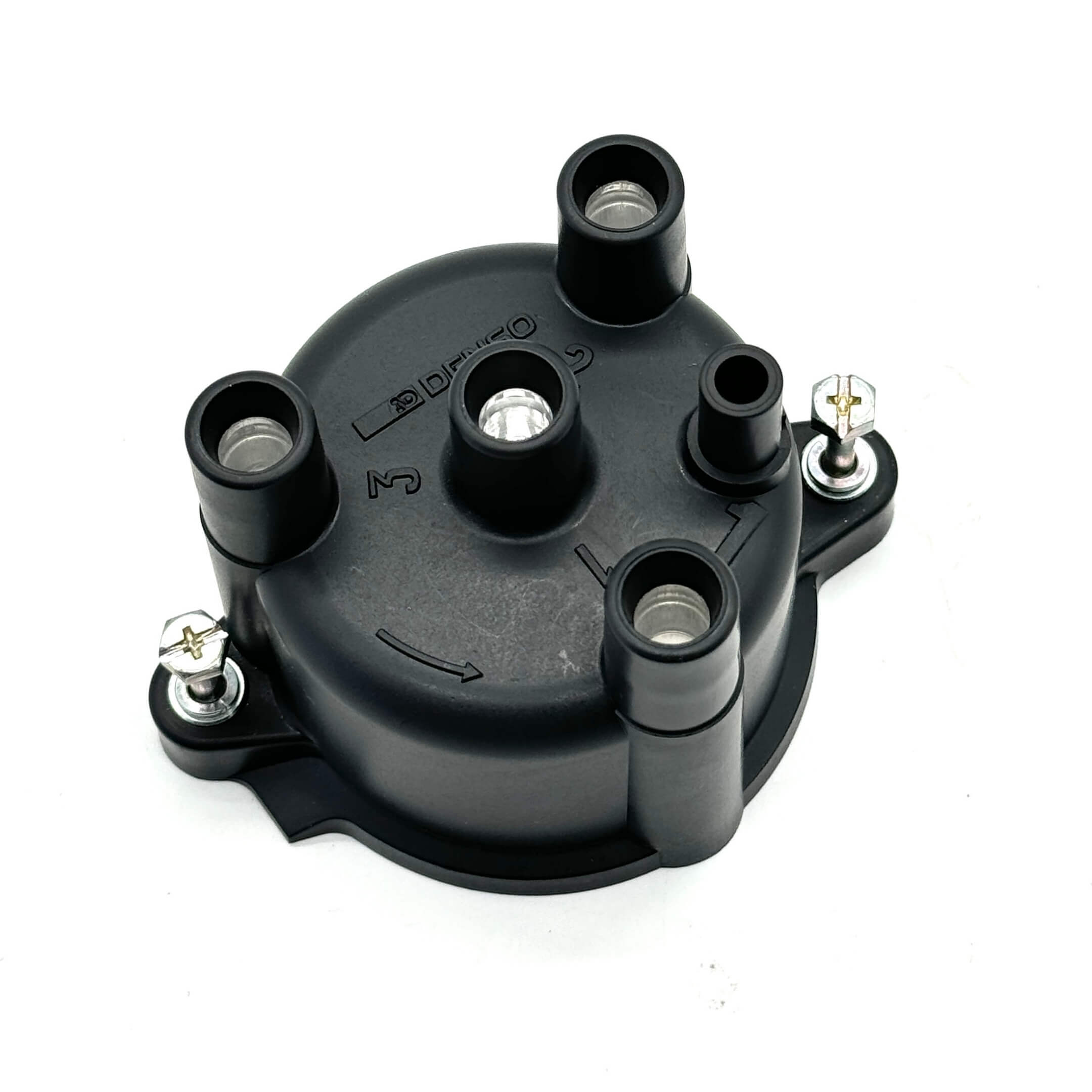
| Distributor caps & rotors | Caps and rotors for the distributor engines, including the earlier single-vent style used up to 1994. |
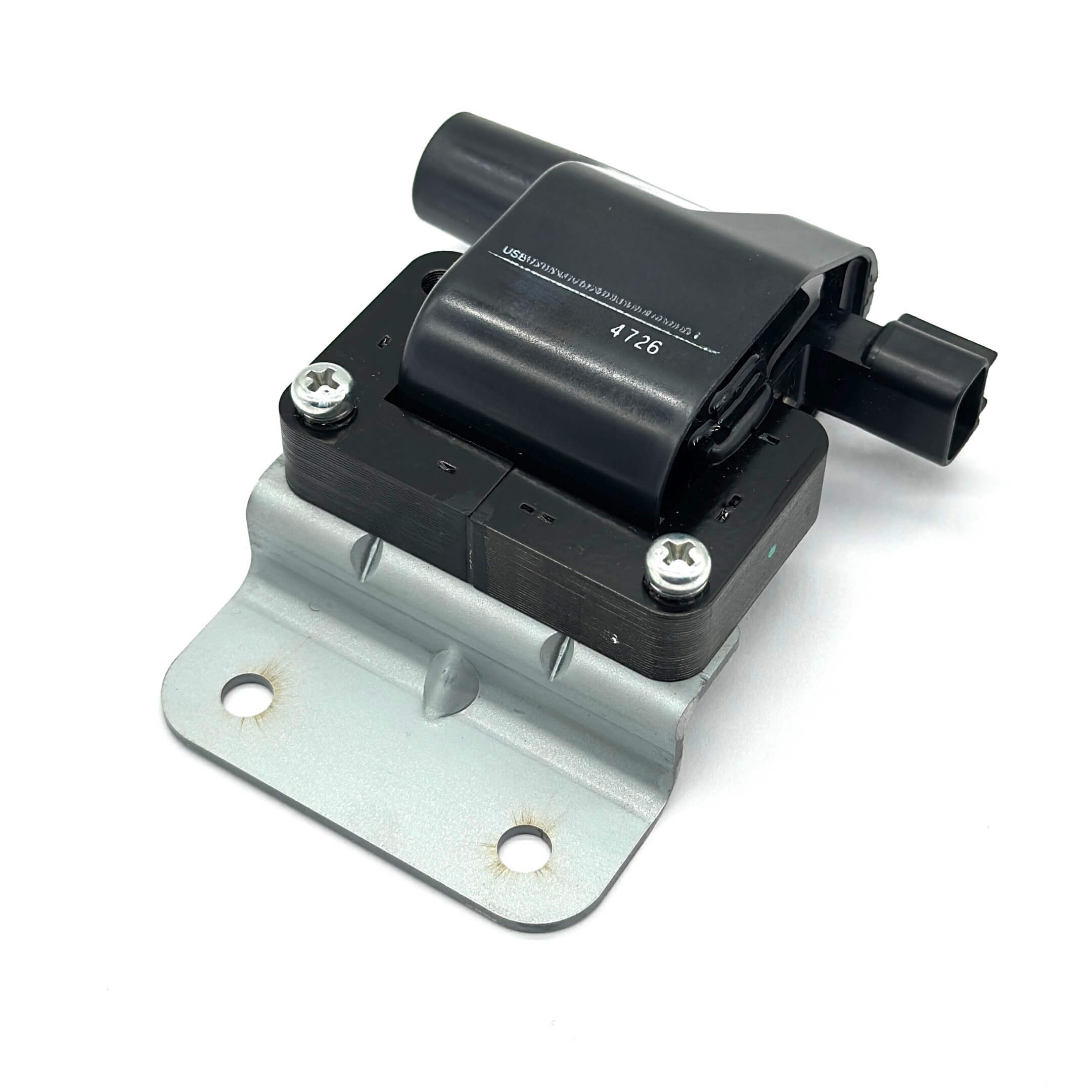
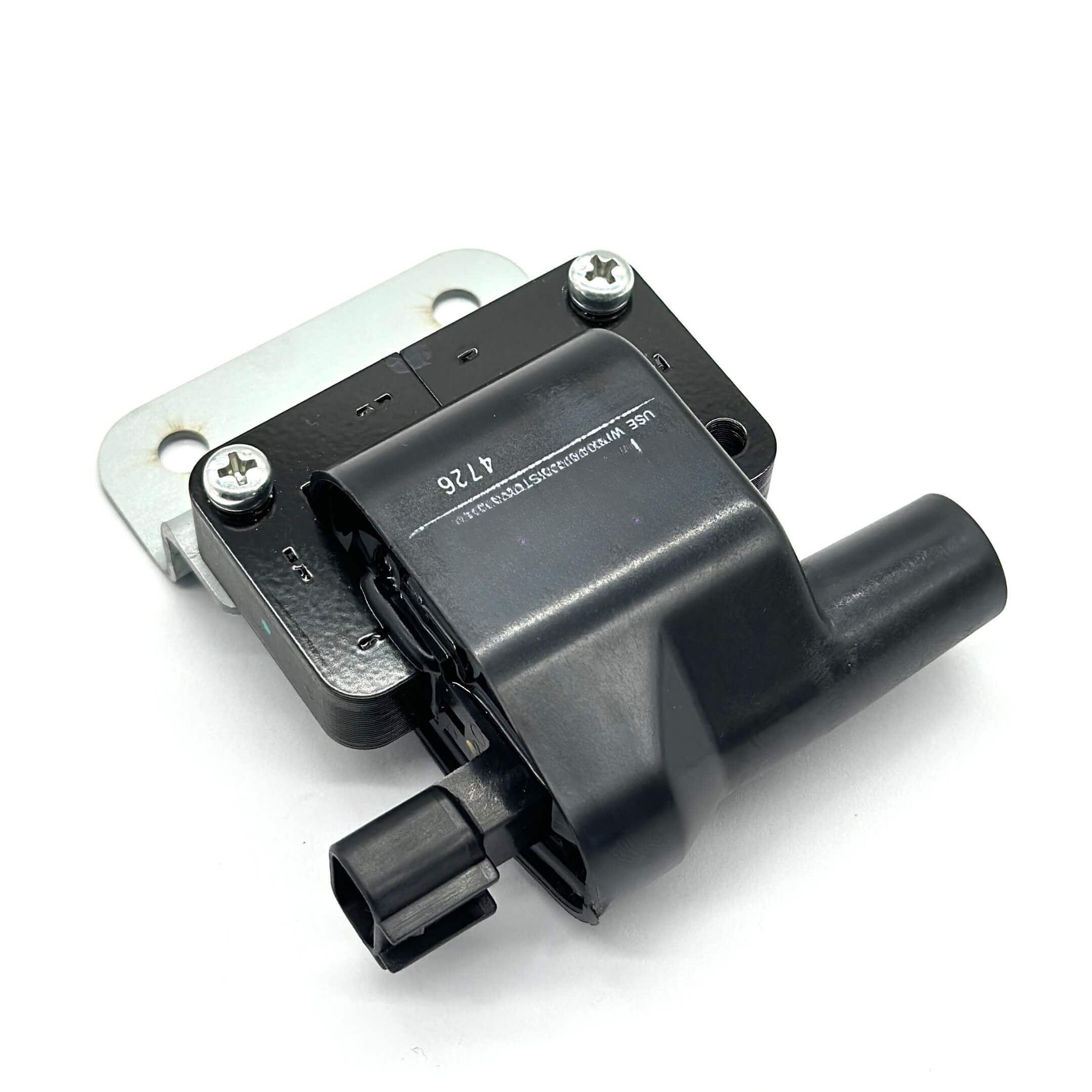
| Ignition coils | Coils for the single-cam engines plus coil packs for the later twin-cam engines, matched by engine code. |
| Bare distributor | A complete replacement distributor for the carbureted EF-NS. |
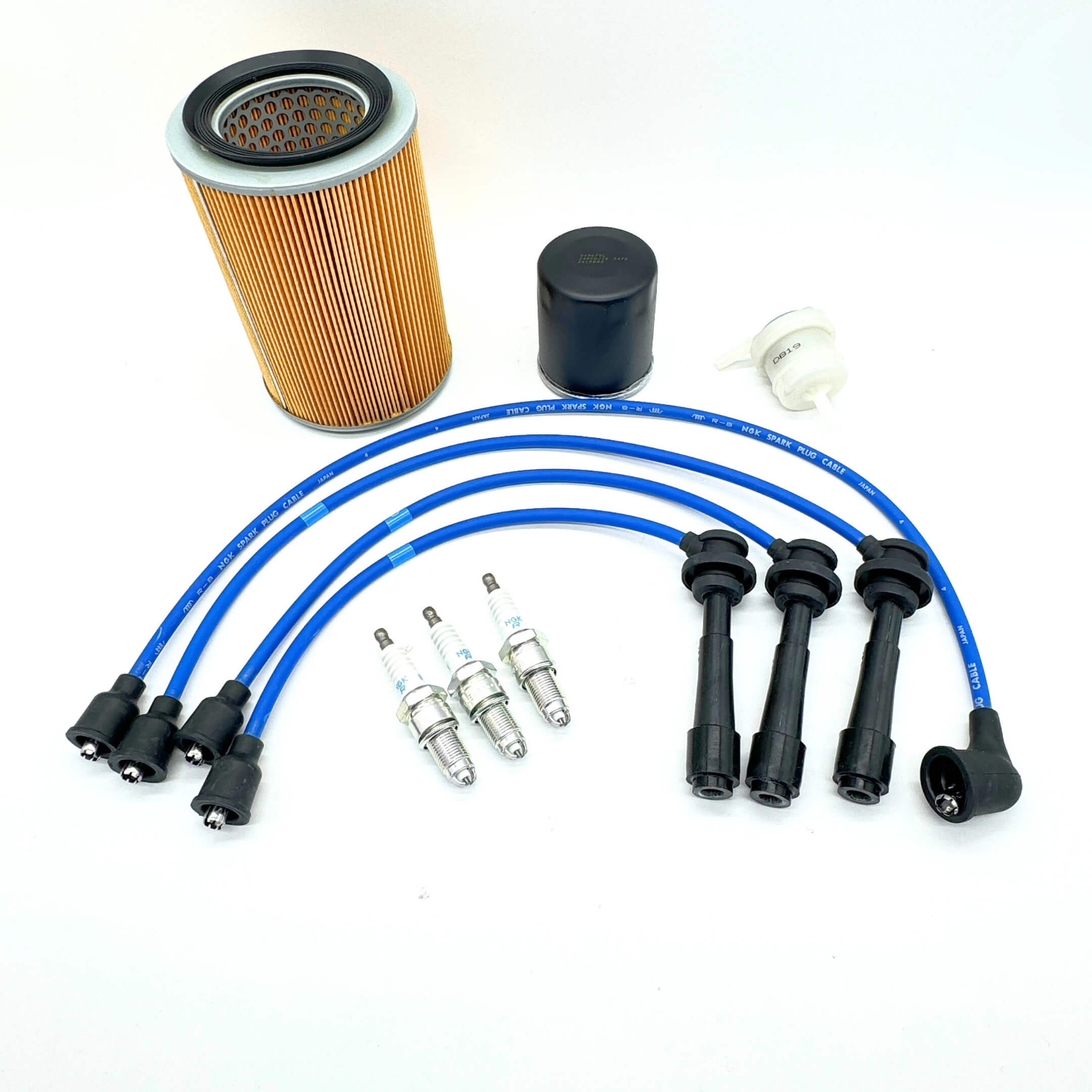
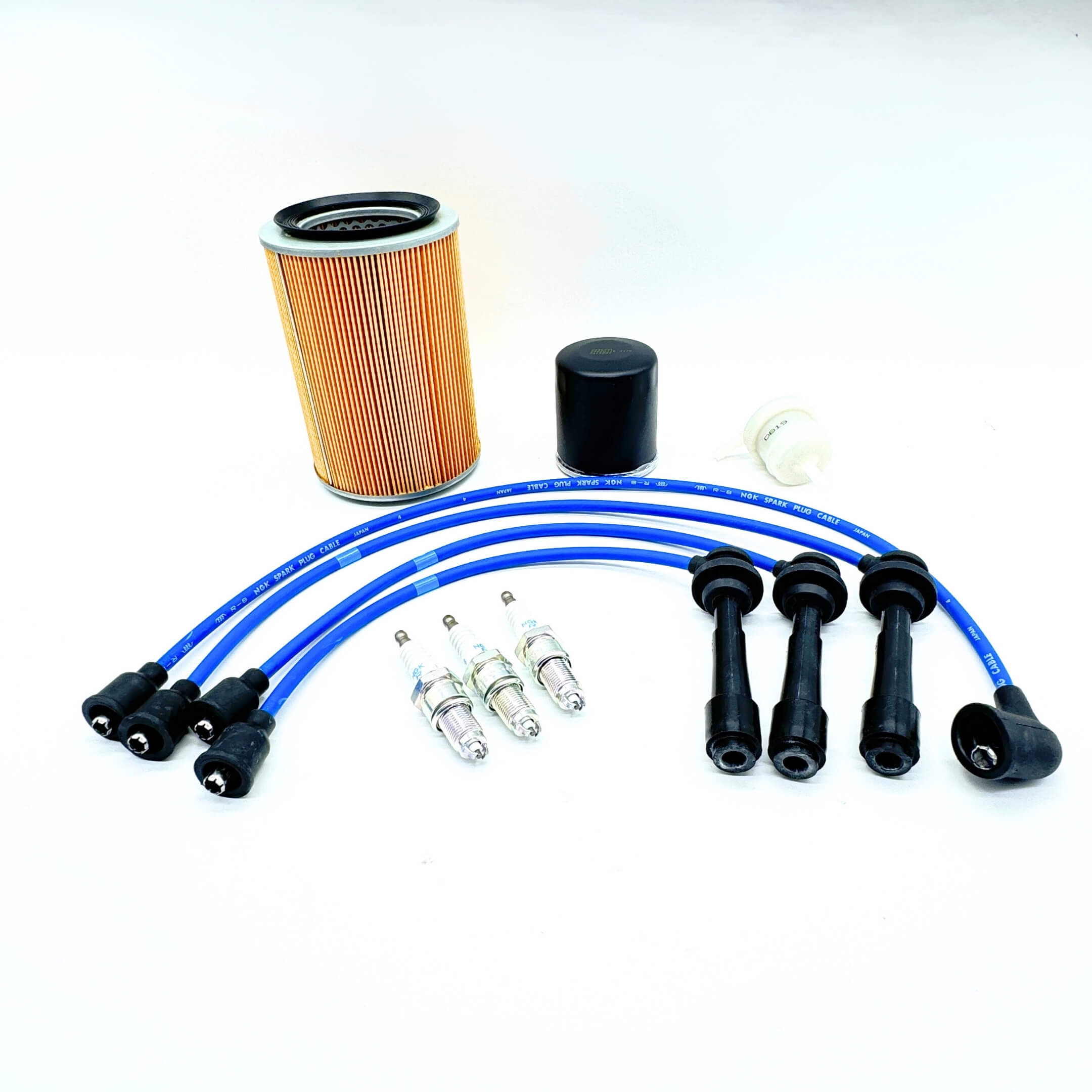
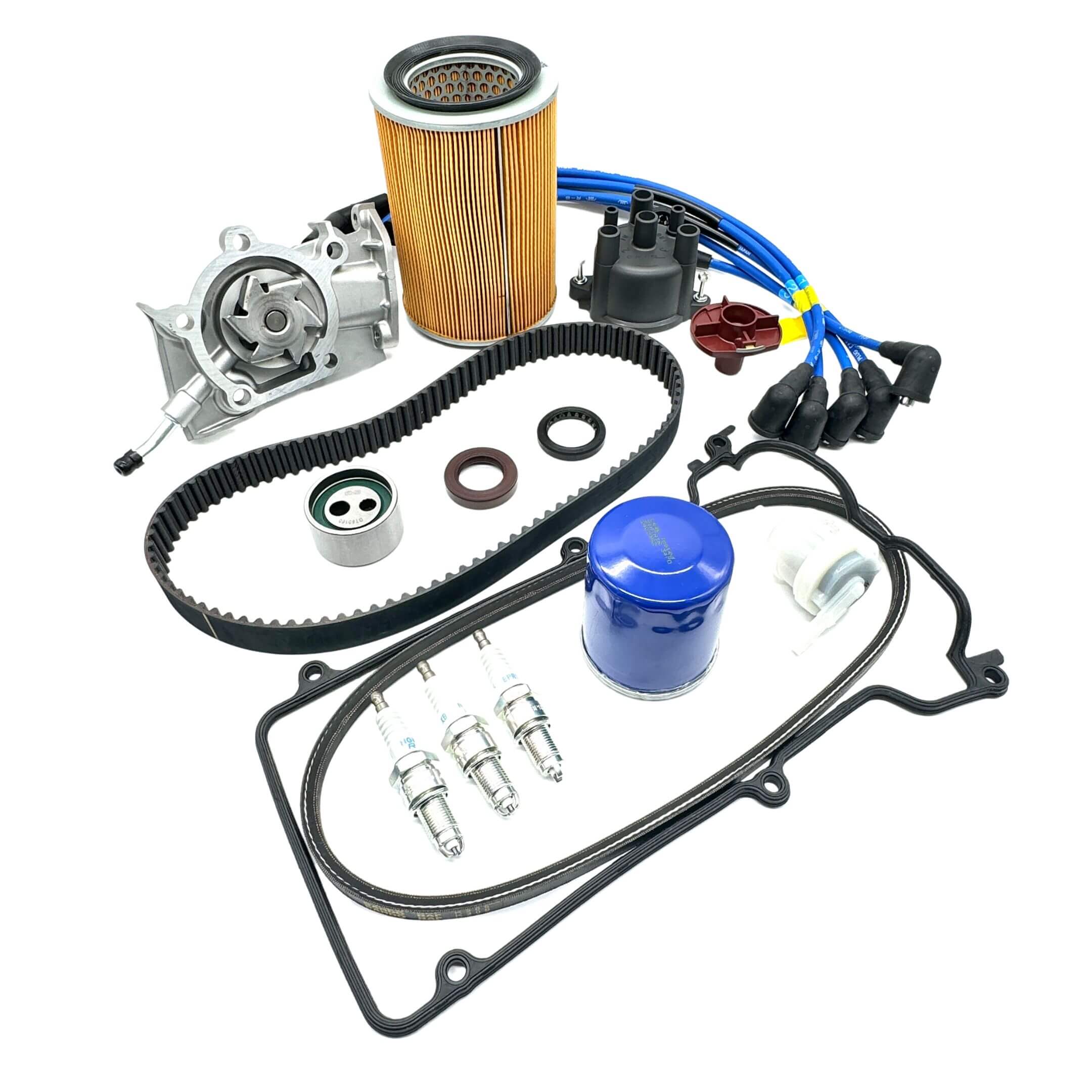
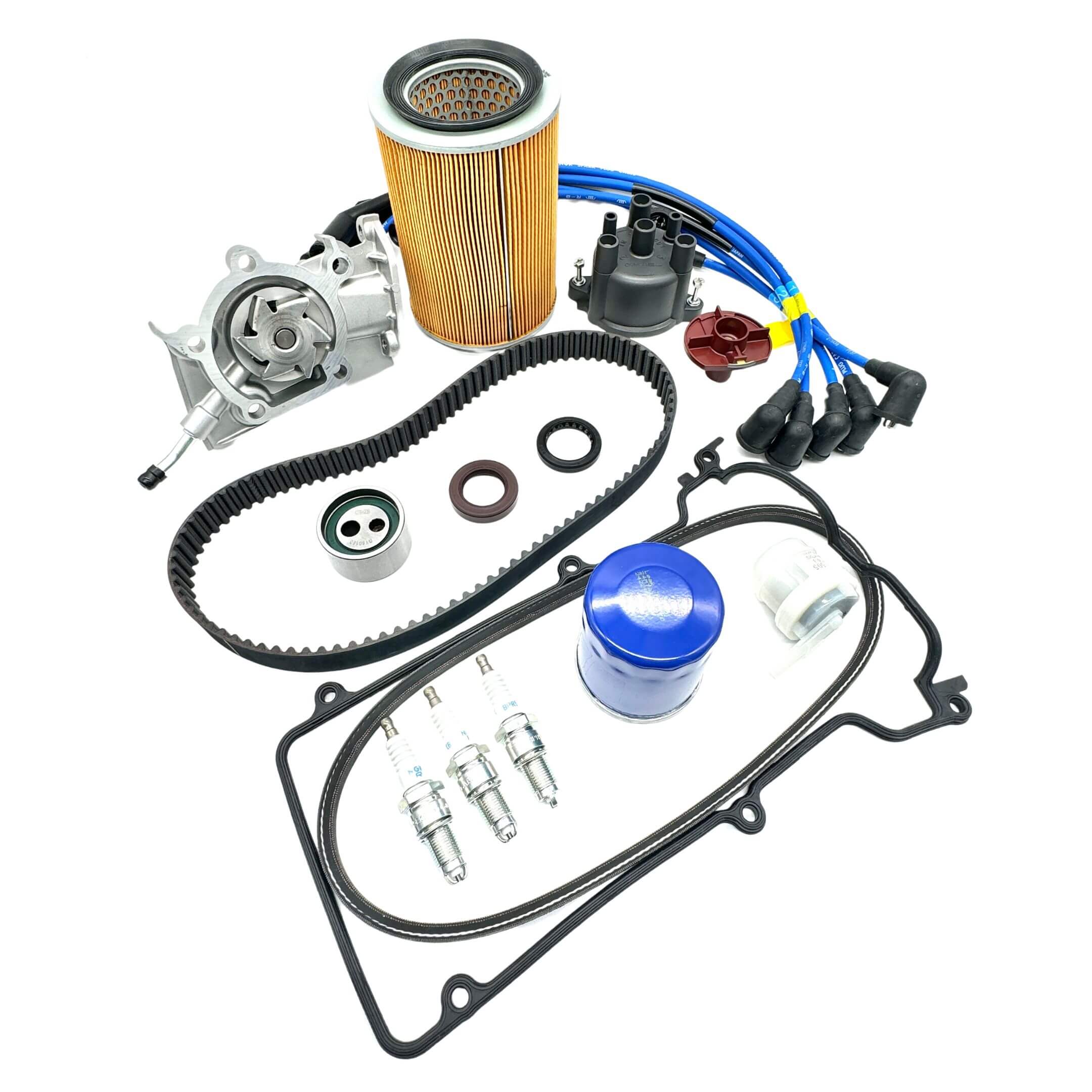
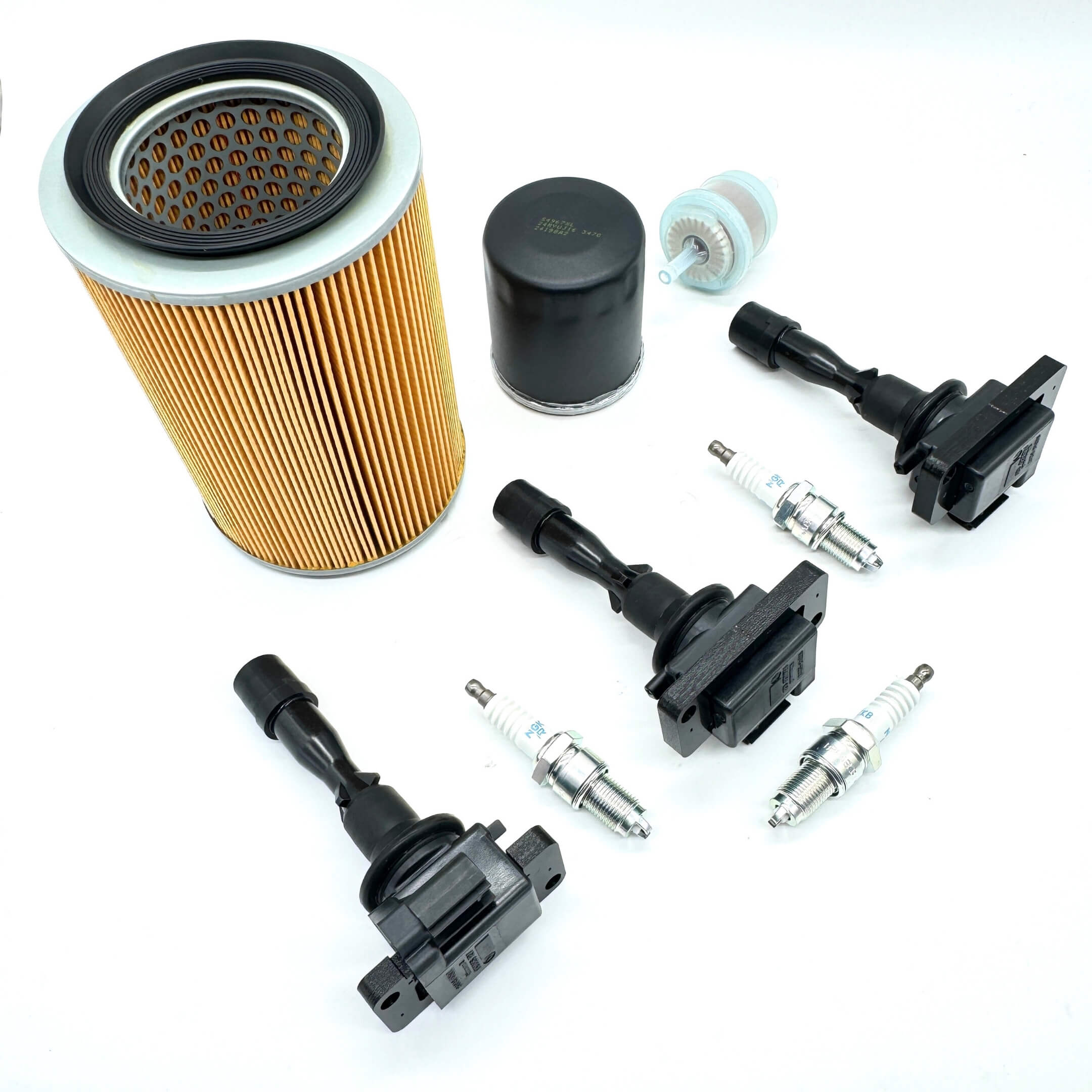
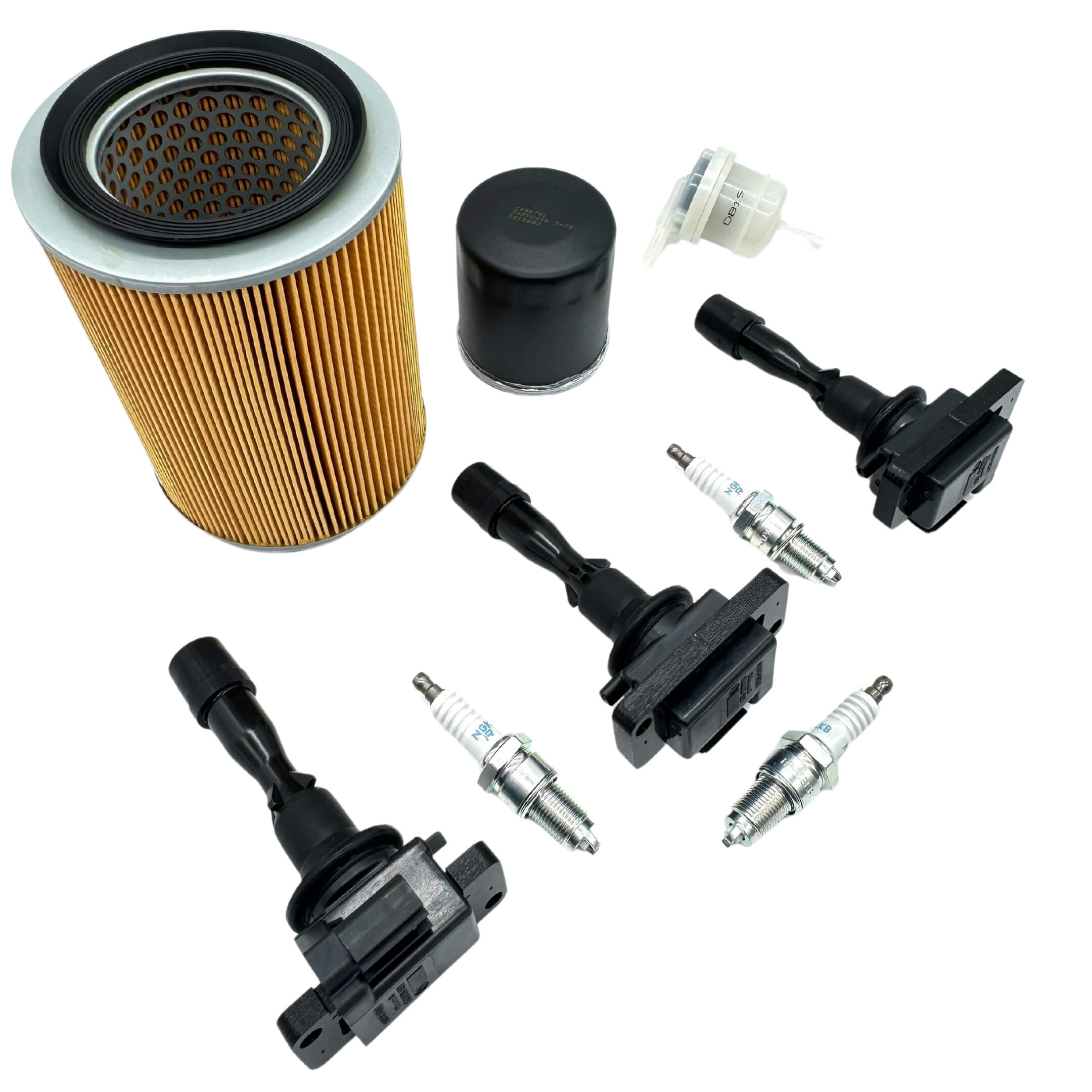
| Kits | Plug and wire sets, cap and rotor pairs, coil kits, and full tune up kits with filters. One box that covers the whole service instead of picking parts one at a time. |
Find your row, then confirm the fitment stated on the individual product before ordering. Wire sets and twin-cam plugs changed by production month, so the build month on your plate can matter as much as the code itself.
| Engine | Parts in this collection | Fitment notes |
|---|---|---|
| EF-NS (carbureted) | Plugs, early and late wire sets, twin-vent cap and rotor, the earlier single-vent cap and rotor, coil, a complete bare distributor, and kits from cap-and-rotor pairs to full tune up boxes. | The factory wire set changed in mid 1997, so early and late sets are listed separately; the van and wagon routing is its own set. The single-vent cap belongs to the 1991-1994 trucks. |
| EF-ES (injected) | Plugs, wire set, EFI cap and rotor, coil, and tune up kits. | The factory wire set application runs from 1/1994 to 12/1995; confirm the product listing for later builds. |
| EF-TS (turbo) | EFI cap and rotor shared with the EF-ES, coil, tune up kits, and plugs as current catalog fitment. | The coil application covers the S120 and S130 vans, 1994-1996. See the third-cylinder access note under Installation before you schedule the job. |
| EF-GS, EF-ZS (twin cam) | Plugs split by production window, coil packs, and ignition kits. | Catalog fitment: one plug for 12/1995-12/1996 builds and another for 1997-1998. Some kits state S120 and S130 applications. |
| EF-RS (twin cam) | Plugs and coil packs. | Catalog fitment for the S120 and S130 vans, 12/1996 onward. |
Inspection & Service
Most ignition parts that get replaced were never faulty. Every part in this collection can be tested on the truck with a basic multimeter before you spend anything. Key off for the resistance checks. If a fault comes and goes with temperature, test twice: once cold, once warm.
| Part | What you measure | Passes at |
|---|---|---|
| Coil, primary | Resistance across the coil's two low-tension terminals, key off | 1.0 ± 0.1 Ω |
| Coil, secondary | Resistance from a low-tension terminal to the high-tension tower | 13.4 ± 2.0 kΩ |
| Coil feed | Voltage at the coil positive with the key on | Battery voltage. No reading at all? Check the 10 amp ENGINE fuse before condemning the coil; a new coil will not fix a blown fuse. |
| Distributor pickup | Resistance across the distributor connector, injected and turbo engines only | 230 ± 25 Ω at 68 °F (20 °C) |
| Distributor pickup, cranking | Meter on that same connector while a helper cranks the engine | The reading flickers as the engine turns. A dead-steady meter is a failed pickup. |
| Distributor air gap | Feeler gauge between the signal generator and a signal rotor tip, lined up nose to nose | 0.2-0.4 mm |
| Plug wires | Resistance end to end, one wire at a time | 25 kΩ or less per wire |


A distributor can pass every resistance check above and still be worn out. The advance side needs a timing light: raise the revs with the light on the marks. If the timing does not walk forward as the revs come up, the advance mechanism has the problem, and new plugs will not fix it. The full check is under Timing & Controls below.
Ignition Systems
The three factory-documented engines run distributor ignition: one coil makes the spark, the distributor cap and rotor pass it to each cylinder in turn, and resistive cords carry it to the plugs. The carbureted EF-NS has its own cap and rotor family, including the earlier single-vent style used up to 1994, and it is the one engine here with a complete bare distributor listed. The injected EF-ES and the turbo EF-TS share the EFI cap and rotor.
The later twin-cam EF-GS, EF-ZS, and EF-RS run coil packs instead, matched by engine code and production window as current catalog fitment. Those engines sit outside the 1994 factory manual this page draws from, so no factory figure on this page should be read across to them.
The shopping decision lives under Choose Your Parts above, and the meter checks that prove these parts good or bad before you spend anything are under Inspection & Service.
Timing & Controls
Warm the engine until the radiator fan cycles once, hook up a timing light, and check against your engine's line below. Each engine wants its own preparation first, and the number is only valid in that prepared state.
Base timing
| Engine | What you do first | Timing spec |
|---|---|---|
| EF-NS (carbureted) | Pull every vacuum hose off the distributor and plug the open ends. An open hose gives a false number. | 7° ± 2° before top dead center at 950 rpm |
| EF-ES (injected) | Bridge the diagnostic check terminals so the computer holds base timing. The factory jumper is SST 09991-87203-000; a plain jumper wire does the same job. The factory warns that bridging the wrong pair can damage the system, so identify the terminals before you connect anything. | 5° ± 2° before top dead center at 850 rpm |
| EF-TS (turbo) | Same bridge as the EF-ES. | 10° ± 2° before top dead center at 900 rpm |
Then prove the advance works
| Engine | What you do | What should happen |
|---|---|---|
| EF-NS (carbureted) | With the hoses still off, raise the revs with the light on the marks. Then reconnect the advance hose and blip it again. | The timing walks forward as revs rise, and pulls further once the vacuum hose is back on. |
| EF-ES, EF-TS (injected) | Release the bridge, then raise the revs with the light on the marks. | The timing advances smoothly as revs rise. If it never moves, the advance side has the fault, and plugs, wires, or a cap will not cure it. |
Idle speed
Idle gets set after the timing is right, never before. Three engines, three different answers.
| Engine | How idle is set | Spec |
|---|---|---|
| EF-NS (carbureted) | Turn the throttle adjusting screw. Straightforward. | 950 ± 50 rpm |
| EF-ES (injected) | You cannot set it. The computer holds it and there is no screw to turn. If the idle is wrong, something in the control system is wrong, and turning things to hide it will not fix it. | 850 ± 50 rpm |
| EF-TS (turbo) | Checked as it runs; with the diagnostic terminals bridged the factory figure drops to a separate check value. | 900 ± 50 rpm, or 800 ± 50 rpm with the terminals bridged |
Twin-cam engines: the 1994 factory manual this page draws from does not document the EF-GS, EF-ZS, or EF-RS, so no timing figure is printed here for them. We do not publish numbers we cannot source.
Troubleshooting
Symptoms narrow the search; the meter settles it. Find the closest line below, run the check it points to, and only then buy the part. Each check is written out in full under Inspection & Service, and the timing-light work lives under Timing & Controls.
| The symptom | Check first | If the check fails |
|---|---|---|
| Hard cold starts, a lumpy idle, or fuel smell in the exhaust | The plug gap against the 0.9-1.0 mm spec, and whether the set is past its service life. | Spark plugs, matched to your engine code. |
| Misfire that moves with the weather, or visible arcing at night | Each wire end to end with a meter, one at a time: 25 kΩ or less per wire. | Plug wires. Truck and van routings are separate sets. |
| Misfire right after washing the engine | Inside the cap for carbon tracking, and the rotor tip for burning. | Distributor cap and rotor, as a pair. |
| Spark that dies as the engine warms up, or weak spark on all three cylinders at once | Coil primary and secondary resistance, cold and again warm if the fault comes and goes with temperature. | Ignition coil for your engine code. |
| No reading at the coil positive with the key on | The 10 amp ENGINE fuse. | Replace the fuse first; a new coil will not fix a blown fuse. |
| Play in the distributor shaft that a new cap cannot hide | The air gap and pickup tests under Inspection & Service. | The complete bare distributor on the carbureted EF-NS. |
| Timing that does not walk forward as the revs come up | The advance check with a timing light, under Timing & Controls. | The advance side of the distributor has the problem. New plugs will not fix it. |
Installation
| What you are fitting | What to get right |
|---|---|
| A new wire set | Route it so no wire touches another wire or any hose; the factory install note says exactly this. Wires laid against each other cross-fire, and a wire resting on a hot hose melts through. Both read as a misfire and get blamed on the plugs. |
| Spark plugs | Check the gap before they go in: 0.9-1.0 mm on every engine here. The heads are aluminum, so start every plug by hand until it seats, then snug it. Cross-threading a plug hole costs a cylinder head. |
| Cap and rotor | The rotor fits one way and the cap seats one way. If the engine will not start right after a cap change, two swapped wires are the first suspect. |
| The distributor | Fit it and tighten it first, then set the timing. Never the other way around. |
The order these get done in
- Plugs first, gapped and started by hand.
- Wires next, routed clear of each other and of every hose.
- Cap and rotor together.
- Coil last of the parts.
- Then timing, with the engine warmed up.
- Then idle, and only then judge the result.
EF-TS: reaching the third cylinder
On the turbo truck the third plug hides between the air hose and the engine mounting member. The factory procedure removes the engine side and lower covers, then feeds a plug socket and extension bar in from the side, exactly as the figures show. Assembled, the tool stack that reaches it measures 16.5 to 18 in; that figure is our shop's measurement, not a factory one.


Specifications
Everything above in one table. The values come from the 1994 Daihatsu factory manual and apply to the three engines it documents.
| Specification | Value | Applies to |
|---|---|---|
| Spark plug gap | 0.9-1.0 mm | EF-NS, EF-ES, EF-TS |
| Ignition timing | 7° ± 2° at 950 rpm | EF-NS |
| Ignition timing, terminals bridged | 5° ± 2° at 850 rpm | EF-ES |
| Ignition timing, terminals bridged | 10° ± 2° at 900 rpm | EF-TS |
| Idle speed | 950 ± 50 rpm | EF-NS |
| Idle speed | 850 ± 50 rpm | EF-ES |
| Idle speed | 900 ± 50 rpm; 800 ± 50 rpm bridged | EF-TS |
| Coil primary resistance | 1.0 ± 0.1 Ω | EF-NS, EF-ES, EF-TS |
| Coil secondary resistance | 13.4 ± 2.0 kΩ | EF-NS, EF-ES, EF-TS |
| Distributor pickup resistance | 230 ± 25 Ω at 68 °F (20 °C) | EF-ES, EF-TS |
| Distributor air gap | 0.2-0.4 mm | EF-NS, EF-ES, EF-TS |
| Plug wire resistance | 25 kΩ or less per wire | EF-NS, EF-ES, EF-TS |
| ENGINE fuse | 10A | EF-NS, EF-ES, EF-TS |
Factory Notes
Factory source: Daihatsu service manual JS411K, 1994. The specifications on this page were verified against the printed maintenance standards at B-4, the spark plug service and timing preparation pages at B-25 and B-26, and the ignition chapter at C-190 through C-193, which carries the coil resistance, spark plug, air gap, pickup, and resistive cord procedures. The Japanese callouts on the figures above have been translated; the drawings themselves are untouched.
One factory page prints the plug gap transposed. A gap cell in the ignition chapter's plug table reads 9.0 to 1.0. The specification is 0.9-1.0 mm, printed correctly in the maintenance standards and the plug service pages. We are disclosing the misprint rather than quietly ignoring it.
The manual prints two engine speeds for the EF-ES timing check. The tune-up specification is 850 rpm, and that is the figure this page uses. A separate emission-system function check in the same manual prints 875 rpm for its own procedure. Both exist in print; they belong to different procedures.
The manual documents three of the seven engine codes in this catalog. EF-NS, EF-ES, and EF-TS are covered. The twin-cam EF-GS, EF-ZS, and EF-RS are not in this manual edition, so their parts here are matched by current catalog application, and no factory figure on this page should be read across to them. Add your ENGINE code at checkout and we will confirm the part before shipping.
Two torque figures from the older version of this page have been removed. A spark plug torque and a distributor mounting torque were previously shown as factory data. The factory manual used here does not print either one for those parts, so both are gone rather than restated. Where a genuine figure exists someday, it will return with its source named.
Where can I buy Daihatsu Hijet ignition parts in the United States?
Right here at Oiwa Garage. We match plugs, wires, caps, rotors, and coils to your EF engine code for the S100 and S110, 1994-1998, with certain applications extending to S120 and S130 where the product fitment states it. What we can supply varies by part and by engine code, so check the individual product page. Not sure you picked right? Add your ENGINE code plus your CHASSIS NO. at checkout and we will verify fitment before we ship.
Our 100% Fitment Guarantee
Add your VIN or chassis number at checkout and we verify the fitment of every part in your order before anything ships. We check your full chassis code and your engine code, which chooses every part and setting on this page, plus truck or van body and the build month where a kit is split by build date. If anything does not match your truck, we contact you before dispatch. If something arrives wrong, we exchange it or refund you in full. No hassle, no runaround.
Contact Our Fitment Specialistsor text us directly at 562-661-8862
Fitment verified by the Kei Truck specialists at Oiwa Garage · Collection description updated August 2026.