
Car Window Tint Guide
Percentages, Types, Rules and Care
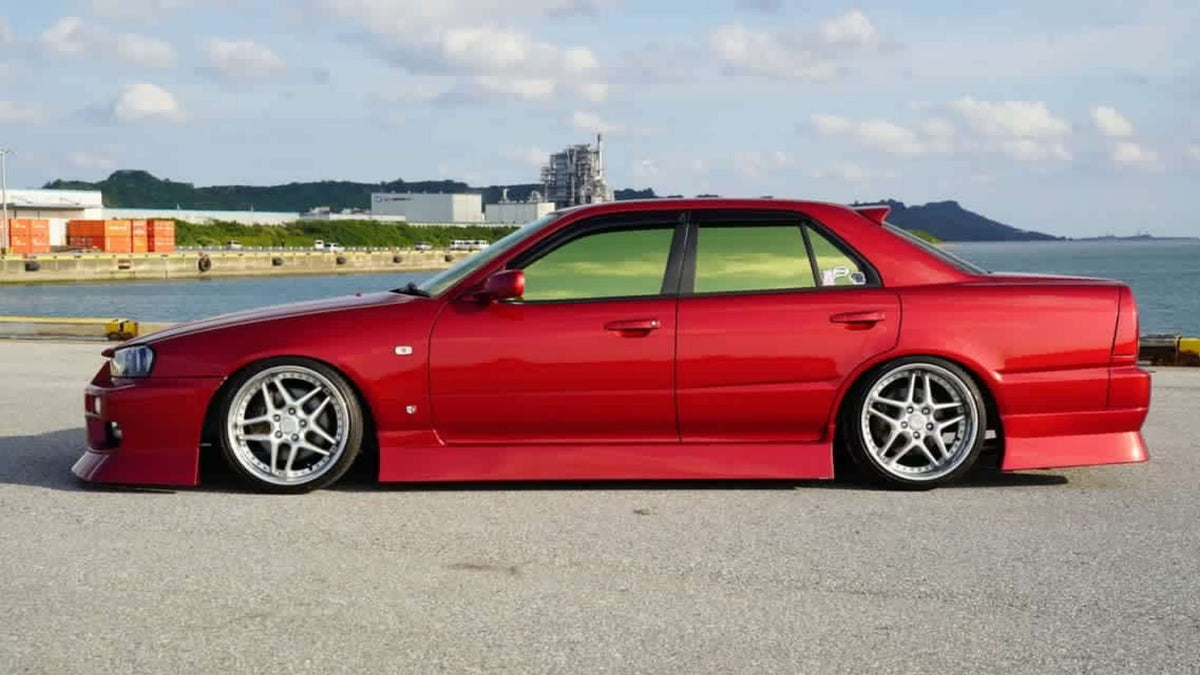
Choose tint by what it lets through, how it performs and what your local rules allow. Use this guide to compare shades and film types, preview the look, and find answers about installation, leased cars, aftercare and removal.
Quick answers
What do window tint percentages mean?
Lower VLT means darker glass. VLT is visible light transmission: the percentage of visible light that passes through the film.
A 20% film lets about 20% of visible light through. It is darker than a 35% film; it does not mean the film blocks only 20%. If you drive often at night or in rain, look through physical samples from inside your car before deciding.
Preview different tint percentages
Move the slider to compare how different VLT levels might look. This is a visual guide, not a measurement of your vehicle or a legal check.
Glass, interior, lighting and film finish affect the real result.
Film VLT and finished-window VLT are different
Factory glass often blocks some light already. Once you add film, light has to pass through both layers. That means the finished window can be darker than the VLT printed on the film roll.
A 35% film on glass that lets through 80% of visible light results in roughly 28% VLT for the finished window. Real readings vary, so if legal compliance matters, have an installer meter the glass and film together. The International Window Film Association’s automotive guide explains why most state limits apply to this combined measurement.
Does darker tint keep a car cooler?
Not necessarily. VLT measures visible light, not total heat. A lighter film with stronger solar performance can reject more heat than a darker film with weaker performance.
Compare manufacturer data for the exact films you are considering, measured on the same type of glass:
- VLT
- Visible Light Transmission. How much visible light passes through.
- TSER
- Total Solar Energy Rejection. Start here when comparing heat control.
- IRR
- Infrared Rejection. A high IRR number alone does not describe total heat rejection.
- UV rejection
- Ultraviolet rejection. Check the product’s stated rating rather than judging by darkness.
The IWFA guide explains the difference between TSER and IRR.
Compare common film types
| Film | Why people choose it | What to check |
|---|---|---|
| Dyed | An affordable darker look, privacy and glare reduction. | Heat and UV ratings vary by product. |
| Metalized | Metal layers help manage sunlight. | Some films may interfere with radio, GPS or other signals. |
| Carbon | A non-metal option. | Compare the actual data sheet with other films at the same VLT. |
| Ceramic | Can deliver strong heat rejection at a lighter shade. | Usually costs more; products with the same label can perform differently. |
What about colored, mirror and chameleon tint?
Finish and darkness are different choices. Blue, bronze, gold, purple and red films change color; mirror films reflect light; chameleon films shift appearance with lighting and viewing angle.
Check a sample on similar glass from both outside and the driver’s seat. Some locations restrict color and reflectivity as well as VLT.
Oiwa Garage Omnique film options
| Film group | Options | What to know |
|---|---|---|
| Mirror films | Rhyolite Bronze (10% VLT), Phantom Gold (20%), Peridot Green (20%), Amethyst Purple (5%), Nebula Black and Neo Silver. | Reflective finishes in several colors. Side window kits start at $99. |
| Colorshift ceramic | Aurora, Opal, Zircon and IOLITE. | Appearance changes with light and viewing angle. Side window kits start at $140. |
| Short-term display | Vulcan Red mirror tint. | Made for shows and display vehicles. It fades quickly and is not meant for a daily driver. |


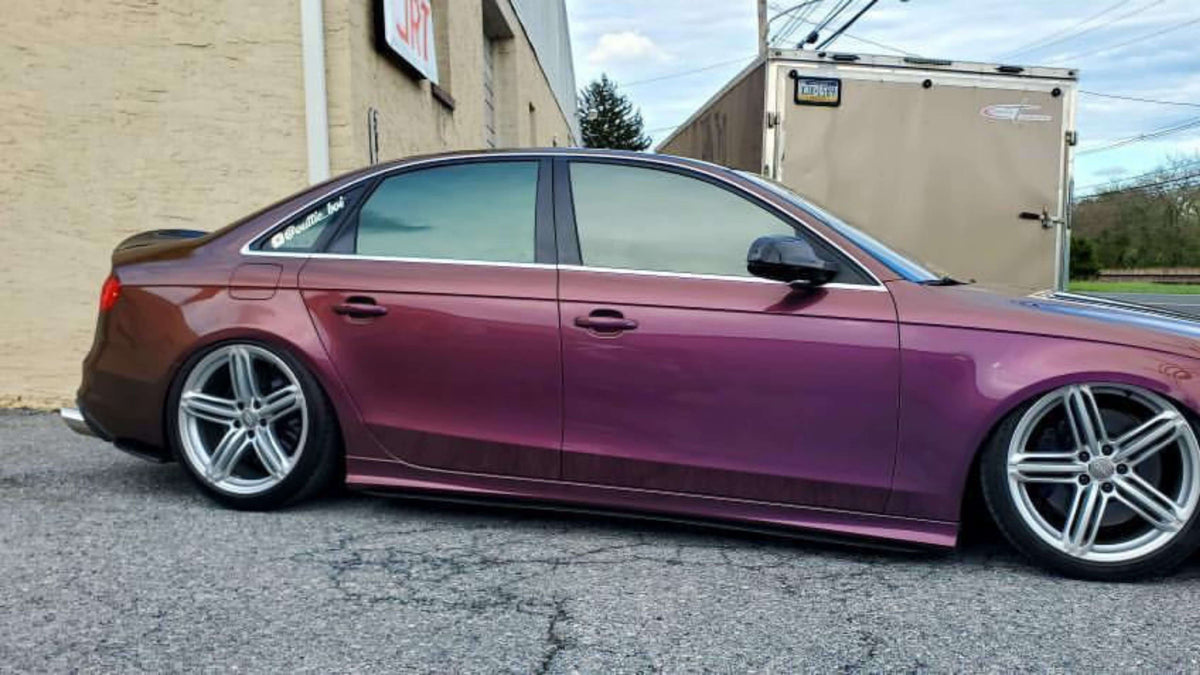
Browse the full car window tint collection for the specifications of the exact film you are considering.
Where does tint go, and how long does installation take?
Inside or outside?
Standard automotive tint goes inside the glass. Installers may temporarily place film outside to cut or heat-shape it, but finished film goes inside unless the product is specifically made for exterior use.
How long does it take?
A four-door car commonly takes several hours. Timing changes with the windows, vehicle, film and any old tint removal. Cleaning, cutting, shaping, applying and edge checks are all part of the job. Installation time is separate from full drying time.
How much does it cost to tint car windows?
Cost depends on the windows, film and labor. A full car, a curved rear window, warranty coverage and old-tint removal can all change the quote.
Oiwa side window film kits start at $99, depending on the film; windshield and full-vehicle kits are available too. A DIY kit and a professionally installed job are different purchases. Installation labor varies by shop and vehicle.
What should a tint quote include?Check the windows, film, finished VLT, removal and warranty.
- Which windows are included
- The film brand and model
- VLT and performance ratings
- Whether old-film removal is included
- What the warranty covers
DIY or professional installation?DIY can save labor; professional installation can help with finish and complex glass.
DIY works best with a clean space, the right tools and experience handling film. Dust, creases, uneven edges and poor shaping on curved glass are difficult to fix once adhesive sets. A professional job costs more, but may make sense for a difficult rear window or when finish quality and warranty coverage matter most.
Can you tint a leased car?
Usually yes, but your lease agreement has the final say. Check it before buying film or booking an installer, and ask whether written approval is required.
What should you ask the leasing company?Clarify approval, removal before return and responsibility for damage.
Find out whether the film must come off before return and who pays if glass, defroster lines or trim are damaged. Film is usually removable, but that does not mean every lease allows it. Local tint rules still apply whether you own or lease.
What should you do after tint is installed?
Follow the film or installer’s care instructions. New tint needs time to bond and dry; the wait varies with the product and weather.
Some haze or small moisture pockets right after installation can be normal. If you still see contamination, large bubbles, lifting edges or peeling after the expected drying period, contact your installer or the film’s seller.
When can you roll the windows down?Follow your installer’s wait; 3M specifies at least 48 hours for its film.
Rolling the window down too soon can catch or lift a fresh edge. As one example, 3M’s care guidance says not to open or close newly tinted windows for at least 48 hours; another product or installer may require longer.
Can you wash your car two days after tinting?An exterior wash usually does not touch standard tint on the inside.
Separate washing the outside of the car from cleaning the freshly filmed interior surface. Check your instructions first, particularly if exterior film or another coating was also applied. Do not wipe or scrub interior tint until its wait period is over.
How should you clean tinted windows?Use a soft cloth and a cleaner approved for your film once it is ready.
Avoid abrasive pads, blades and hard scraping. Products have different care and warranty terms, so follow the film manufacturer’s guidance.
Can old window tint be removed?
Yes. Film can be removed when it peels, bubbles, scratches, discolors or no longer suits your needs or local rules.
What affects removal difficulty and cost?Old adhesive, deteriorated film and sensitive rear glass can add labor.
Removal usually means loosening and peeling the film, then cleaning leftover adhesive. Old film may break into small pieces. Take special care around rear-window defroster lines, antennas and electrical elements; aggressive scraping or pulling can damage them. Professional removal is safer for badly deteriorated film or sensitive rear glass. Ask for a quote for your vehicle.
How do you know whether a tint is legal?
Check the current rules for your location, vehicle and each window. A film label or visual preview cannot certify that the finished window complies.
Windshield, front-side, rear-side and rear glass can have different limits. Some rules also cover color, reflectivity and vehicle type. Check your state or local motor vehicle authority before buying, and have an installer meter the finished glass and film together. If you drive across jurisdictions, check those rules too.
How to choose the right tint
- Choose your priority: privacy, glare, heat control, UV protection or a particular finish.
- Check legal limits for each window, including color and reflectivity if relevant.
- Compare exact films: look at VLT, TSER, UV data and the full product sheet.
- View physical samples from inside and outside, especially if you drive at night.
- Confirm the full quote: windows, film, finished VLT, installation, removal and warranty.
Ready to compare finishes? Explore Oiwa Garage’s window tint film collection and check the specifications of the exact product you have in mind.