Can you swap parts between different Japanese mini trucks? Yes, many Kei truck parts are interchangeable due to manufacturing alliances, shared engine families, and domestic rebadging agreements. However, while routine maintenance items frequently cross over, structural, drivetrain, and model-specific parts vary significantly.
Whether you are a DIY mechanic, farmer, or off-road enthusiast, understanding how Japanese mini truck compatibility works can save you hours of tracking down rare components. This guide breaks down the JDM manufacturer family trees, high-wear interchangeable items, and the exact process to verify a part before ordering.
Table of Contents
- The Kei Truck Family Tree: Rebadging vs. Platform Sharing
- The Golden Rule: Chassis Codes vs. Brand Names
- Which Maintenance Parts Are Most Commonly Interchangeable?
- Where Compatibility Breaks Down completely
- Step-by-Step Checklist: How to Verify a Part Before You Buy
- FAQ: Japanese Mini Truck Compatibility
The Kei Truck Family Tree: Rebadging vs. Platform Sharing
To understand parts compatibility, it helps to separate original design lines from rebadged models. Japanese Domestic Market (JDM) rebadging occurs when an automaker builds a vehicle and allows another brand to sell it under a different name to manage corporate assembly costs. Rebadged models share structural chassis designs, engine families, and general maintenance components.
The Suzuki Carry stands as the most widely rebadged platform in the Kei class. Domestically, the Carry platform was cross-shared to create the Mazda Scrum and Autozam Scrum. It also saw global export arrangements under banners like the Chevrolet Carry, Ford Pronto, and Holden Scurry. Crucially for owners of modern trucks, the Mitsubishi Minicab transitioned to a rebadged Suzuki Carry platform starting in 2014.
Instead of full platform rebadging, the Daihatsu Hijet operates on an OEM platform-sharing architecture. This shared family network includes the Toyota Pixis truck and post-2012 generations of the Subaru Sambar. Because they roll off the same production lines, they cross-reference identical routine maintenance parts for matching year ranges.
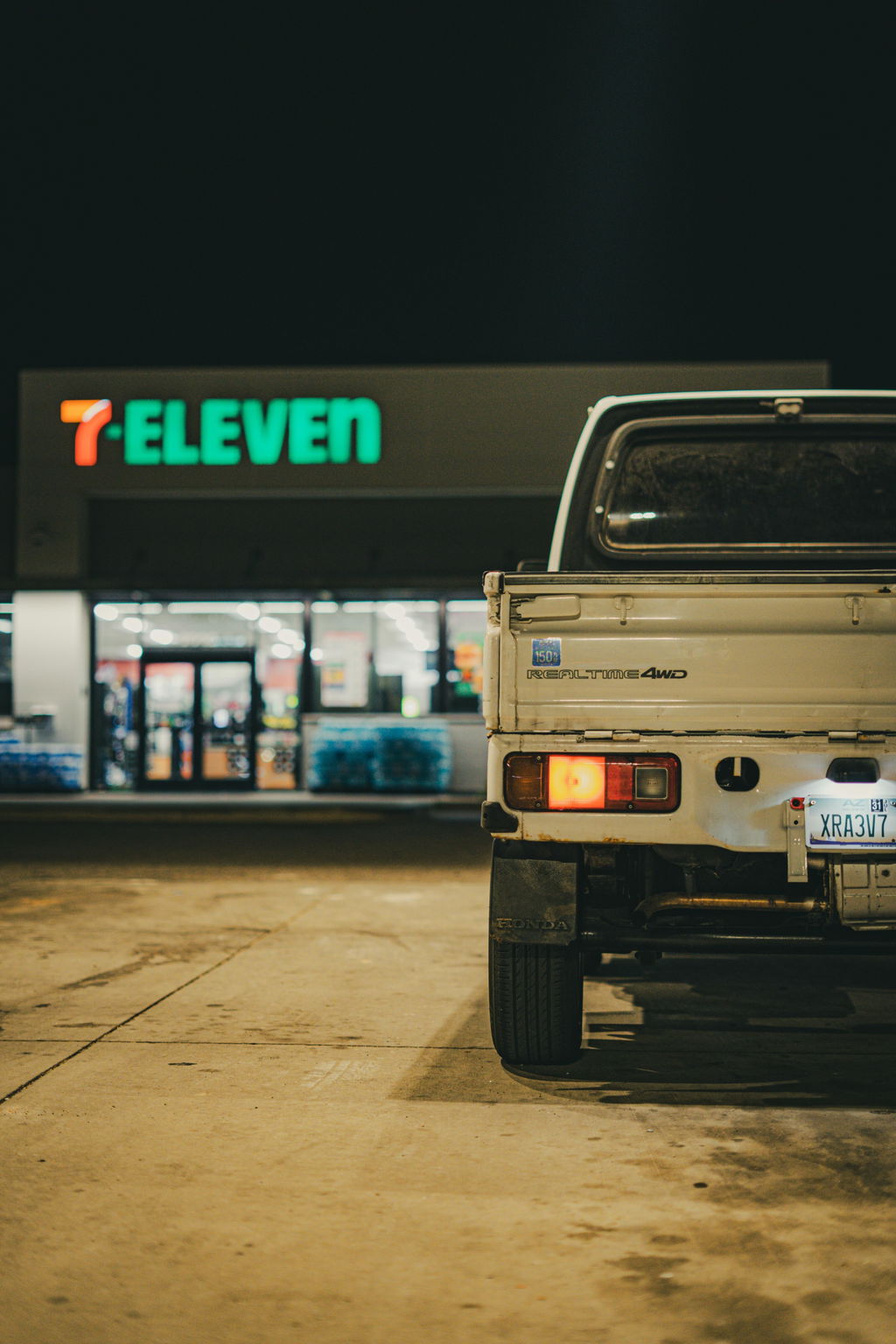
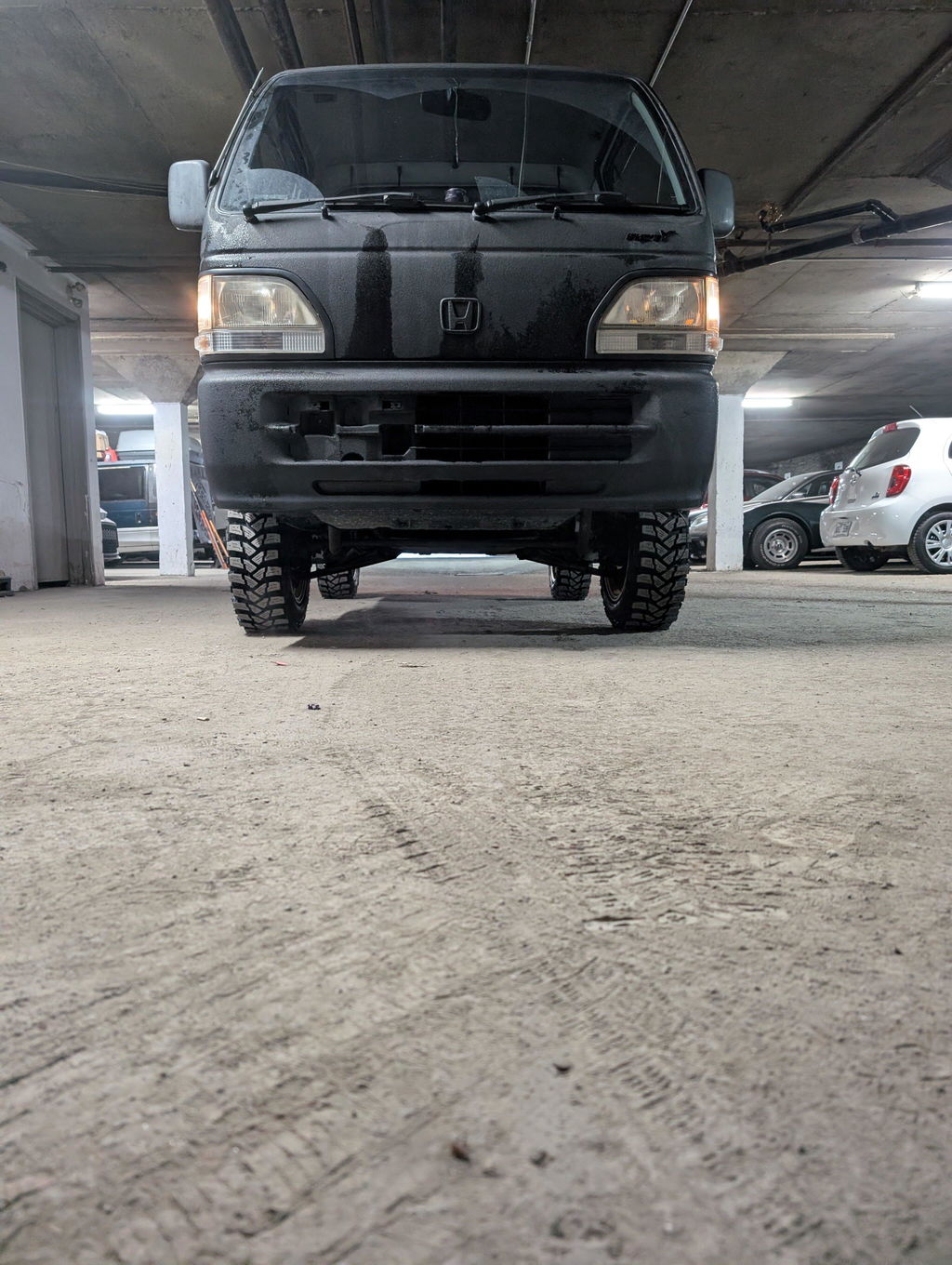
By contrast, the Honda Acty has never been rebadged or cross-shared. Honda maintained an independent engineering path for over 40 years, relying on an in-house mid-engine layout and brand-specific powertrains. Consequently, Honda Acty components almost never cross over to alternative mini truck brands.

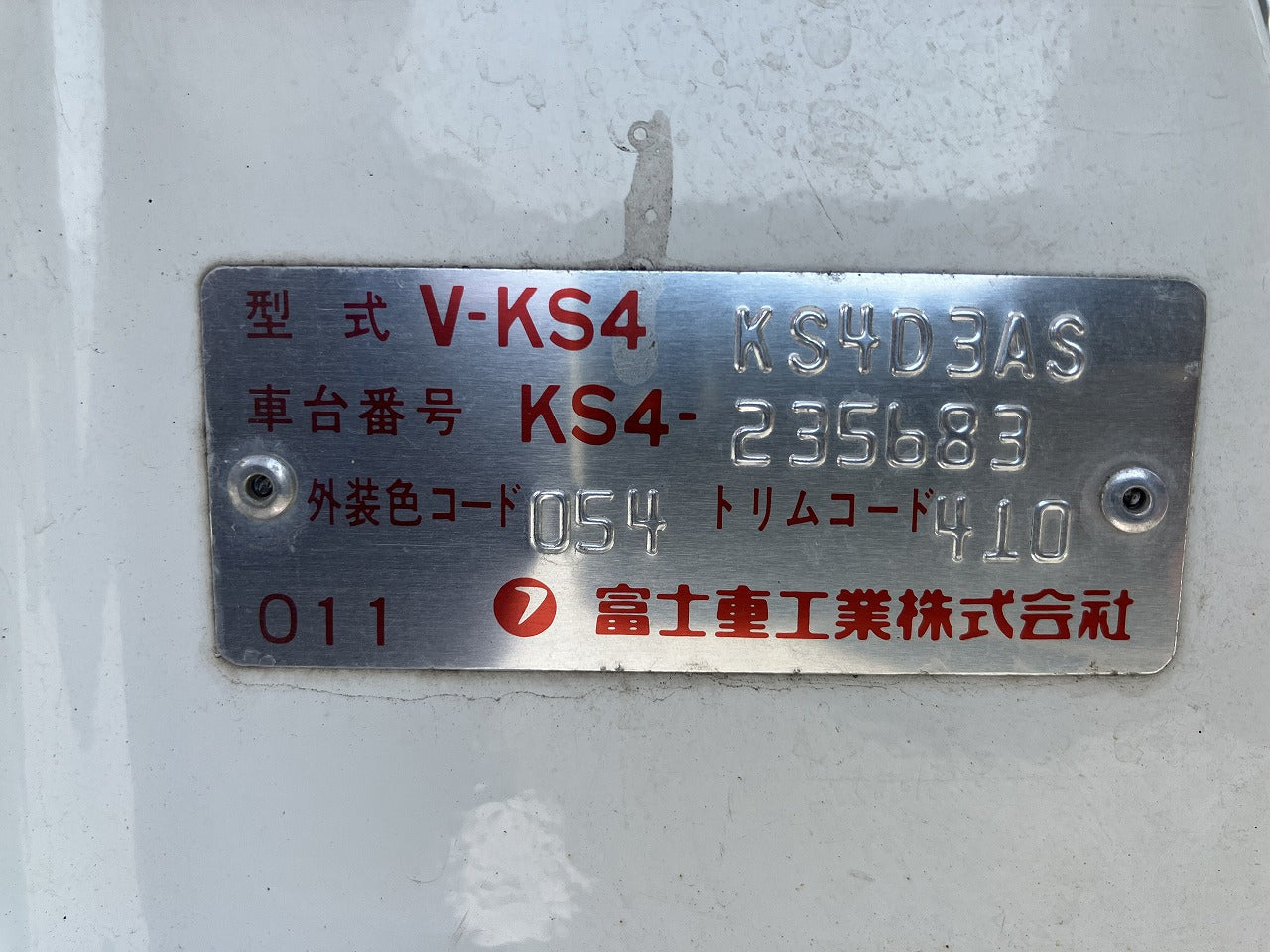
Figure 1: Locating the factory chassis identifier plate is your primary step for cross-referencing components.
Quick Brand-to-Brand Crossover Matrix
The table below details known platform relationships across popular Japanese manufacturers. Cross-compatibility applies strictly to matching generation timelines:
| Original Manufacturer Base | Rebadged Equivalent | Applicable Production Eras | Shared Architecture Components |
|---|---|---|---|
| Suzuki Carry | Mazda Scrum | 1989 - Present | Engines, Transmissions, Chassis, Routine Consumables |
| Suzuki Carry | Mitsubishi Minicab | 2014 - Present | Powertrain, Body Panels, Braking Systems, Filters |
| Daihatsu Hijet | Subaru Sambar | 2012 - Present | KF Engine Components, Filters, Complete Chassis Layout |
| Daihatsu Hijet | Toyota Pixis | 2011 - Present | 100% Platform Interchangeability (Identical Vehicles) |
| Honda Acty | None (Independent) | All Generations | No cross-brand parts sharing available. |
The Golden Rule: Chassis Codes vs. Brand Names
The single most important rule of Japanese mini truck compatibility is to always verify parts by chassis code, engine family, and production generation rather than the nameplate on the tailgate.
Generational redesigns introduce clean breaks in part fitment. For example, a 1995 Suzuki Carry (DD51T generation) shares almost zero mechanical components with a 2015 Suzuki Carry (DA16T generation). Drivetrains, suspension architecture, brake calipers, and electrical configurations vary across these generational boundaries.
Furthermore, model trim options within a single production year can alter parts compatibility. High-end or specialized utility trims often feature specific differences, including:
- 4WD vs. 2WD axle configurations, differential assemblies, and front brake layouts.
- Varying transmission setups (4-speed vs. 5-speed manual gearboxes or automatic options).
- Air conditioning additions vs. base heater-only models (altering drive belts and pulleys).
- Heavy-duty dump options or diff-lock models with distinct rear suspension spring configurations.
Key Takeaway for DIY Mechanics
Two Suzuki Carry trucks from different generations will share fewer parts than a Suzuki Carry and a Mazda Scrum from the exact same production block.

Figure 2: Sample identification plate containing production specifications necessary to track down matching replacements.
Which Maintenance Parts Are Most Commonly Interchangeable?
When platforms are shared, specific high-wear consumables cross over safely. These components rely heavily on standardized suppliers across the Japanese automotive sector (such as Denso, NGK, or Akebono):
- Engine Maintenance Tools: Oil filters, air filters, fuel filters, spark plugs, drive belts, and cooling system thermostats frequently use identical fitment dimensions when engine codes match.
- Electrical Consumables: Headlight units with universal socket types, taillight clusters, turn signal bulbs, and standardized relays are cross-compatible if both voltage and connector pins align.
- Braking Consumables: Specific brake pads and shoes match across rebadged series (e.g., Carry to Scrum), provided the drum or rotor diameter corresponds to the matching chassis year block.
Where Compatibility Breaks Down Completely
Interchangeability stops quickly when dealing with structural components or highly specialized engine management electronics. Avoid swapping parts blindly across the following systems without exact OEM part number confirmation:
- Drivetrain Layouts & Axles: Front axle lengths, differential gear ratios, transfer cases, and steering components like tie rods and ball joints are sensitive to the truck’s specific tracking width and 4WD options.
- Engine Electronics & Fuel Delivery: Wiring harnesses, electronic control units (ECUs), and specialized sensors vary widely depending on whether the truck utilizes a mechanical carburetor, an early electronic fuel injection (EFI) module, or later electronic valve controllers.
- Wheel & Hub Fitment: Wheel bolt patterns (PCD), center bore clearance, and offsets vary significantly across brands and years. For example, older models may feature 4x110mm or 4x114.3mm configurations, whereas modern platforms standardized around 4x100mm hubs.
- Air Conditioning Components: Systems from different generations may require distinct compressor models, mounting brackets, or alternative refrigerant designs (e.g., older R12 systems vs. newer R134a setups).
Step-by-Step Checklist: How to Verify a Part Before You Buy
Follow this procedural sequence to ensure exact fitment before committing to a replacement part:
- Locate Your Chassis Code: Check the metal manufacturer identification plate riveted to your vehicle. This is commonly found on the engine bay bulkhead, the driver-side door jamb, or on the structural frame rail under the seat cushion.
- Identify Your Engine Family Code: Document the engine stamping (such as Honda's E07A, Suzuki's F6A, or Daihatsu's EF-NS) to narrow down internal engine components and emissions gear.
- Obtain the Factory OEM Part Number: Check for a stamped part number on the removed component, or look it up using your specific chassis code inside an authentic vehicle parts catalog.
- Verify the Axle Configuration: Confirm whether your vehicle is a standard 2WD or a utility 4WD layout, as this shifts front suspension and steering linkage geometry.
- Cross-Reference Listings: Match your verified chassis code and factory part number against the replacement product documentation to confirm fitment before shipping.

Figure 3: Keeping a model-specific service manual on hand helps identify OEM cross-reference numbers efficiently.
FAQ: Japanese Mini Truck Compatibility
Can You Use a Brand Name Alone to Confirm Kei Truck Part Compatibility?
No, brand names alone are insufficient for tracking parts compatibility. Long production lifecycles, mid-generation engineering updates, and vehicle rebadging mean you must rely strictly on chassis codes, engine family markings, and factory OEM part numbers to secure a correct fit.
What Is More Important For Kei Truck Compatibility: Chassis Code Or Engine Code?
The chassis code is always your primary reference point. It explicitly identifies the structural generation, steering system, suspension setup, and brake design of the truck. The engine code serves as a secondary filter used to confirm internal powertrain, cooling, and emissions-related components.
Do Suzuki Carry And Mazda Scrum Use The Same Parts?
Yes, they share a very high percentage of parts compatibility due to their historic rebadging connection. However, exact interchangeability still depends on matching the generation block and drivetrain configuration, as specifications updated frequently across different production year spans.
Why Do Kei Truck Parts Sometimes Look Identical But Have Different Numbers?
Manufacturers frequently alter component part numbers due to mid-cycle assembly changes, updates to internal material tolerances, or switches to alternative factory component suppliers. Even if the external casting looks identical, slight differences in thread pitches, seals, or electrical resistance values may exist.
Are Honda Acty parts compatible with other mini truck models?
No, Honda Acty parts are generally not compatible with other mini truck brands. Honda maintained an entirely independent development path with unique mid-engine, rear-wheel-drive or real-time 4WD engineering, meaning its mechanical and body components are brand-exclusive.
Find Precision Fitment Parts at Oiwa Garage
Don't guess on cross-compatibility and risk ordering the wrong components. At Oiwa Garage, we organize our catalog by specific vehicle chassis codes to help you secure the exact fitment your vehicle requires for the job.
Browse our targeted JDM parts inventories directly:
- Explore genuine Honda Acty parts for HA3, HA4, HA6, HA7, HA8, and HA9 setups.
- Source rugged Subaru Sambar parts covering KS3, KS4, TT1, and TT2 configurations.
- Find reliable Daihatsu Hijet parts tailored for S100 and S110 series.
- Locate factory-spec Suzuki Carry parts for DC51T, DD51T, DA52T, and DA16T models.
- Order matching Mitsubishi Minicab parts supporting U41T, U42T, U61T, and U62T chassis.
Need direct assistance confirming a hard-to-find part or verifying a cross-reference? Reach out to our specialized support through our Contact Page today.