Table of Contents
- 1. Understanding the Geometry: Caster, Camber, and Toe
- 2. Suspension Specification Comparison
- 3. The 5-Step Reality of Modifying Kei Truck Suspension
- 4. Model-Specific Lift Challenges (Acty, Carry, Hijet, Sambar, Minicab)
- 5. Pros and Cons of Kei Truck Lift Kits
- 6. Pre-Drive Alignment & Safety Checklist
- 7. Frequently Asked Questions
Installing a Japanese Kei truck lift kit is an excellent way to boost off-road capability, maximize ground clearance, and fit aggressive all-terrain tires. However, lifting these specialized utility vehicles changes how they handle on and off the road. Altering your ride height changes factory alignment angles, which can accelerate tire wear and impact steering stability at higher speeds if left uncorrected.
Quick Answer: How Lift Kits Affect Kei Truck Geometry
A 2-inch to 6-inch lift kit increases off-road approach angles to a rugged 28 to 35 degrees. However, it shifts critical steering angles (caster, camber curve, and toe behavior) by roughly 1 to 4 degrees. Without corrective alignment components, this shift can accelerate tire wear by 10% to 25% and cause handling instability or steering "wander" at speeds over 60 mph.
Understanding the Geometry: Caster, Camber, and Toe
Standard mini truck suspension relies closely on Ackerman steering geometry. This engineering design ensures the inside wheel turns sharper than the outside wheel during a corner, allowing both front tires to track smoothly without dragging sideways—a damaging condition known as "scrub."
When you lift a mini truck, the control arms tilt down sharply, shortening their effective horizontal reach and changing their operating angles. This geometric shift disrupts three primary alignment pillars:
- Caster: The forward or backward tilt of the steering axis when viewed from the side. Factory mini trucks carry a 5 to 7-degree positive caster to provide a natural return-to-center steering feel. Lifting drops effective caster by 1 to 3 degrees per 2 inches of lift, causing loose steering at highway speeds.
- Camber: The side-to-side tilt of the tire when viewed from the front. Lift kits frequently push wheels into an excessive negative camber configuration (often hitting -3 to -4 degrees instead of the preferred -1 to -2 degrees), reducing the tire contact patch and accelerating inside edge wear.
- Droop Camber & Toe: As the suspension fully extends (droop) during rut traversal or off-road rock crawling, the toe and camber curves shift rapidly under load. This sudden change makes the front end feel unnaturally light, twitchy, or sensitive to crosswinds.
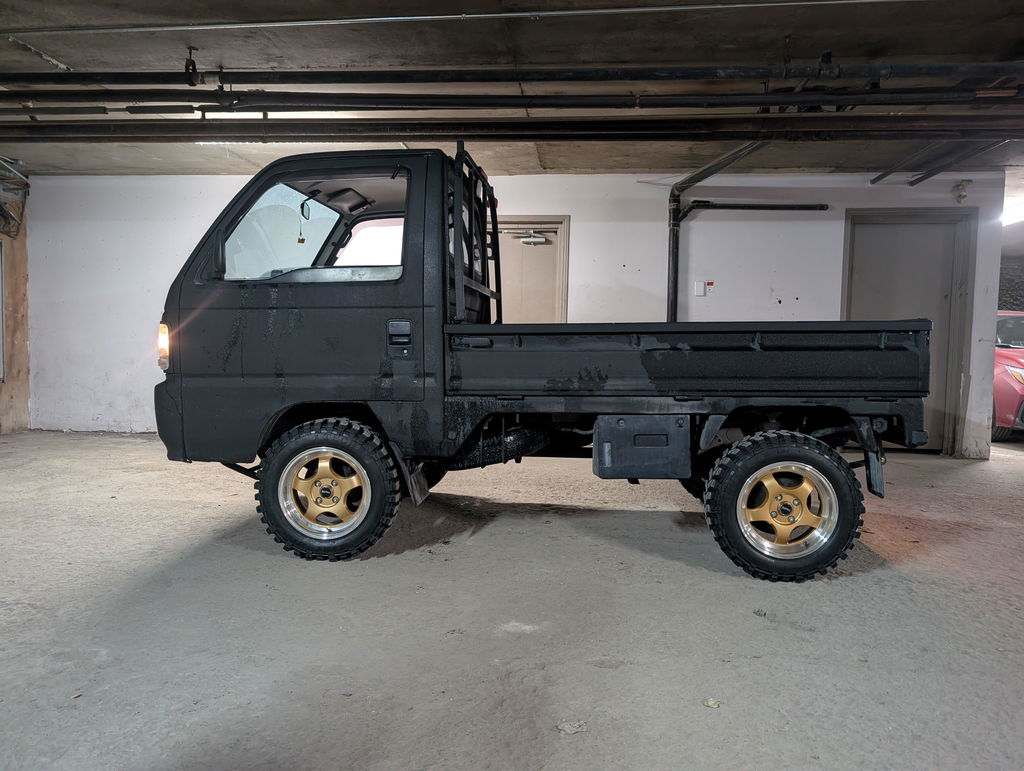
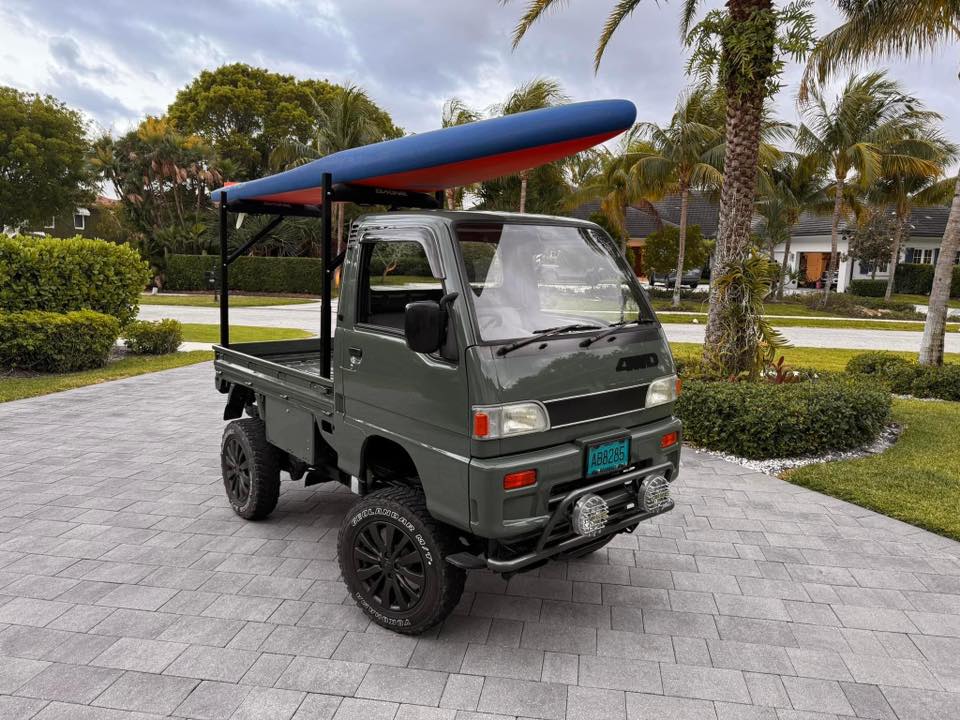
 Figure 1: Raising your mini truck improves off-road capability but shifts factory control arm angles.
Suspension Specification Comparison
To keep your truck running safely, it helps to understand what changes between a stock setup and an uncorrected lift block installation:
| Suspension Metric | Factory Specification | Uncorrected 2" Lift Kit | Corrected Target Range |
|---|---|---|---|
| Front Caster Angle | +5° to +7° (Positive) | +2° to +4° (Loose Feel) | +5° to +6° (Stable) |
| Front Camber Angle | -1° to -2° | -3° to -4° (Severe Lean) | -1° to -1.5° (Even Wear) |
| Front Approach Angle | ~25 Degrees | 28 to 32 Degrees | 28 to 35 Degrees |
| Tire Wear Rate | Standard Baseline | 10% to 25% Faster Wear | Standard Baseline |
| Fuel Economy (MPG) | Baseline Range | 1 to 3 MPG Loss | 1 to 2 MPG Loss |
The 5-Step Reality of Modifying Kei Truck Suspension
Step 1: Installing a 2-Inch Lift
Factory mini truck ground clearance sits around 6 to 6.5 inches, leaving low-hanging bumpers vulnerable to scrapes on rough trails. A precision-engineered 2-inch lift adds 1.5 to 2.5 inches of clean frame clearance. While your exact gains depend heavily on your bumper style and wheelbase, the approach angle typically moves up from a stock 25 degrees to a capable 28 to 32 degrees on models like the Honda Acty, Suzuki Carry, and Daihatsu Hijet.
While factory 22-inch to 24-inch street tires work with these lifts, most owners upgrade to rugged 24-inch to 26-inch Kei truck all-terrain tires. All-terrain options grip rocks and trail ledges much better than factory highway rubber. Their taller sidewalls flex over obstacles to absorb impact and prevent pinch flats, while stiffer tread blocks prevent tread squirm. On-road, quality all-terrain options remain quiet enough for daily driving, with a minor fuel economy drop of only 1 to 3 MPG.
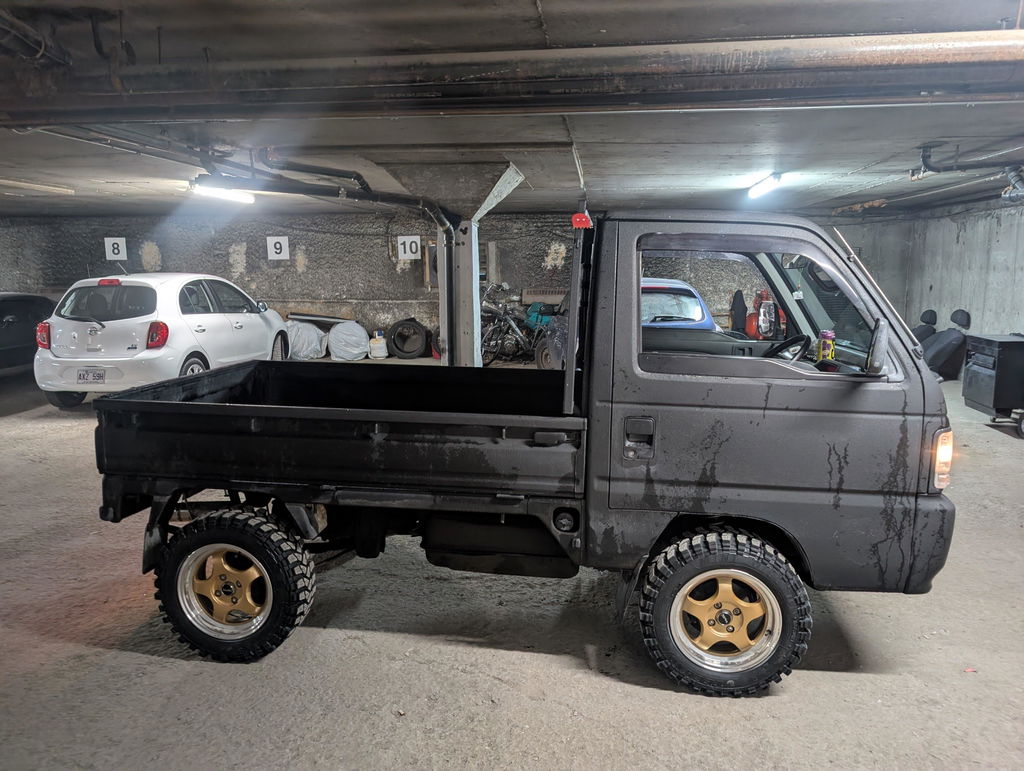
 Figure 2: Upgrading to 24-inch or 26-inch all-terrain tires requires adequate wheel well clearance.
Step 2: Test Drive & Handling Symptoms
While off-road capability improves right away, an uncorrected highway test drive reveals clear geometry trade-offs. At speeds over 60 mph, steering becomes overly sensitive and requires frequent, small corrections. The loss of positive caster reduces the self-centering force that helps straighten your steering wheel after a turn.
At the same time, shifting toe curves alter tracking stability under load. This can cause the front end to feel loose, light, or twitchy. A higher center of gravity on a narrow chassis also increases sensitivity to high crosswinds and deep road ruts. If you notice your truck pulling to one side on the highway, it is a clear warning sign that your tracking needs correction before it causes uneven tire wear.
Step 3: State Legality & Inspection Compliance
Before installing a lift kit, check your local state vehicle modification laws. Mini trucks are registered under varying classifications across the United States based on their age (such as the 25-year DOT/EPA import exemption), title designation (road-legal vs. off-road use only), and local road guidelines. Incorrect vehicle operation can result in dynamic compliance issues or fines.
Most states do not ban suspension lifts completely; instead, they enforce safety guidelines during vehicle inspections. Common regulations focus on:
- Ensuring headlights aim correctly at the road rather than blinding oncoming traffic.
- Keeping front and rear bumpers within legal heights (frequently between 16 and 30 inches off the ground).
- Verifying compliance with tire coverage laws, which require fenders or extended flares to fully cover exposed tread blocks when running wider all-terrain tires.
A modest 2-inch lift kit generally meets compliance guidelines easily when paired with basic headlight adjustments.
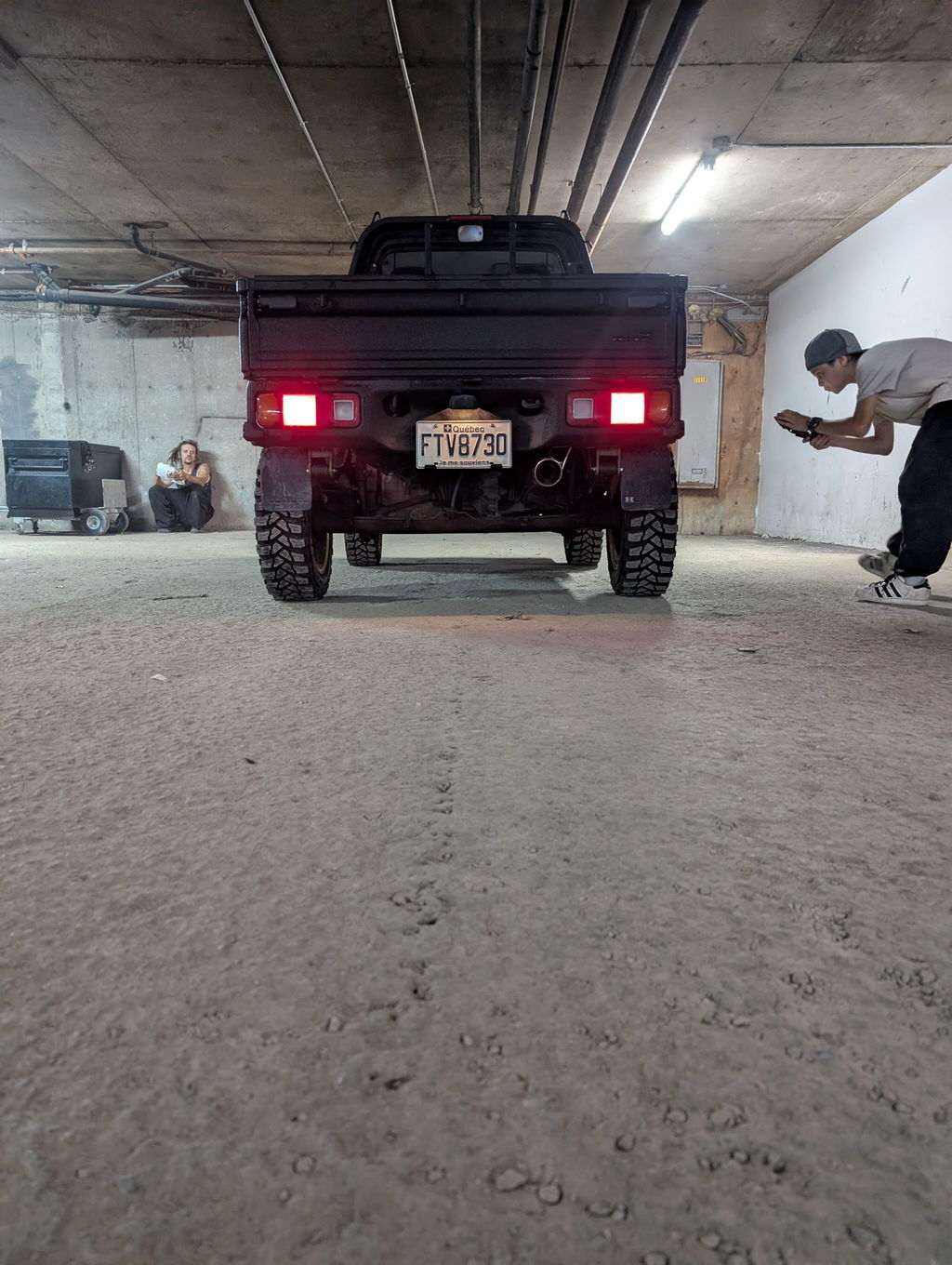
 Figure 3: Ensuring proper tire coverage with fenders keeps your modified mini truck street legal.
Step 4: Real-World Budget Breakdown
Modifying a suspension system properly often requires budget considerations beyond the price of a basic lift kit. Standard strut spacer blocks cost between $200 and $600; these provide immediate height but do not include correction features. Full-suspension upgrade kits that feature partial or complete geometry correction components can range from $1,000 to over $6,000 depending on your application.
Pure trail builds can tolerate minor geometry differences, but regular highway driving requires dedicated correction parts to protect your steering components and tires. Oiwa Garage offers a variety of model-specific upgrade packages tailored to your build needs, such as our 36-piece rear suspension kit for HA3 and HA4 Honda Acty trucks (which includes heavy-duty shackle bushings and upgraded shock hardware). Drivers can also utilize our 33-piece front/rear suspension kits or comprehensive 10-to-41-piece steering rebuild packages to restore factory handling metrics.
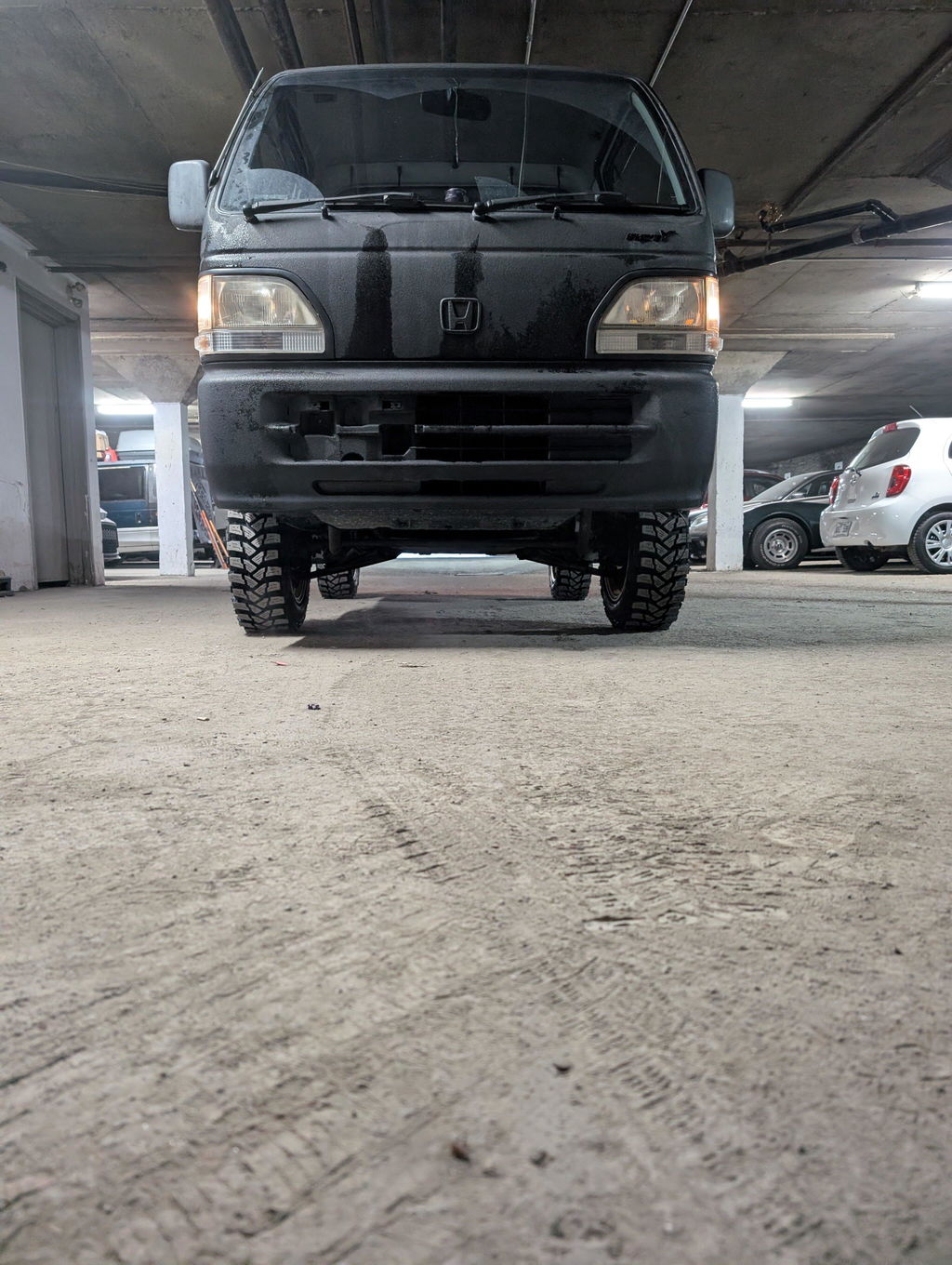
 Figure 4: A balanced lift budget accounts for both lift spacers and supporting steering joints.
Step 5: Correcting Geometry for Longevity
To ensure your modified vehicle operates predictably, focus on correcting your steering geometry post-installation. Proper correction centers on bringing your caster, camber, and toe settings back into stable functional ranges to eliminate tire cupping and highway drift.
Where adjustable factory hardware is unavailable, specialized aftermarket alignment parts help bridge the gap. For example, utilizing a specialized 2-inch body lift kit for Honda Acty HA3/HA4 models helps raise body clearance without radically shifting the suspension arm operating angles. Once your components are installed, completing a comprehensive 4-wheel alignment is necessary; correcting improper toe limits tire feathering, while proper camber adjustments stop fast inside-edge wear.
Model-Specific Lift Challenges
Different Japanese manufacturers utilized distinct chassis layouts. Lifting your specific truck requires understanding its unique design:
- Honda Acty (HA3/HA4/HA7): These trucks use a front MacPherson strut design with an integrated steering knuckle. Standard top-spacer lifts push the assembly into significant positive camber. Installing adjustable aftermarket camber bolts (slot bolts) is highly recommended to bring the front tires back to spec.
- Subaru Sambar (KS3/KS4/TT1/TT2): Featuring an independent rear trailing arm design and a rear-mounted engine, lifting a Sambar pushes the rear CV axles to steep operating angles. Restricting lifts to 2 inches or adding a subframe drop kit helps protect against premature CV boot tearing or axle binding.
- Daihatsu Hijet (S210P/S510P): Four-wheel-drive Hijet models pull the front drive axles tight when lifted. To protect your inner CV joints from binding on rough terrain, consider installing a front differential drop spacer kit alongside your strut spacers.
- Suzuki Carry (DD51T/DA63T/DA16T): These trucks respond well to suspension modifications but are prone to steering wheel misalignment due to the angle of the steering rack. Installing upgraded heavy-duty tie rod ends or steering extensions helps keep the steering wheel centered.
- Mitsubishi Minicab (U61T/U62T): The front coil-over design on these models means using ultra-stiff lift springs can radically alter your ride dampening. Combining a modest top spacer with fresh, factory-spec dampeners is often the best way to preserve ride comfort.
Pros and Cons of Kei Truck Lift Kits
| Advantages (Pros) | Disadvantages & Risks (Cons) |
|---|---|
|
|
Pre-Drive Alignment & Safety Checklist
Before taking your newly lifted mini truck out on the road or trail, complete this maintenance check to ensure your steering components are secure:
Frequently Asked Questions
Do I need an alignment after installing a Kei truck lift kit?
Yes. Installing a lift kit shifts your suspension arms from their factory operating planes, altering your camber and toe curves. Completing a professional 4-wheel alignment after installation helps prevent uneven tire wear and restores predictable handling.
Will a 2-inch lift kit cause my mini truck to roll over?
A lift kit raises your vehicle's center of gravity, which naturally increases body roll through corners. While a modest 2-inch lift remains highly manageable for daily use, drivers should exercise care during high-speed cornering and consider upgrading to stiffer supporting shocks or bushings.
What is the maximum lift height for a standard Suzuki Carry or Honda Acty?
For most daily-driven mini trucks, a 2-inch lift kit is the practical limit before modifications require extensive suspension revisions. Going above 2 inches often demands subframe drops, custom steering shaft extensions, and brake line repositioning to avoid axle binding.
Why does my mini truck wander at highway speeds after being lifted?
This handling characteristic is usually caused by a loss of positive caster. As your lift kit pushes your control arms downward, it flattens your front steering axis tilt, reducing the natural self-centering force that keeps your truck tracking straight at speeds over 60 mph.
Will off-road tires and a lift kit lower my fuel economy?
Yes. Upgrading to taller, heavier all-terrain tires increases rolling resistance and aerodynamic drag. Most owners notice a modest fuel economy drop of 1 to 3 MPG, though the exact change depends on your tire selection and driving style.
Conclusion: Build Your Suspension the Right Way
Lifting a mini truck is an excellent way to unlock off-road terrain capability, provided you address the accompanying geometry changes. Balancing your lift blocks with the proper supporting alignment adjustments helps keep your truck tracking straight, protects your steering components, and ensures even tire wear.
Upgrade Your Mini Truck Suspension Safely
Avoid highway steering wander and uneven tire wear. Explore our selection of precision-engineered replacement parts, high-quality lift kits, and comprehensive steering components built specifically for your vehicle generation.
Shop Oiwa Garage Suspension PartsNeed specialized assistance matching a lift kit or steering component to your specific vehicle model year? Contact us to connect directly with our parts support specialists.