
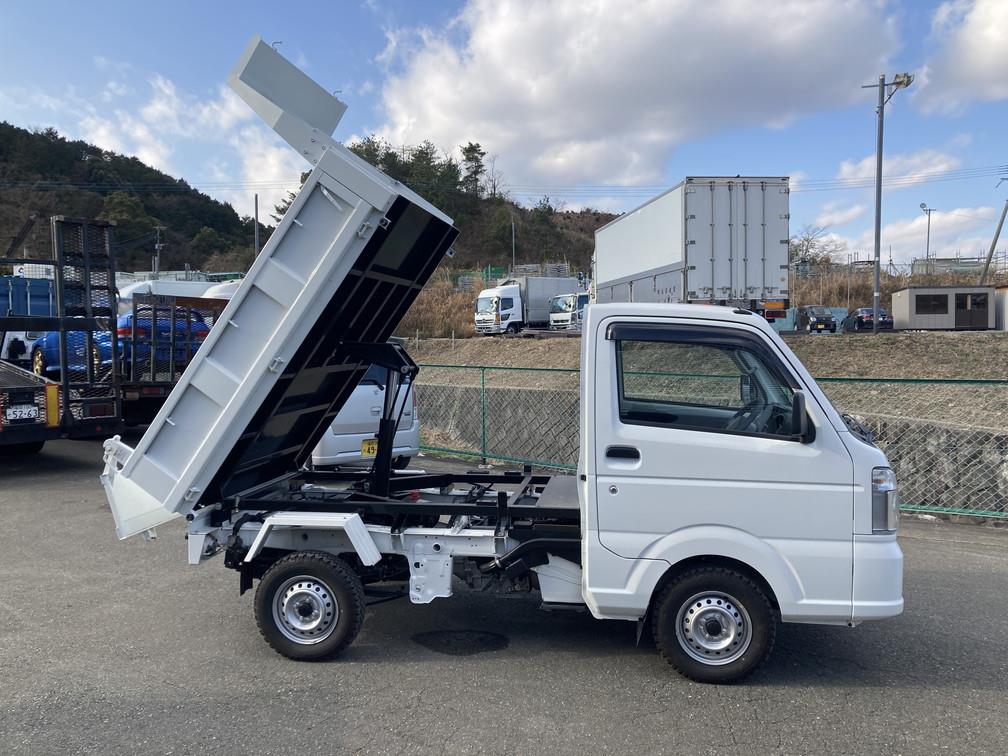
Most Japanese kei trucks imported to the U.S. rely on 660cc engines producing roughly 40 to 45 horsepower. With this limited displacement, choosing between factory options like air conditioning (A/C) and a hydraulic dump bed involves important power tradeoffs. While air conditioning imposes a continuous parasitic drag on engine output whenever turned on, a hydraulic dump bed draws power only intermittently during operation, though it adds permanent curb weight that affects payload and suspension wear.
Quick Answer: How A/C vs. Dump Beds Affect 660cc kei Truck Power
- Air Conditioning: Creates a continuous parasitic mechanical load on the crankshaft while running, consuming roughly 2 to 4 horsepower (a 5% to 10% reduction in total engine output). This directly reduces acceleration, throttle response, and hill-climbing power.
- Hydraulic Dump Bed: Operates on an intermittent power demand. It draws engine power (via mechanical PTO or electric hydraulic pump) strictly while raising or lowering the bed. Once disengaged, it creates zero operational engine drag, though the added hardware increases permanent vehicle curb weight.
Table of Contents
- Why Air Conditioning Has a Noticeable Impact on 660cc Engines
- How Factory Hydraulic Dump Beds Function & Weight Tradeoffs
- Side-by-Side Performance Comparison
- Model-Specific Notes: Honda, Suzuki, Daihatsu, Subaru, & Mitsubishi
- Pre-Purchase & Maintenance Inspection Checklist
- Frequently Asked Questions
- Verdict: Which Factory Option Matches Your Driving Needs?

Why Air Conditioning Has a Noticeable Impact on 660cc Engines
Factory A/C in a 660cc kei truck is driven by a belt connected directly to the engine crankshaft pulley. When you switch on the A/C, an electromagnetic compressor clutch engages. The engine must immediately supply the mechanical force needed to turn the compressor pump, pressurize refrigerant, and circulate it through the system.
In a high-horsepower vehicle, a 2 to 4 horsepower draw is barely noticeable. However, in a 660cc mini truck producing 40 to 45 horsepower total, that compressor load accounts for 5% to 10% of total engine output. This parasitic load remains constant as long as the compressor clutch stays engaged.
Real-world driving effects of running A/C in a 660cc kei truck include:
- Slower Throttle Response: Acceleration feels sluggish when merging onto main roads or pulling away from stops.
- Reduced Hill-Climbing Ability: Maintaining speed on steep inclines requires downshifting earlier or switching off the A/C temporarily to preserve momentum.
- Slight Fuel Efficiency Drop: The engine works harder to maintain speed against the continuous compressor resistance.
- Idle Quality Fluctuations: Worn idle-up valves can cause engine stumbling when the A/C compressor kicks on at stoplights.
If your A/C system is slipping, squealing, or making loud noises when engaged, inspect your kei truck engine belts and A/C replacement components to ensure the compressor isn't creating unnecessary friction on the crankshaft.

How Factory Hydraulic Dump Beds Function & Weight Tradeoffs
Factory hydraulic dump beds raise and lower using a dedicated hydraulic pump and cylinder setup. How power is supplied depends on the engineering design of the specific truck:
- Mechanical Power Take-Off (PTO): Uses a mechanical gear shaft engaged via a lever inside the cab that transfers engine rotation from the transmission/transfer case directly to the hydraulic pump.
- Electric-Hydraulic Power Packs: Uses a 12V electric motor wired to the battery and alternator to drive the hydraulic pump.
Neither system drains engine power during normal road travel. Once the bed is lowered and the control valve or PTO lever is disengaged, the hydraulic pump stops operating, placing zero continuous load on the engine.
Key Difference: A/C creates a continuous mechanical drag while driving. A dump bed creates an intermittent operational draw, but adds permanent physical weight (extra chassis reinforcement, subframe, hydraulic ram, and bed structure) that slightly increases overall curb weight.
Because the extra mass of a factory dump bed lowers effective payload margins and increases stress on the rear axle over rough terrain, owners frequently upgrade to heavy-duty Kei truck leaf springs and suspension components to prevent rear-end sag when carrying heavy materials.
Side-by-Side Performance Comparison
The table below summarizes how factory air conditioning and hydraulic dump beds impact driving mechanics, power consumption, and maintenance on a standard 660cc platform:
| Performance Feature | Factory Air Conditioning (A/C) | Factory Hydraulic Dump Bed |
|---|---|---|
| Power Draw Timing | Continuous while compressor clutch is engaged | Intermittent (only while raising or lowering bed) |
| Continuous Engine Drag | Yes (~2–4 HP continuous parasitic loss) | No (zero power draw during road driving) |
| Impact on Acceleration | Noticeable reduction in throttle responsiveness | None from hydraulics; minor impact from added curb weight |
| Impact on Hill Climbing | Significant reduction in climb power; often requires switching A/C off on steep grades | No effect on power output while driving uphill |
| Fuel Economy Impact | Ongoing decrease in MPG while operating | Negligible (limited to minor curb weight penalty) |
| Primary Wearing Parts | Compressor belt, clutch, idle-up valve, refrigerant lines | Hydraulic fluid, seals, PTO linkage, heavy-duty springs |
| Best Primary Use Case | Daily commuting, highway travel, and hot climate comfort | Farming, construction, property maintenance, and heavy hauling |
Model-Specific Notes: Honda, Suzuki, Daihatsu, Subaru, & Mitsubishi
Not all 660cc Japanese mini trucks handle factory options identically. Engine placement, transmission gearing, and hydraulic system designs vary significantly across manufacturers:
-
Honda Acty (HA3 / HA4 and HA6 / HA7): Powered by the mid-mounted 660cc
E07Aengine. Acty factory dump trucks typically utilize an electric-hydraulic power unit mounted near the frame rather than a transmission PTO shaft. Because of the rear-mid engine placement, A/C belt inspection requires removing the engine cover panel behind the cabin bed. Explore Honda Acty HA3/HA4 replacement parts for model-specific belts and maintenance items. -
Suzuki Carry (DD51T and DA52T and DA63T): Powered by
F6AorK6Aengines. Heavy-duty Carry dump models ("Heavy Dump") commonly use a mechanical PTO shaft engaged by a cab-mounted lever connected to the transfer case. Because these trucks are built for utility, keeping the front-end chassis aligned with fresh ball joints and tie rods is critical when operating heavily loaded dump beds over rough ground. Explore Suzuki Carry DD51T parts and accessories. -
Daihatsu Hijet (S100P / S110P and S210P): Powered by the
EFseries engine. Hijet dump options (including "Climber" trims) often combine factory hydraulics with ultra-low 4WD gearing to assist in off-road unloading. Inspect Daihatsu Hijet S100P/S110P parts for maintenance hardware. -
Subaru Sambar (KS3 / KS4 and TT1 / TT2): Powered by the rear-mounted 4-cylinder
EN07engine. Supercharged Sambar models ("Clover") handle A/C compressor drag better than naturally aspirated competitor models due to increased low-end engine torque. - Mitsubishi Minicab (U42T and U62T): Powered by the 3-cylinder 3G83 engine. The AC fast-idle / idle-up system must function correctly on Minicab models to raise idle RPM when the A/C compressor engages, preventing stalling at idle.

Pre-Purchase & Maintenance Inspection Checklist
Whether buying a Kei truck with factory A/C or servicing a PTO dump bed, use this mechanical inspection checklist to ensure optimal system performance:
Air Conditioning Inspection
- Check Compressor Clutch Engagement: Verify that the compressor clutch clicks on smoothly when turning the cabin A/C switch on.
- Inspect Idle-Up System: Confirm engine RPM increases slightly when A/C turns on at idle to prevent engine stumbling.
- Check Belt Tension & Condition: Look for cracks, glazing, or loose tension on the A/C drive belt connected to the crankshaft.
- Verify Cabin Temperature: Ensure air blows cold without unusual whining noises coming from the compressor pulley bearings.
Hydraulic Dump Bed Inspection
- Check Hydraulic Cylinder Seals: Inspect the hydraulic ram piston for oil leaks or pitting along the chrome shaft.
- Verify PTO or Electric Pump Engagement: Test bed lifting speed under load to ensure smooth raising and lowering without abnormal pump whining.
- Inspect Frame & Pivot Pins: Check chassis mounting points, bed hinges, and subframe welds for cracks or excessive rust.
- Check Suspension & Axle Seals: Inspect rear leaf springs and Kei truck CV boots and drive axles for grease leaks or strain caused by heavy dump loads.

Frequently Asked Questions
How much horsepower does air conditioning steal from a 660cc Kei truck?
An operating A/C compressor draws approximately 2 to 4 horsepower from the engine. On a 660cc engine producing 40 to 45 total horsepower, this represents a 5% to 10% reduction in total engine power available to the drive wheels.
Does driving with a dump bed down drain extra gas in a Kei truck?
No. Once a hydraulic dump bed is fully lowered and the PTO or electric pump is turned off, the hydraulic system draws zero power from the engine. Fuel consumption while driving is only affected by the minor physical weight of the dump bed hardware.
Should I turn off the A/C when driving a Kei truck uphill?
Yes. Disengaging the A/C compressor switch when climbing steep highway inclines or hauling heavy loads generally frees up 2 to 4 horsepower, helping your engine maintain road speed without overworking or forcing an early downshift.
Is a mechanical PTO dump bed better than an electric-hydraulic dump bed?
Mechanical PTO systems driven by the transmission/transfer case are extremely durable for heavy daily dumping operations. Electric-hydraulic pump systems are simpler to maintain, run independently of transfer case engagement, and do not rely on mechanical PTO gear linkages.

Verdict: Which Factory Option Matches Your Driving Needs?
Deciding between factory air conditioning and a hydraulic dump bed comes down to how you plan to use your Japanese mini truck:
- Choose Air Conditioning if your Kei truck is primarily used for daily commuting, highway driving, or year-round comfort in warm climates where staying cool outweighs the temporary loss of 2 to 4 horsepower on steep grades.
- Choose a Dump Bed if your Kei truck is an active work vehicle used on farms, job sites, or large properties where unloading dirt, gravel, or firewood quickly is essential, knowing that normal driving power remains unaffected once the bed is lowered.
Need Model-Specific Parts or Maintenance Help for Your Kei Truck?
Whether you need replacement A/C belts, cooling components, heavy-duty suspension springs, or drivetrain hardware, Oiwa Garage supplies direct-fit parts for Honda Acty, Suzuki Carry, Daihatsu Hijet, Subaru Sambar, and Mitsubishi Minicab platforms.