
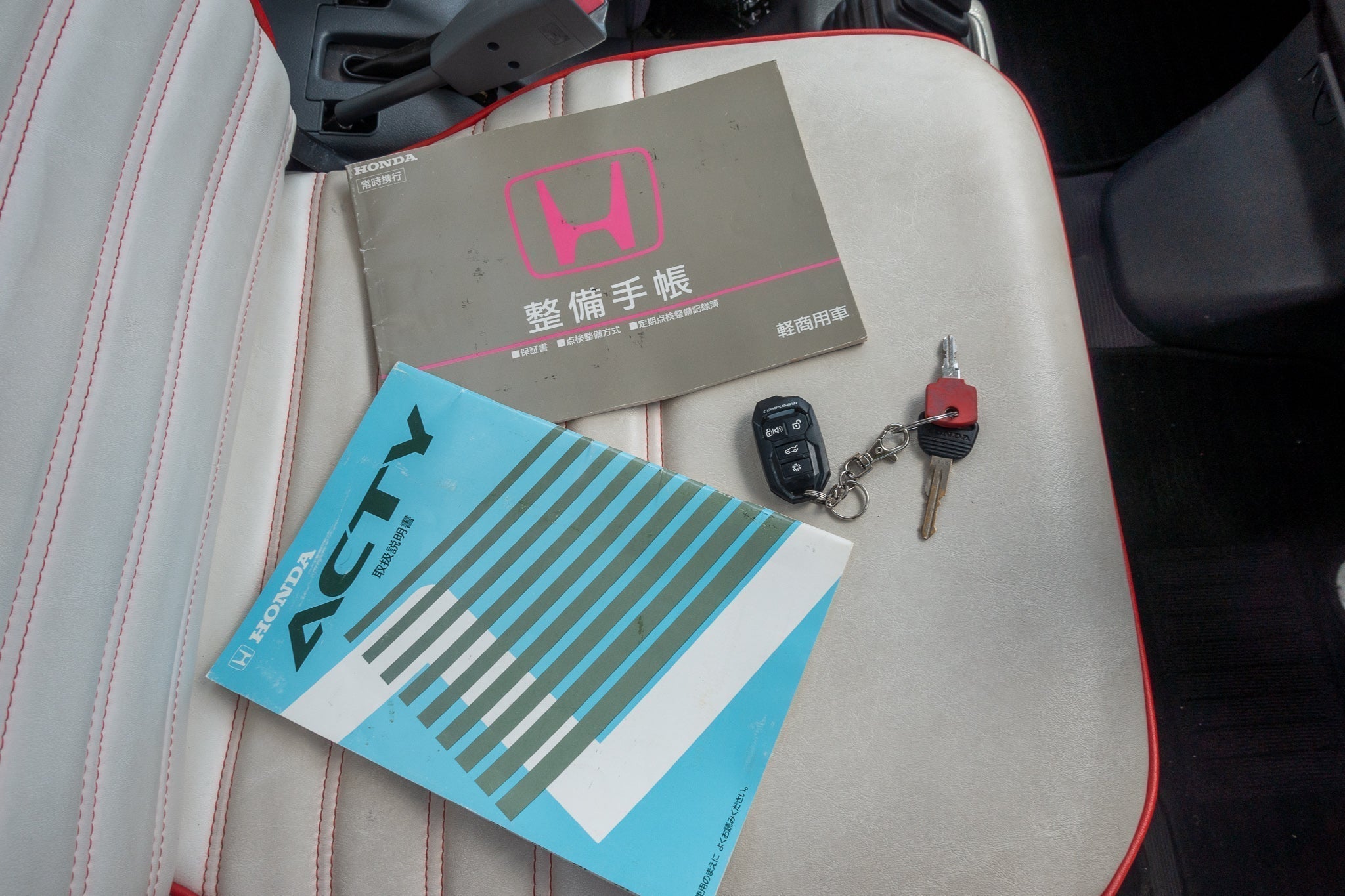
Whether you are a seasoned DIY mechanic, a farmer keeping your workhorse running, or an importer restoring a recent arrival, working on a Japanese Domestic Market (JDM) Kei truck presents unique challenges. The biggest hurdle? Finding accurate technical data. Standard North American manuals like Haynes or Chilton do not cover these unique right-hand-drive vehicles.
To keep your mini truck running safely, you must rely on original factory manuals and technical schematics. This guide breaks down how to read JDM electrical maps, understand Japanese labeling conventions, and find the exact fitment data you need for your Honda Acty, Suzuki Carry, Daihatsu Hijet, Subaru Sambar, or Mitsubishi Minicab.
Table of Contents
- What Are JDM Factory Manuals and Technical Schematics?
- Why Kei Truck Owners Rely on OEM Documentation
- The Basics of How JDM Wiring Diagrams Are Read
- Japanese Labeling Conventions & Translation Matrix
- Model-Specific Nuances: Acty, Sambar, Hijet, Carry, and Minicab
- Frequently Asked Questions (FAQ)
What Are JDM Factory Manuals and Technical Schematics?
It is not uncommon to hear people conflate JDM factory manuals and technical schematics. However, they serve two distinct purposes:
- JDM Factory Manuals (OEM FSMs): Comprehensive guides provided by the automaker containing model-specific repair information, torque tolerances, and fluid capacities.
- Technical Schematics: Individual diagrams within those manuals that visually illustrate how mechanical or electrical parts interact and connect within a vehicle's overall system.
Aftermarket repair books, Electronic Parts Catalogs (EPC), and tuning guides all differ fundamentally from JDM factory manuals. Examples of classic aftermarket repair books include Haynes and Chilton manuals. You will essentially never find a Haynes or Chilton aftermarket repair book for Kei trucks because they focus exclusively on vehicles within North American and European markets rather than Japan.
By contrast, an EPC/parts catalog is an OEM system designed to provide quick, accurate digital tools for identifying specific component serialization numbers. Tuning guides are rarely OEM-produced and focus strictly on aftermarket performance modifications rather than baseline repairs.

Why Kei Truck Owners Rely on OEM Documentation
JDM Kei truck enthusiasts and import owners rely heavily on OEM manuals because these utility vehicles do not have dedicated export-market factory service manual sets. Following proper documentation is essential for restoration, mechanical troubleshooting, electrical diagnostics, and maintaining authenticity—all of which directly support your vehicle's resale value.
A prime example of why enthusiasts rely on OEM manuals can be seen even with performance JDM imports, such as the mid-engine Honda Beat sports car. Jim Simpson, a Washington State collector, restorer, and independent designer who has owned more than two-dozen JDM vehicles, described the difficulty to Hagerty: “Changing the timing belt requires a lift, and you need some d**n decent skills, or you won't accomplish it... Even for someone who knows what they're doing, it's a very involved job.”
For Kei utility trucks, the tight spatial layouts under seats or beds present identical challenges. A factory manual does not necessarily make the physical space wider, but it completely removes critical guesswork regarding torque specs and assembly patterns for professional mechanics and DIY owners alike.
The Basics of How JDM Wiring Diagrams Are Read
Wiring diagrams are separated into distinct vehicle systems, with each system assigned its own circuit group. This setup streamlines your ability to isolate electrical faults. Common vehicle systems covered by these layouts include lighting networks, ignition paths, and ECU controls.
Common Symbols in Wiring Diagrams
The most common symbols in JDM wiring diagrams indicate electrical connectors where harnesses join, chassis grounds where electricity returns to the metal frame, and relays acting as power switches. You will also look for internal fuses for circuit protection and alphanumeric pinouts for mapping multi-wire electrical plugs.
How the Diagrams Are Organized
It is common to assume that wiring diagrams in factory manuals are organized by physical vehicle location. However, they are actually organized strictly by system. Proper electrical flow tracing always includes starting at the power source before moving sequentially to the fuse, the relay, the functional component, and finally the chassis ground.

Why JDM Wiring Diagrams Feel Difficult at First
Reading JDM electrical maps has a steep learning curve because circuits can span across multiple pages. These continuations are marked with arrows pointing to subsequent sheets, labeled with specific alphanumeric codes. While flipping pages is required, remember this general rule of thumb: power flow usually starts at the top of the page, while ground points typically sit at the bottom.
Rather than blindly tracing lines across connectors page by page, familiarize yourself with the specific manufacturer’s coordinate system. You will typically find symbol legends, connector code indexes, abbreviation keys, and page navigation guides near the very beginning of the electrical service section. Keep in mind that different Japanese manufacturers use slightly varying icon styles and circuit terminology.
Japanese Labeling Conventions & Translation Matrix
One practice you will find within many JDM factory manuals is compact labeling to reduce diagram clutter. For example, a wire might end at a terminal node labeled C12, indicating that it connects to connector C’s 12th terminal position. Circuit names are also shortened to internal OEM terminology to save space.
Crucially, wires use color abbreviations in manuals that correspond to their Japanese kanji designations. When working on your truck's harness, use this translation matrix to accurately match the diagram text with the physical wires in your vehicle:
| Japanese Kanji | Common Diagram Abbreviation | English Translation |
|---|---|---|
| 黒 | B (or BLK) | Black |
| 赤 | R (or RED) | Red |
| 白 | W (or WHT) | White |
| 青 | L (or BLU) | Blue |
| 黄 | Y (or YEL) | Yellow |
| 緑 | G (or GRN) | Green |
Translation and Interpretation Challenges
Optical Character Recognition (OCR) translation software often misreads complex Japanese technical symbols, older digitized PDFs can suffer from low-resolution or poor scaling, and automated English translations can inadvertently alter critical technical meanings. Using high-quality print reproductions or verified translations prevents these dangerous diagnostic errors.

Model-Specific Nuances: Acty, Sambar, Hijet, Carry, and Minicab
Every manufacturer engineered their mini truck with specific layouts. When troubleshooting mechanical components or chasing wiring issues, keep these model realities in mind:
- Honda Acty (e.g., HA3, HA4, HH3): Known for its unique mid-engine layout utilizing the E07A engine. Diagrams are critical for adjusting complex dual-carburetor setups and properly bleeding the highly elongated cooling system.
- Subaru Sambar (e.g., KS3, KS4, KV3, KV4): Features a distinct rear-engine configuration powered by the EN07 inline-four engine. Electrical maps are vital for diagnosing the wiring routing differences found on Clover4 supercharged trims.
- Daihatsu Hijet (e.g., S100, S110): Utilizes a traditional under-seat engine placement. Correct vacuum routing maps within service manuals are absolute necessities for solving idling and emissions issues on these configurations.
- Suzuki Carry & Every (e.g., DD51T, DC51T): Widely popular cab-over design. Having access to specific schematic sets for special equipment models (such as factory dumps, scissor lifts, or specialized utility gates) prevents wiring accidents during repairs.
- Mitsubishi Minicab & Bravo (e.g., U41T, U42T): Relies on distinct electrical harness routing styles. Having an exact schematic ensures you can safely diagnose ignition component issues without damaging surrounding circuits.
Frequently Asked Questions (FAQ)
Are Kei truck factory service manuals available in English?
Original OEM factory service manuals were published exclusively in Japanese for the domestic market. However, high-quality, professionally translated English print editions are available for popular models, reproducing original diagrams alongside clear English text instructions.
How do you decode Japanese wiring diagram wire colors?
JDM diagrams use singular character abbreviations based on Japanese color words (such as "B" for Kuro/Black, "W" for Shiro/White, and "L" for Ao/Blue). Reference our translation index chart above to verify colors before tracking physical harnesses.
What is the difference between an FSM and an EPC parts catalog?
An FSM (Factory Service Manual) provides detailed instructions on mechanical procedures, wiring paths, and torque tolerances. An EPC (Electronic Parts Catalog) is a structural directory that maps out individual part explosion diagrams along with original part numbers to aid ordering accuracy.
Where can I buy a physical service manual for my vehicle?
You can purchase clear, accurately scaled, English-translated physical print manuals directly through online specialty suppliers. Explore our factory manuals collection to find the exact copy for your vehicle chassis line.
Can I use a standard OBD2 scanner on a 1990s JDM Kei truck?
No. Standard OBD2 diagnostic protocols were not globally standardized or mandatory on JDM passenger and commercial vehicles until the early 2000s. For 1990s models, diagnostics rely on flash-code systems through specific diagnostic jump terminals outlined in electrical manuals.
How Oiwa Garage Keeps You One Step Ahead of Repairs
Familiarizing yourself with JDM factory technical documentation helps you bypass frustrating translation traps, while relying on original or pristine copy materials keeps you safe from low-resolution digital files and broken diagram scaling.
Oiwa Garage gives you the power to service your vehicle like a professional technician with authentic, premium manual sets for popular truck and van series:
- Honda Acty Manual (1989-1999)
- Subaru Sambar Manual (1990-2006)
- Suzuki Carry Special Equipment Manual (1990-1998)
- Daihatsu Hijet Service Manual (1994-1998)
Looking for deep electrical breakdowns? We also provide standalone factory electrical diagram assets for targeted troubleshooting:
- Suzuki Carry and Every Electrical Manual (1990-1998)
- Mitsubishi Minicab and Bravo Mechanical Service Manual (1990-1998)
- Mitsubishi Minicab Electrical Service Manual (1989-1998)
- Subaru Sambar Electrical Diagram Book (1990-2001)
When purchasing your resources through Oiwa Garage, you receive clearly translated instructions, correctly scaled technical layouts, and complete engine overhaul documentation to streamline your workbench operations.
If you encounter tricky issues involving Kei truck suspension parts, are installing lift setups, or need to replace degraded steering components like replacement CV boots, tie rods, or ball joints, pairing your high-grade parts with accurate factory schematics guarantees a perfect repair sequence every time.
Browse our website's factory manuals catalog today, or Contact Us for specialized guidance on your truck's specific chassis layout.