
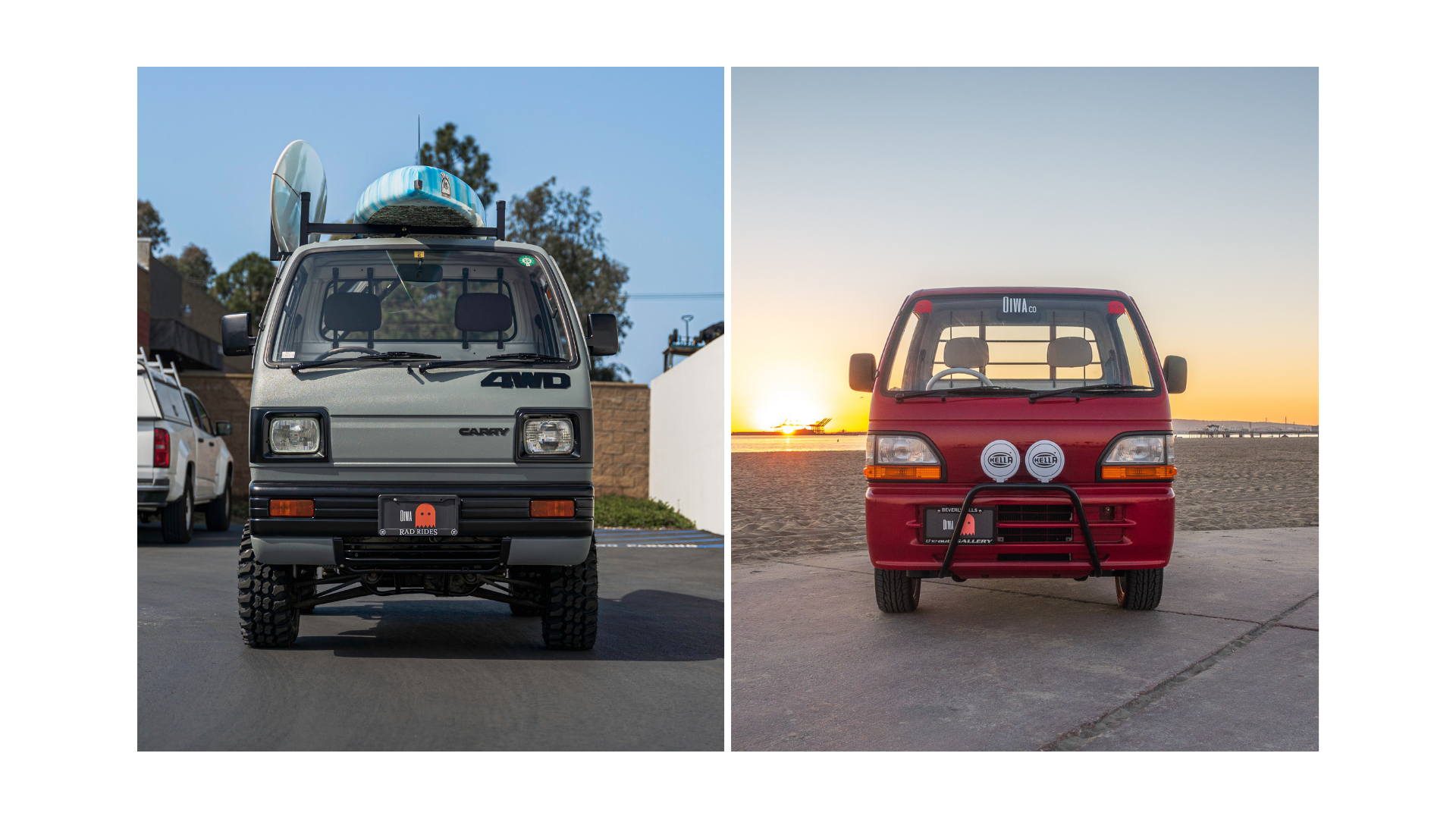
E07A vs. F6A: Engine Matchup Verdict
The E07A engine, found in Honda Acty HA3/HA4 series (1990-1999) and HA6/HA7 series (1999-2009) models, edges out the Suzuki F6A for overall reliability and daily use, but the F6A is more ideal for off-road builds and parts availability. You’ll find the F6A engine in Suzuki Carry/Every (DA51/DC51 series, 1990-1998) and Suzuki Carry 9th generation (DC51T/DD51T, 1991-1999) models.
Stock horsepower and torque for the 656cc, 3-cylinder E07A are about 37.5 to 63 horsepower and 40 to 44 lb-ft, respectively. In comparison, a naturally aspirated F6A 657cc, inline three-cylinder’s stock power output ranges from 34 to 55 horsepower and 60 to 64 lb-ft of torque. However a turbocharged F6A often produces 60 to 64 horsepower and 30 to 67 lb-ft of torque.
Regarding reliability, you can easily hit 124,000 miles with an E07A when completing regular maintenance, but you’ll want to replace the timing belt every 62,000 miles or about 7 years; otherwise, you risk bent valves, which can cause major damage. The F6A has the same replacement interval.
F6A cooling and gasket failures can spike past 93,000 miles with the F6A, especially if the water pump lags. However, you’ll have access to cheaper parts.

| Specification Feature | Honda E07A (Base / Commercial) | Suzuki F6A (Base / Commercial) |
| Total Displacement | 656 cc | 657 cc |
| Bore x Stroke | 66.0 mm x 64.0 mm (Oversquare) | 65.0 mm x 66.0 mm (Undersquare) |
| Engine Block Material | Lightweight Die-Cast Aluminum | Heavy-Duty Cast Iron |
| Valvetrain Layout | SOHC 12-Valve (4 valves per cylinder) | SOHC 6-Valve or 12-Valve |
| Valve Clearance Risk | Non-Interference (Generally safe if belt snaps) | Interference (Engine damage if belt snaps) |
| Engine Rotation | Counter-Clockwise | Clockwise |
| Primary Induction | Keihin CV Carburetor / PGM-FI (post-'96) | Carburetor / Electronic Fuel Injection |
| Base Horsepower | 38 - 42 hp @ 5300 - 6000 RPM | 42 - 50 hp @ 6000 - 6500 RPM |
| Base Torque | 39 - 40.5 lb-ft @ 4500 - 5000 RPM | 46 - 50 lb-ft @ 3500 - 4000 RPM |
| Performance Variant | MTREC (Individual Throttle Bodies) | DOHC 12-Valve Intercooled Turbo |
| Performance Output | 63 hp @ 8100 RPM / 44 lb-ft @ 7000 RPM | 63 hp @ 6500 RPM / 85 lb-ft @ 4000 RPM |
| Primary JDM Truck | Honda Acty (HA3, HA4, HH3, HH4) | Suzuki Carry / Every (DC51T, DD51T) |
| Engine Placement | Mid-Engine (Under the cargo bed) | Front-Mid Engine (Under the front seats) |

Core Specifications and Variants
The E07A is a 656 cc inline three cylinder engine, single overhead cam, four valves per cylinder, 12 valves in all, designed to run transversely and spin relatively freely for a truck engine. By comparison, the F6A is a 657 cc inline three-cylinder engine with a cast-iron block and aluminum head, a single overhead cam design with four valves per cylinder. It has a stout bottom end that will take abuse and turbocharging.
Honda’s E07A leans more toward a rev-happy character, while the F6A’s dimensions and iron block make it more torque‑biased, resulting in better feel when loaded.

Power Delivery and Real‑World Behavior
Regarding how the F6A can feel better when loaded, this engine could haul 800 lbs of gravel up a 10% hill at 15 mph in 2nd gear at 2,500 rpm without needing to downshift. On the highway, say traveling 50-55 mph at 4,600rpm in 5th gear, the E07A produces greater rev noise, but the engine feels more responsive when you press the gas.
If you’re crawling a field with a loaded truck, the F6A would be an ideal choice, while empty-bed country runs would benefit from the E07A. An E07A will work harder to haul loads than an F6A, resulting in lower mileage.

Common Failure Points and Preventive Maintenance
If you don’t replace an E07A or F6A’s timing belt, it may break, and pistons can smash valves, which can lead to a $3,000 to $5,000 engine rebuild or replacement. Pistons can smash valves after a timing belt breaks on these engines, as when the pistons are at their highest point in the cylinder, the valves are frozen open and occupy the same space.
If you skip regular coolant flushes every 2 to 3 years or 30,000 miles with an E07A, you risk warping cylinder heads and triggering oil sludge.

Since F6A head gasket failures spike past 93,000 miles, focus on avoiding water pump neglect and lower radiator hose seal leaks. For the water pump, aside from oil changes at 5,000-mile intervals, be on the lookout for bearing whine or obvious pulley play and replace at 60k-90k miles or when the first coolant weep happens. Squeeze the lower radiator hose each month to check for hard and/or cracked rubber, which means it should be replaced right away. Low coolant, which you can check in your coolant reservoir before starting, can create air pockets, damaging pump seals.
When properly maintained, especially timing belts and coolant, an E07A can go for 124k-155k miles before needing major work. F6A Gasket and pump issues often require top-end work earlier at around 90k-110k miles, and you can expect a lower lifespan of 112k-137k miles.
Strategic Outlook and Operational Synthesis
The comprehensive comparative analysis of the Honda E07A and Suzuki F6A reveals two engines that, despite originating from identical governmental regulatory constraints in 1990, execute their duties through vastly different, highly successful engineering paradigms.
The Honda E07A is an absolute masterclass in elegant, lightweight, naturally aspirated fluid dynamics. Its die-cast aluminum construction, specialized oversquare geometry, counter-clockwise rotation, and forgiving non-interference valvetrain make it an exceptionally durable, user-friendly, and easy-to-maintain powerplant for utility applications. Its linear power delivery and the superior mid-engine layout of the Acty chassis provide unparalleled refinement, maneuverability, and acoustic balance for daily driving and agricultural work. It is the engine of choice for fleet managers, farmers, and private users seeking guaranteed reliability, simple DIY maintenance, and uncompromised utilitarian function.
Conversely, the Suzuki F6A represents brute-force industrial engineering scaled down to microcar proportions. Its cast-iron block guarantees lower-end invincibility, providing massive low-RPM torque for heavy hauling in commercial settings, and serving as an impenetrable, rigid foundation for extreme forced-induction tuning in sports applications like the Cappuccino and AZ-1. While its interference valvetrain and known susceptibility to valve stem seal degradation demand a much more rigorous, proactive maintenance schedule and mechanical aptitude , the F6A unequivocally rewards its owners with a torque-rich driving experience, immense aftermarket tuning support, and a hyper-aggressive, high-RPM character that defines JDM motorsport culture.
Ultimately, deciding between the two platforms hinges entirely on the intended operational profile of the buyer. The Honda E07A offers the path of least resistance for dependable, refined, naturally aspirated utility, while the Suzuki F6A caters to those requiring robust low-end agricultural hauling capability or an unyielding cast-iron canvas for high-boost performance modifications. Both engines stand as towering historical testaments to Japanese internal combustion engineering, proving definitively that severe regulatory constraints often breed the most enduring, fascinating mechanical innovations.
Need to bulletproof your Kei truck? Shop our full collection of Honda Acty and Suzuki Carry maintenance kits here.