
The Buyer’s Logic: Summary
Choosing between an agricultural and urban Kei truck comes down to one factor: The Duty Cycle.
- Agricultural Logic: Prioritize 4WD, manual transmissions with "Crawler" gears, and Diff-Locks for off-road torque.
- Urban Logic: Prioritize 2WD for a tighter turning radius, automatic transmissions for traffic, and mid/rear-engine layouts for better pavement balance.
Farm Tool or City Hack? Start With Your Use Case
Kei trucks are versatile, low-speed assets on both farms and in cities, but their utility manifests differently in each environment. Agricultural kei truck use might involve hauling feed, tools, or off-roading on irregular terrain. In comparison, urban kei truck use typically revolves around short delivery or light-hauling trips, where the small vehicle size mitigates parking constraints.
| Requirement | Agricultural Logic | Urban Logic |
|---|---|---|
| Drive System | 4WD with Low Range | 2WD (Better MPG/Turning) |
| Best Engine Position | Front/Mid (Accessibility) | Mid/Rear (Balance/Braking) |
| Transmission | 5-Speed Manual (Control) | 3/4-Speed Automatic (Traffic) |
| Key Feature | Diff-Lock & Dump Bed | Air Conditioning & Power Steering |

4WD, Gearing, and Payload: What Actually Matters on a Farm
Farms commonly have environmental challenges that four-wheel drive (4WD) can mitigate. If you’re expecting to encounter muddy fields, uneven terrain, or hills regularly, 4WD should be non-negotiable. Most farm kei trucks run part-time 4WD (2WD for pavement, 4WD for mud) since it’s cheaper to maintain than full-time 4WD.
Expert Logic: For heavy farm work, look for a Crawler Gear. This is lower than first gear, providing maximum torque for crawling through mud or hauling full loads of hay without stalling.
Popular Models with Diff Lock:
- Suzuki Carry (DD51T)
- Daihatsu Hijet (S110P)
- Honda Acty (Attack Package)
- Subaru Sambar (KS4)
- Mitsubishi Minicab (U42T)

Tight Streets and MPG: Why Cities Flip the Equation
While kei trucks provide massive urban utility, the logic changes. On pavement, 4WD and Diff-Locks are unnecessary weight. A 2WD configuration offers a slightly better turning radius and better mileage. Urban drivers also benefit from a "perched cab" design for visibility and mid-engine layouts for better weight distribution during city braking.
The Legal Reality: Navigating On-Road Use
Urban or on-road kei truck drivers generally face more stringent registration and insurance requirements than their farming counterparts. Importing a kei truck that’s 25 years or older exempts the vehicle from Federal Motor Vehicle Safety Standards (FMVSS) and EPA emissions requirements. Still, some states limit use to off-road or local roads.
Core kei truck registration categories include:
-
Off-road only (private land/farms/trails; most restrictive states)
-
UTV/ATV/ORV (off-highway plates, limited public trails)
-
Limited-use vehicle (local roads, less than or equal to 35 mph)
-
Farm/agricultural utility (farm tags, rural roads)
-
Low-speed vehicle (LSV) (less than or equal to 25 mph, headlights required)
-
Collector/historical/antique (hobby plates, limited mileage)
-
Specialty/special-use (constructed/reconstructed)
-
Full street-legal (passenger/motorcycle/light truck plates)
Check out our Kei Truck Road Legality Guide for state-specific rules.

Final Verdict: Best Models by Use Case
Farm Favorites: Suzuki Carry & Daihatsu Hijet
The Suzuki Carry and Daihatsu Hijet are farm go-tos due to their:
-
Reliability
-
Parts availability
-
Affordability
-
Compact durability
You’ll want to look towards 9th-generation Suzuki Carry models for features like fuel injection, durable 660cc engines, essential 4WD with high/low range, and drop-down bed sides.
Key Daihatsu Hijet farming models include the:
-
9th-generation jumbo cab (8 inches of extra space behind seats, better headroom, and better ergonomics)
-
Hijet PTO Hydraulic Dump (great for transporting soil, gravel, or feed)
-
S80 Series (1986-1994) for easy repairs and off-road durability
The majority of kei trucks imported into the U.S. come with a manual transmission, and a 5-speed manual offers superior control and power on farms compared to automatics.
Urban Picks: Honda Acty & Subaru Sambar
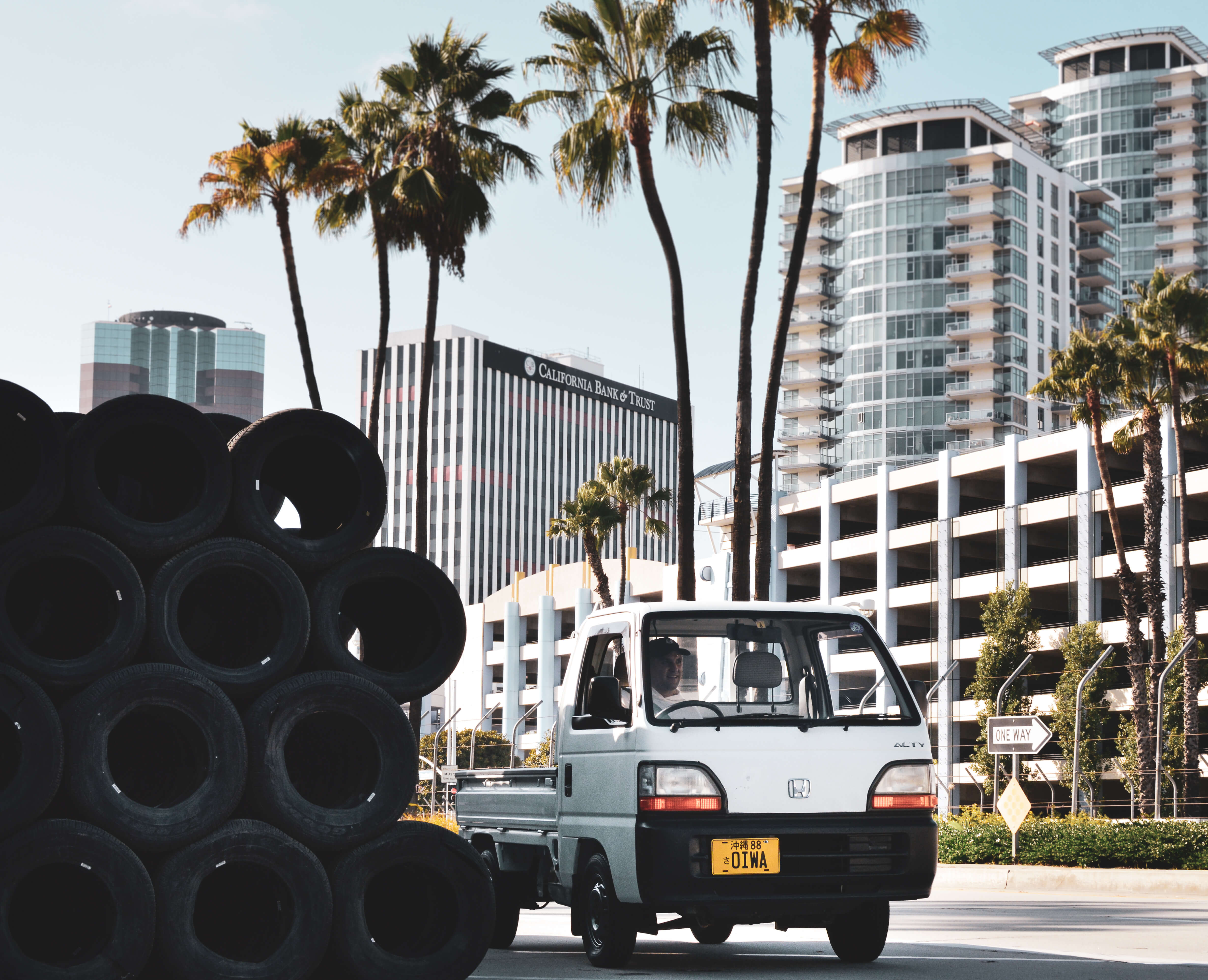
The Honda Acty’s mid-engine layout makes it the "Urban King" for handling. Alternatively, the Subaru Sambar’s rear-engine layout provides the best traction on 2WD trims and the smoothest ride on paved streets.

Common Questions About Kei Truck Logic
A: Manual is logically superior for farm work because it allows for lower gearing (crawler gears) and better torque control when hauling heavy loads.
A: Mid-engine models like the Honda Acty distribute weight more evenly, reducing "nose-dive" during frequent city braking and improving overall handling on pavement.